Search


Citations et références (5)
Invitrogen™
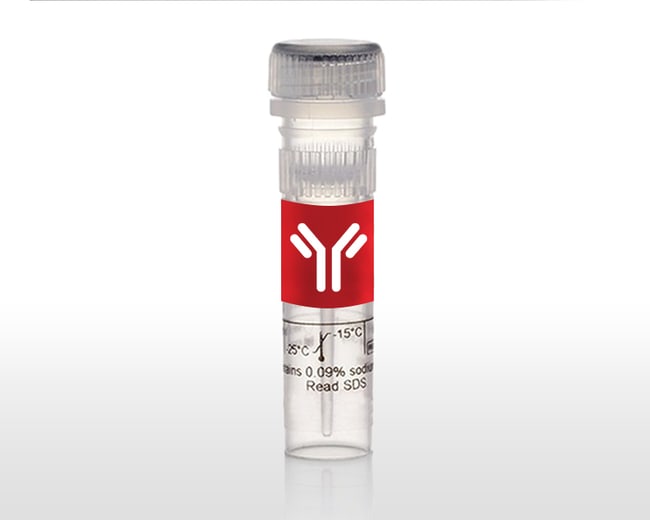
SAIVI™ Rapid Antibody Labeling Kit, Alexa Fluor™ 680
Kit de marquage rapide d’anticorps SAIVI™, Alexa Fluor™ 680
| Référence | Quantité |
|---|---|
| S30045 | 1 kit |
Référence S30045
Prix (EUR)
958,00
Each
Quantité:
1 kit
Prix (EUR)
958,00
Each
Le kit de marquage d’anticorps Alexa Fluor™ 680 SAIVI™ fournit un moyen pratique de marquer les anticorps avec un degré optimal de marquage pour les applications d’imagerie in vivo (DOL ; ∼2) sur une plage de concentration d’anticorps de 6 fois sans qu’il soit nécessaire d’ajuster le volume de la réaction, la concentration du colorant ou la concentration des anticorps. Grâce à cette procédure, les anticorps marqués de manière optimale sont prêts pour les applications nécessitant des réactifs exempts d’azoture, tels que l’imagerie cellulaire en phase ou l’injection directe chez les animaux.
Usage exclusivement réservé à la recherche. Ne pas utiliser pour des procédures de diagnostic.
Spécifications
CouleurIR
Méthode de détectionFluorescence
Excitation / émission679/702
Type d’étiquetteColorants Alexa Fluor
Balance d’étiquetage0,5 à 3 mg
Gamme de produitsAlexa Fluor, SAIVI
Type de produitKit de marquage d’anticorps
Quantité1 kit
Conditions d’expéditionTempérature ambiante
Labeling TargetAnticorps
Marqueur ou colorantAlexa Fluor 680
Unit SizeEach
Contenu et stockage
Conserver au réfrigérateur à 2°C à 8°C et à l’abri de la lumière.
Foire aux questions (FAQ)
What amount of conjugated antibody should I inject to image tumors?
What size needle should I use for small animal in vivo imaging?
What are the optimal and maximal volumes of reagent that can be injected into a mouse?
What type of mice are the best for in vivo imaging?
Citations et références (5)
Citations et références
Abstract
Affibody Molecules for In vivo Characterization of HER2-Positive Tumors by Near-Infrared Imaging.
Journal:Clin Cancer Res
PubMed ID:18559604
'PURPOSE: HER2 overexpression has been associated with a poor prognosis and resistance to therapy in breast cancer patients. We are developing molecular probes for in vivo quantitative imaging of HER2 receptors using near-infrared (NIR) optical imaging. The goal is to provide probes that will minimally interfere with the studied system,
Noninvasive positron emission tomography and fluorescence imaging of CD133+ tumor stem cells.
Journal:
PubMed ID:24469819
'A technology that visualizes tumor stem cells with clinically relevant tracers could have a broad impact on cancer diagnosis and treatment. The AC133 epitope of CD133 currently is one of the best-characterized tumor stem cell markers for many intra- and extracranial tumor entities. Here we demonstrate the successful noninvasive detection
Minimally invasive quantification of lymph flow in mice and rats by imaging depot clearance of near-infrared albumin.
Journal:Am J Physiol Heart Circ Physiol
PubMed ID:22101523
'There is a lack of available methods to noninvasively quantify lymphatic function in small experimental animals, a necessity for studies on lymphatic system pathophysiology. We present a new method to quantify lymph flow in mice and rats, based on optically monitoring the depot clearance of near-infrared fluorescently labeled albumin and
Multiplexed mAbs: a new strategy in preclinical time-domain imaging of acute myeloid leukemia.
Journal:Blood
PubMed ID:23243270
Antibodies play a fundamental role in diagnostic immunophenotyping of leukemias and in cell-targeting therapy. However, this versatility is not reflected in imaging diagnostics. In the present study, we labeled anti–human mAbs monochromatically against selected human myeloid markers expressed on acute myeloid leukemia (AML) cells, all with the same near-infrared fluorochrome.
Influenza virus aerosol exposure and analytical system for ferrets.
Journal:Proc Natl Acad Sci U S A
PubMed ID:21536880
Understanding the transmission ability of newly emerging influenza viruses is central to the development of public health preparedness and prevention strategies. Animals are used to model influenza virus infection and transmission, but the routinely used intranasal inoculation of a liquid virus suspension does not reflect natural infection. We report the