Search



Citations & References (8)
Thermo Scientific™
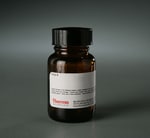
Pierce™ DSP, No-Weigh™ Format
Thermo Scientific Pierce DSP (Lomant's Reagent) is a water-insoluble, homo-bifunctional N-hydroxysuccimide ester (NHS ester) crosslinker that is thiol-cleavable, primary amine-reactive,Read more
Have Questions?
Change view

| Catalog Number | Quantity |
|---|---|
| 22586 | 50 mg |
| A35393 | 10 x 1 mg |
| 22585 | 1 g |
Catalog number 22586
Price (INR)
14,061.00
Online offer
Ends: 30-Sep-2026
23,434.00Save 9,373.00 (40%)
Each
Quantity:
50 mg
Price (INR)
14,061.00
Online offer
Ends: 30-Sep-2026
23,434.00Save 9,373.00 (40%)
Each
Thermo Scientific Pierce DSP (Lomant's Reagent) is a water-insoluble, homo-bifunctional N-hydroxysuccimide ester (NHS ester) crosslinker that is thiol-cleavable, primary amine-reactive, and useful for many applications. DSP contains an amine-reactive NHS ester at each end of an 8-carbon spacer arm. NHS esters react with primary amines at pH 7–9 to form stable amide bonds and releasing N-hydroxy-succinimide. Proteins, including antibodies, generally have several primary amines in the side chain of lysine (K) residues and the N-terminus of each polypeptide that are available as targets for NHS ester crosslinking reagents. DSP is non-sulfonated and insoluble in water, so it must first be dissolved in an organic solvent and then added to the aqueous reaction mixture. Because DSP does not possess a charged group, it is lipophilic and membrane-permeable and so useful for intracellular and intramembrane conjugation. A sulfonated analog of DSP (DTTSP) is water soluble. DSS, the non-cleavable analog of the DSP crosslinker is also available for applications that require a stable spacer arm that cannot be cleaved in the presence of reducing agents.
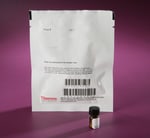
Thermo Scientific No-Weigh products are specialty reagents provided in a pre-aliquoted format. The pre-weighed packaging prevents the loss of reagent reactivity and contamination over time by eliminating the repetitive opening and closing of the vial. The format enables use of a fresh vial of reagent each time, eliminating the hassle of weighing small amounts of reagents and reducing concerns over reagent stability.
DSP contains an amine-reactive N-hydroxysuccinimide (NHS) ester at each end of an 8-carbon spacer arm. NHS esters react with primary amines at pH 7-9 to form stable amide bonds, along with release of the N-hydroxy-succinimide leaving group. Proteins, including antibodies, generally have several primary amines in the side chain of lysine (K) residues and the N-terminus of each polypeptide that are available as targets for NHS-ester crosslinking reagents. DSS, the non-cleavable analog of DSP crosslinker is also available for applications that require a stable spacer arm that cannot be cleaved in the presence of reducing agents.
Features of Lomant's Reagent:
• Reactive groups: NHS ester (both ends)
• Reactive towards: amino groups (primary amines)
• Amine-reactive NHS ester reacts rapidly with any primary amine-containing molecule
• Disulfide bond in the spacer arm is readily cleaved by 10-50 mM DTT or TCEP at pH 8.5
• Spacer arm also cleavable with reducing SDS-PAGE sample loading buffer
• Cleavable crosslinker allows separation of crosslinked products
• Water-insoluble (dissolve first in DMF or DMSO); compare to DTSSP (Sulfo-DSP)
• Membrane-permeable, allowing for intracellular crosslinking
Applications:
• Chemical crosslinking of intracellular proteins prior to cell lysis and immunoprecipitation
• 'Fix' protein interactions to allow identification of weak or transient protein interactions
• Fix tissues for immunostaining without damaging RNA
• Protein crosslinking to create bioconjugates via single-step reactions
• Immobilize proteins onto amine-coated surfaces
Properties of DSP
• Alternative names: Lomant's reagent, DTSP
• Molecular formula: C14H16N2O8S2
• Molecular weight: 404.42
• Spacer arm length: 12.0 Å (8 atoms)
• CAS number: 57757-57-0
• Reactive groups: NHS esters, react with primary amines at pH 7.0–9.0
DSP Specifications:
We manufacture DSP to the highest specifications to produce the most specific bioconjugates, ensure the integrity of your data and to provide you with the highest degree of consistency. Each lot of DSP is tested to meet the following minimum specifications.
• Identity: IR scan shows only peaks characteristic of the structure and functional groups of DSP
• Purity: > 95% by quantitative NMR (the highest standard for crosslinker purity)
Product References
Crosslinker Application Guide -- search for recent literature references for this product
Thermo Scientific No-Weigh products are specialty reagents provided in a pre-aliquoted format. The pre-weighed packaging prevents the loss of reagent reactivity and contamination over time by eliminating the repetitive opening and closing of the vial. The format enables use of a fresh vial of reagent each time, eliminating the hassle of weighing small amounts of reagents and reducing concerns over reagent stability.
DSP contains an amine-reactive N-hydroxysuccinimide (NHS) ester at each end of an 8-carbon spacer arm. NHS esters react with primary amines at pH 7-9 to form stable amide bonds, along with release of the N-hydroxy-succinimide leaving group. Proteins, including antibodies, generally have several primary amines in the side chain of lysine (K) residues and the N-terminus of each polypeptide that are available as targets for NHS-ester crosslinking reagents. DSS, the non-cleavable analog of DSP crosslinker is also available for applications that require a stable spacer arm that cannot be cleaved in the presence of reducing agents.
Features of Lomant's Reagent:
• Reactive groups: NHS ester (both ends)
• Reactive towards: amino groups (primary amines)
• Amine-reactive NHS ester reacts rapidly with any primary amine-containing molecule
• Disulfide bond in the spacer arm is readily cleaved by 10-50 mM DTT or TCEP at pH 8.5
• Spacer arm also cleavable with reducing SDS-PAGE sample loading buffer
• Cleavable crosslinker allows separation of crosslinked products
• Water-insoluble (dissolve first in DMF or DMSO); compare to DTSSP (Sulfo-DSP)
• Membrane-permeable, allowing for intracellular crosslinking
Applications:
• Chemical crosslinking of intracellular proteins prior to cell lysis and immunoprecipitation
• 'Fix' protein interactions to allow identification of weak or transient protein interactions
• Fix tissues for immunostaining without damaging RNA
• Protein crosslinking to create bioconjugates via single-step reactions
• Immobilize proteins onto amine-coated surfaces
Properties of DSP
• Alternative names: Lomant's reagent, DTSP
• Molecular formula: C14H16N2O8S2
• Molecular weight: 404.42
• Spacer arm length: 12.0 Å (8 atoms)
• CAS number: 57757-57-0
• Reactive groups: NHS esters, react with primary amines at pH 7.0–9.0
DSP Specifications:
We manufacture DSP to the highest specifications to produce the most specific bioconjugates, ensure the integrity of your data and to provide you with the highest degree of consistency. Each lot of DSP is tested to meet the following minimum specifications.
• Identity: IR scan shows only peaks characteristic of the structure and functional groups of DSP
• Purity: > 95% by quantitative NMR (the highest standard for crosslinker purity)
Product References
Crosslinker Application Guide -- search for recent literature references for this product
For Research Use Only. Not for use in diagnostic procedures.
Specifications
Cell PermeabilityYes
DescriptionDSP
FormPowder
Labeling MethodChemical Labeling
Molecular Weight (g/mol)404.42
PEGylatedNo
Product LinePierce
Quantity50 mg
Reactive MoietyNHS Ester
Shipping ConditionAmbient
SolubilityDMF, DMSO
Spacer Arm Length12.0 Å
Water SolubleNo
Chemical ReactivityAmine-Amine
CleavableBy Thiols
Crosslinker TypeHomobifunctional
FormatStandard, Single-use, Premium-grade
Product TypeCrosslinker
SpacerMedium (10 to 30 Å)
Unit SizeEach
Contents & Storage
Upon receipt store desiccated at 4°C.
Frequently asked questions (FAQs)
Can you provide the shelf-life for DSP (dithiobis(succinimidyl propionate)), Lomant's Reagent?
For the DSP crosslinker (Cat. No. 22586) you specify that the spacer arm is 12 angstroms. How did you measure this length?
Is DSP soluble in acetonitrile?
Is a hazy solution common after the addition of the stock DSP solution to an aqueous buffer system?
What are some common uses for the DSP cross-linker?
Citations & References (8)
Citations & References
Abstract
Chemical cross-linking provides a model of the gamma-secretase complex subunit architecture and evidence for close proximity of the C-terminal fragment of presenilin with APH-1.
Journal:J Biol Chem
PubMed ID:18801744
'Gamma-secretase is an intramembrane cleaving aspartyl protease complex intimately implicated in Alzheimer disease pathogenesis. The protease is composed of the catalytic subunit presenilin (PS1 or PS2), the substrate receptor nicastrin (NCT), and two additional subunits, APH-1 (APH-1a, as long and short splice forms (APH-1aL, APH-1aS), or APH-1b) and PEN-2. Apart
The schizophrenia susceptibility factor dysbindin and its associated complex sort cargoes from cell bodies to the synapse.
Journal:Mol Biol Cell
PubMed ID:21998198
'Dysbindin assembles into the biogenesis of lysosome-related organelles complex 1 (BLOC-1), which interacts with the adaptor protein complex 3 (AP-3), mediating a common endosome-trafficking route. Deficiencies in AP-3 and BLOC-1 affect synaptic vesicle composition. However, whether AP-3-BLOC-1-dependent sorting events that control synapse membrane protein content take place in cell bodies
Molecular dissection of Erv26p identifies separable cargo binding and coat protein sorting activities.
Journal:J Biol Chem
PubMed ID:19574229
'Efficient export of secretory alkaline phosphatase (ALP) from the endoplasmic reticulum depends on the conserved transmembrane sorting adaptor Erv26p/Svp26p. In the present study we investigated the mechanism by which Erv26p couples pro-ALP to the coat protein complex II (COPII) export machinery. Site-specific mutations were introduced into Erv26p, and mutant proteins
Compartmentalized cyclic adenosine 3',5'-monophosphate at the plasma membrane clusters PDE3A and cystic fibrosis transmembrane conductance regulator into microdomains.
Journal:Mol Biol Cell
PubMed ID:20089840
Formation of multiple-protein macromolecular complexes at specialized subcellular microdomains increases the specificity and efficiency of signaling in cells. In this study, we demonstrate that phosphodiesterase type 3A (PDE3A) physically and functionally interacts with cystic fibrosis transmembrane conductance regulator (CFTR) channel. PDE3A inhibition generates compartmentalized cyclic adenosine 3',5'-monophosphate (cAMP), which further
Association of Rho-associated protein kinase 1 with E-cadherin complexes is mediated by p120-catenin.
Journal:Mol Biol Cell
PubMed ID:22031287
The dynamic functional linkage of cadherins with the underlying actin cytoskeleton is tightly regulated to achieve proper cell-cell adhesion. p120-catenin (p120) regulates both cadherin stability and actin dynamics, but the relationship between these two functions remains unclear. Using a novel proteomic approach called reversible cross-link immunoprecipitation, or ReCLIP, we previously