Search


Citations & References (52)
Invitrogen™
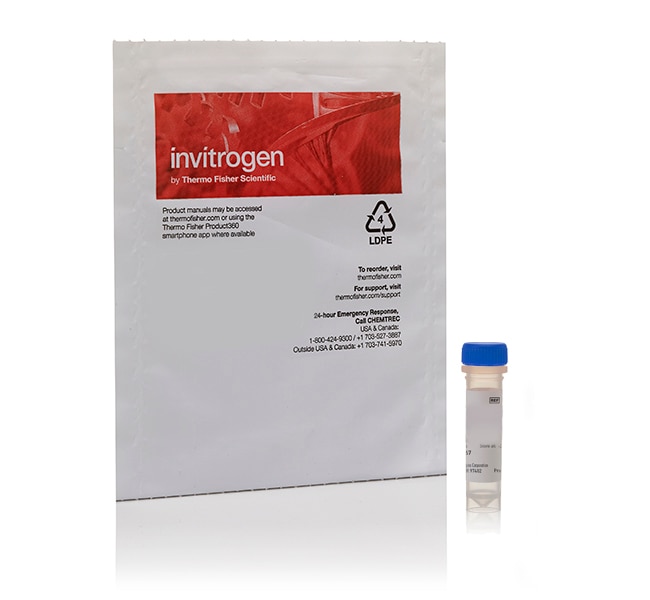
Calcium Green™-5N, Hexapotassium Salt, cell impermeant
The cell-impermeant visible light-excitable Ca2+ indicator, Calcium Green™-5N, exhibits an increase in fluorescence emission intensity upon binding Ca2+ with littleRead more
| Catalog Number | Quantity |
|---|---|
| C3737 | 500 μg |
Catalog number C3737
Price (INR)
-
Quantity:
500 μg
The cell-impermeant visible light-excitable Ca2+ indicator, Calcium Green™-5N, exhibits an increase in fluorescence emission intensity upon binding Ca2+ with little shift in wavelength. Calcium Green™-5N is essentially nonfluorescent in the absence of Ca2+ and the low-affinity indicator has dissociation constant for Ca2+ in the absence of Mg2+ of ∼14 μM.
For Research Use Only. Not for use in diagnostic procedures.
Specifications
Detection MethodFluorescence
Dye TypeFluorescent Dye-Based
Quantity500 μg
Shipping ConditionRoom Temperature
For Use With (Equipment)Fluorescence Microscope
Product LineCalcium Green
Product TypeCalcium Indicator
Unit SizeEach
Contents & Storage
Store in freezer -5°C to -30°C and protect from light.
Citations & References (52)
Citations & References
Abstract
Synaptic mitochondria are more susceptible to Ca2+overload than nonsynaptic mitochondria.
Journal:J Biol Chem
PubMed ID:16517608
'Mitochondria in nerve terminals are subjected to extensive Ca2+ fluxes and high energy demands, but the extent to which the synaptic mitochondria buffer Ca2+ is unclear. In this study, we identified a difference in the Ca2+ clearance ability of nonsynaptic versus synaptic mitochondrial populations enriched from rat cerebral cortex. Mitochondria
Presynaptic Ca(2+) influx at the inhibitor of the crayfish neuromuscular junction: a photometric study at a high time resolution.
Journal:J Neurophysiol
PubMed ID:10634895
'Presynaptic calcium influx at the inhibitor of the crayfish neuromuscular junction was investigated by measuring fluorescence transients generated by calcium-sensitive dyes. This approach allowed us to correlate presynaptic calcium influx with transmitter release at a high time resolution. Systematic testing of the calcium indicators showed that only low-affinity dyes, with
Monitoring calcium in turtle hair cells with a calcium-activated potassium channel.
Journal:J Physiol
PubMed ID:8865061
'1. An apamin-sensitive Ca(2+)-activated K+ channel was characterized in turtle hair cells and utilized to monitor submembranous intracellular Ca2+ and to evaluate the concentration of the mobile endogenous calcium buffer. 2. Isolated hair cells were voltage clamped with whole-cell patch electrodes filled with a Cs(+)-based intracellular solution to block the
Role of cytosolic Ca2+ in inhibition of InsP3-evoked Ca2+ release in Xenopus oocytes.
Journal:J Physiol
PubMed ID:7932238
'1. Calcium liberation induced in Xenopus oocytes by flash photorelease of inositol 1,4,5-trisphosphate (InsP3) from a caged precursor was monitored by confocal microfluorimetry. The object was to determine whether inhibition of Ca2+ release seen with paired flashes arose as a direct consequence of elevated cytosolic free [Ca2+]. 2. Responses evoked
Shift in the localization of sites of hydrogen peroxide production in brain mitochondria by mitochondrial stress.
Journal:J Neurochem
PubMed ID:15228597
'We have determined the underlying sites of H(2)O(2) generation by isolated rat brain mitochondria and how these can shift depending on the presence of respiratory substrates, electron transport chain modulators and exposure to stressors. H(2)O(2) production was determined using the fluorogenic Amplex red and peroxidase system. H(2)O(2) production was higher