Search


인용 및 참조 문헌 (1)
Gibco™
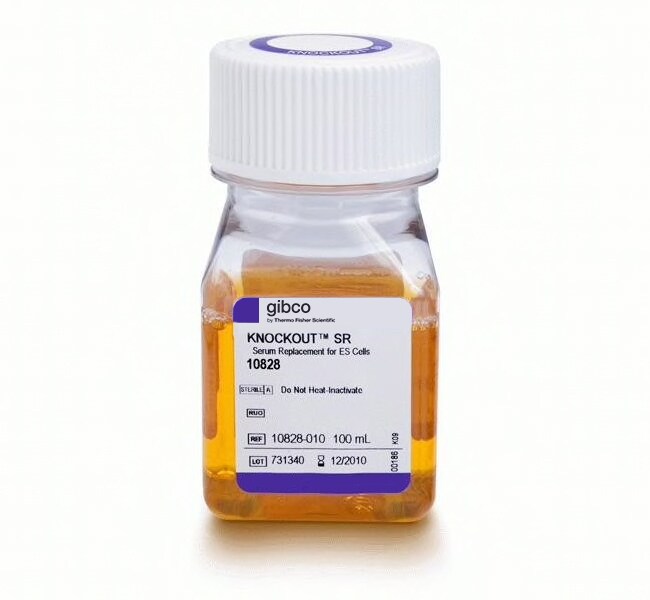
KnockOut™ Serum Replacement
Gibco™ KnockOut™ Serum Replacement (KnockOut™ SR)는 조성이 잘 알려진 FBS-free 배지 보충제로서 fibroblast feeder cell 상에서 배양되는 pluripotent stem cells자세히 알아보기
Have Questions?
보기 방식 변경

| 카탈로그 번호 | 수량 |
|---|---|
| 10828010 | 100 mL |
| 10828028 | 500 mL |
카탈로그 번호 10828010
제품 가격(KRW)
153,000
Online offer
Ends: 30-Sep-2026
169,000할인액 16,000 (9%)
Each
수량:
100 mL
제품 가격(KRW)
153,000
Online offer
Ends: 30-Sep-2026
169,000할인액 16,000 (9%)
Each
Gibco™ KnockOut™ Serum Replacement (KnockOut™ SR)는 조성이 잘 알려진 FBS-free 배지 보충제로서 fibroblast feeder cell 상에서 배양되는 pluripotent stem cells (PSCs)의 성장을 지원합니다. 기존 프로토콜에서 fetal bovine serum(FBS)을 대체하기 위해 고안된 이 혈청 대체제는 거의 20년 동안 수많은 사용자들의 신뢰를 받고 있습니다. KnockOut SR은 규정 준수 검토에 필요한 문서를 제공하기 때문에 연구에서 임상 응용 분야로 전환시 시약을 검증해야 하는 부담을 덜어 줍니다. 기초 연구 응용 분야에만 관심이 있는 경우 이 제품의 연구 전용 버전 을 사용하면 요구에 맞는 기능을 유리한 가격으로 제공받을 수 있습니다.
KnockOut Serum Replacement의 장점:
• 확실한 feeder-dependent PSCs 배양
• 향상된 성능을 가진 검증된 FBS-free 조성
• FBS에 비해 더욱 안정적인 가격 및 공급
확실한 PSC 배양
KnockOut SR은 2000 건이 넘는 문헌에서 인용되었으며 embryonic stem cells (ESCs) 및 induced pluripotent stem cells (iPSCs)의 feeder-dependent 배양을 지원합니다. 또한 reprogramming, embryoid body (EB) 형성, in vitro 분화, 극저온 보존, ESC 유도 및 다른 많은 응용 분야를 지원합니다.
향상된 성능
KnockOut SR은 조성이 규정되지 않고 변동이 많은 성분을 포함하는 FBS에 비해 조성이 더욱 잘 규정되어 있습니다. 대부분의 FBS 제품과는 달리 각각의 로트(lot)는 PSC를 지원하는 능력이 테스트됩니다. 이로 인해 KnockOut SR을 사용한 PSC의 배양은 FBS에 비해 더 낮은 분화와 더 밀집된 콜로니(colony) 형태를 얻을 수 있습니다.
안정적인 가격과 공급
KnockOut SR은 FBS 제품에서는 흔한 제한된 공급과 가격의 변동성에 의한 영향을 받지 않습니다. 특히 대부분의 FBS 제품에 비해 더욱 경제적이기 때문에 예산 편성이 더 쉽고 원하는 제품을 쉽게 구입할 수 있습니다.
이 시약은 일부 국가에서 의료기기로 분류됩니다. 의료기기로 규제되지 않는 지역에서는 실험실 용도로만 사용해야 합니다.
본 제품은 냉장/냉동제품으로 반송된 제품은 전량 폐기 처리 되오니 주문 전 상세 내용 다시 한번 확인 부탁드립니다.
KnockOut Serum Replacement의 장점:
• 확실한 feeder-dependent PSCs 배양
• 향상된 성능을 가진 검증된 FBS-free 조성
• FBS에 비해 더욱 안정적인 가격 및 공급
확실한 PSC 배양
KnockOut SR은 2000 건이 넘는 문헌에서 인용되었으며 embryonic stem cells (ESCs) 및 induced pluripotent stem cells (iPSCs)의 feeder-dependent 배양을 지원합니다. 또한 reprogramming, embryoid body (EB) 형성, in vitro 분화, 극저온 보존, ESC 유도 및 다른 많은 응용 분야를 지원합니다.
향상된 성능
KnockOut SR은 조성이 규정되지 않고 변동이 많은 성분을 포함하는 FBS에 비해 조성이 더욱 잘 규정되어 있습니다. 대부분의 FBS 제품과는 달리 각각의 로트(lot)는 PSC를 지원하는 능력이 테스트됩니다. 이로 인해 KnockOut SR을 사용한 PSC의 배양은 FBS에 비해 더 낮은 분화와 더 밀집된 콜로니(colony) 형태를 얻을 수 있습니다.
안정적인 가격과 공급
KnockOut SR은 FBS 제품에서는 흔한 제한된 공급과 가격의 변동성에 의한 영향을 받지 않습니다. 특히 대부분의 FBS 제품에 비해 더욱 경제적이기 때문에 예산 편성이 더 쉽고 원하는 제품을 쉽게 구입할 수 있습니다.
이 시약은 일부 국가에서 의료기기로 분류됩니다. 의료기기로 규제되지 않는 지역에서는 실험실 용도로만 사용해야 합니다.
본 제품은 냉장/냉동제품으로 반송된 제품은 전량 폐기 처리 되오니 주문 전 상세 내용 다시 한번 확인 부탁드립니다.
For research use only. Not for use in diagnostic procedures.
사양
세포 유형Stem Cells (Embryonic)
분류Serum-Free
배양 유형Mammalian Cell Culture
용도(애플리케이션)Clinical Research, Translational Research
제조 품질cGMP for medical devices, 21 CFR Part 820 and ISO 13485
제품라인KnockOut
순도 또는 품질 등급ES Cell-Qualified
혈청 수준Serum-Free
유통 기한18 Months
배송 조건Dry Ice
종Serum-Free
테스트됨Growth Performance Assay
형태Frozen
제품 유형Serum Replacement
수량100 mL
pH6 to 8
Unit SizeEach
구성 및 보관
Store in freezer (-5 to -20°C) and protect from light.
자주 묻는 질문(FAQ)
Can KnockOut SR be used to culture mouse ESCs in feeder-free conditions?
Can KnockOut SR be used to culture mouse ESCs on feeder cells?
How do I characterize human embryonic stem ( ES) cells?
How are human embryonic stem (ES) cells derived?
What are ES cells?
인용 및 참조 문헌 (1)
인용 및 참조 문헌
Abstract
Effects of an indole derivative on cell proliferation, transfection, and alternative splicing in production of lentiviral vectors by transient co-transfection.
Journal:PloS one
PubMed ID:38833479
Lentiviral vectors derived from human immunodeficiency virus type I are widely used to deliver functional gene copies to mammalian cells for research and gene therapies. Post-transcriptional splicing of lentiviral vector transgene in transduced host and transfected producer cells presents barriers to widespread application of lentiviral vector-based therapies. The present study