Search


인용 및 참조 문헌 (30)
Invitrogen™
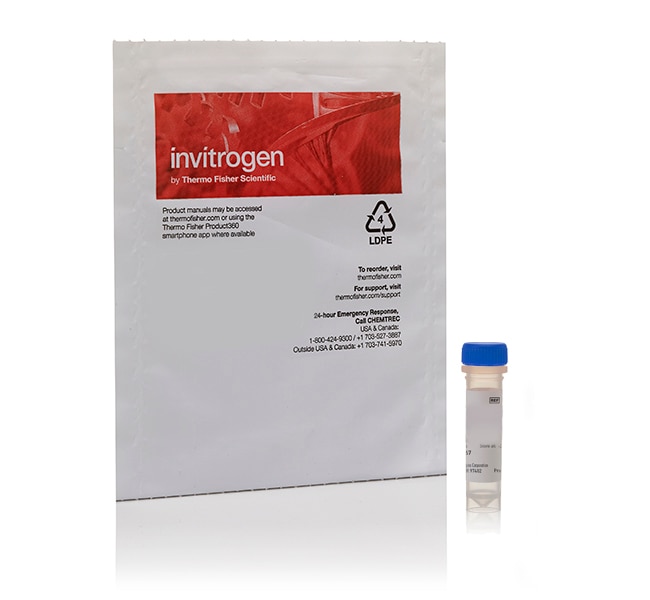
HPF (Hydroxyl Radical and Peroxynitrite Sensor)
Two indicators that together can selectively detect hypochlorite anion
| 카탈로그 번호 | 수량 |
|---|---|
| H36004 | 470 μL |
카탈로그 번호 H36004
제품 가격(KRW)
918,000
線上優惠
Ends: 31-Dec-2026
1,019,000할인액 101,000 (10%)
Each
수량:
470 μL
제품 가격(KRW)
918,000
線上優惠
Ends: 31-Dec-2026
1,019,000할인액 101,000 (10%)
Each
Aminophenyl fluorescein (APF, A36003) and hydroxyphenyl fluorescein (HPF), two reactive oxygen species (ROS) indicators developed by T. Nagano, offer greater specificity and stability than dichlorodihydrofluorescein diacetate (H2DCFDA, D399). APF and HPF show limited non-selective reactivity and relatively high resistance to light-induced oxidation. Both of these new fluorescein derivatives are nonfluorescent until they react with the hydroxyl radical or peroxynitrite anion; APF will also react with the hypochlorite anion. Together, these two ROS indicators can selectively detect hypochlorite anion. Upon oxidation, both APF and HPF exhibit bright green fluorescence (excitation/ emission maxima ∼490/515 nm), making them compatible with any instrument that can detect fluorescein.
For Research Use Only. Not for use in diagnostic procedures.
사양
용도(애플리케이션)ROS
수량470 μL
검출 방법Fluorescence
방출 파장 범위515 nm
Excitation Wavelength Range490 nm
제품 유형ROS Indicator
Unit SizeEach
인용 및 참조 문헌 (30)
인용 및 참조 문헌
Abstract
Measuring reactive species and oxidative damage in vivo and in cell culture: how should you do it and what do the results mean?
Journal:Br J Pharmacol
PubMed ID:15155533
'Free radicals and other reactive species (RS) are thought to play an important role in many human diseases. Establishing their precise role requires the ability to measure them and the oxidative damage that they cause. This article first reviews what is meant by the terms free radical, RS, antioxidant, oxidative
Externally applied pressure activates pancreatic stellate cells through the generation of intracellular reactive oxygen species.
Journal:Am J Physiol Gastrointest Liver Physiol
PubMed ID:17761838
'Local tissue pressure is higher in chronic pancreatitis than in the normal pancreas. We reported recently that pressure application induces synthesis of extracellular matrix (ECM) and cytokines in pancreatic stellate cells (PSCs) and that epigallocatechin gallate (EGCG), a potent antioxidant, inhibits the transformation of PSCs from quiescent to activated phenotype
The detection and quantification of highly reactive oxygen species using the novel HPF fluorescence probe in a rat model of focal cerebral ischemia.
Journal:Neurosci Res
PubMed ID:16168507
'A novel fluorescence probe, 2-[6-(4''-hydroxy) phenoxy-3H-xanthen-3-on-9-yl] benzoic acid (HPF) was used to investigate the generation of highly reactive oxygen species (hROS) under ischemia both in vitro and in vivo. In the in vitro study, HT 22 cells were used to demonstrate that was predominantly detected in the cytoplasm, which coincides
Time to fatigue is increased in mouse muscle at 37 degrees C; the role of iron and reactive oxygen species.
Journal:J Physiol
PubMed ID:19470779
'Studies exploring the rate of fatigue in isolated muscle at 37 degrees C have produced mixed results. In the present study, muscle fibre bundles from the mouse foot were used to study the effect of temperature on the rate of muscle fatigue. Provided iron was excluded from the solutions, time
Fluorescence probes used for detection of reactive oxygen species.
Journal:J Biochem Biophys Methods
PubMed ID:16297980
'Endogenously produced pro-oxidant reactive species are essential to life, being involved in several biological functions. However, when overproduced (e.g. due to exogenous stimulation), or when the levels of antioxidants become severely depleted, these reactive species become highly harmful, causing oxidative stress through the oxidation of biomolecules, leading to cellular damage