Search

Thermo Scientific™
Boyas flotantes, para dispositivos de diálisis Slide-A-Lyzer™ MINI de 0,1 ml
Los flotadores de los dispositivos de diálisis Thermo Scientific Slide-A-Lyzer MINI son balsas de polietileno de baja densidad (LPDE) diseñadasMás información
| Número de catálogo | Cantidad |
|---|---|
| 69588 | 4 boyas |
Número de catálogo 69588
Precio (MXN)
-
Cantidad:
4 boyas
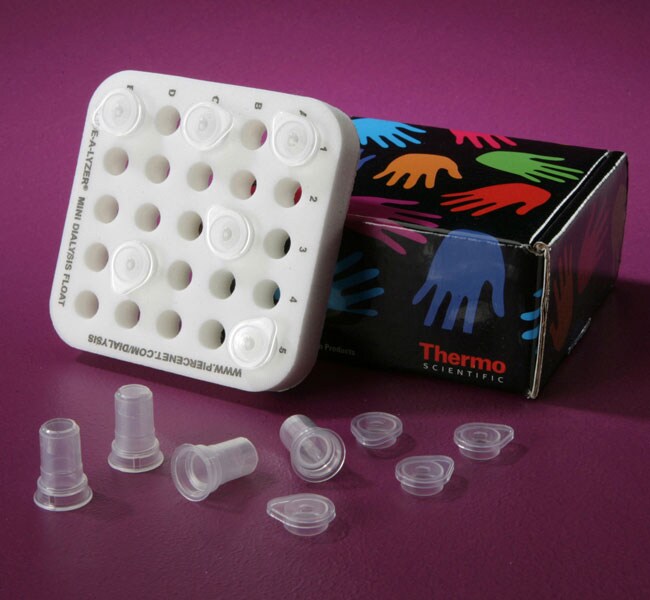
Los flotadores de los dispositivos de diálisis Thermo Scientific Slide-A-Lyzer MINI son balsas de polietileno de baja densidad (LPDE) diseñadas que pueden albergar de forma segura hasta 25 dispositivos de diálisis Slide-A-Lyzer MINI de 0,1 ml para permitir la diálisis de conjuntos.
Características de boyas de flotación para dispositivos de diálisis Slide-A-Lyzer MINI de 0,1 ml:
• Formato flexible: permite al usuario hacer diálisis en una sola muestra (tubo) o en varias (conjunto de 25).
• Reutilizable: la estructura de polietileno de baja densidad (LPDE) inerte es compatible con la mayoría de las condiciones acuosas de tampón; los flotadores se pueden lavar y reutilizar muchas veces.
• Indexado: las marcas de columna y fila fáciles de leer hacen que sea fácil realizar un seguimiento de la identidad de las diferentes muestras.
Los flotadores del dispositivo de diálisis Slide-A-Lyzer MINI tienen marcadas las filas (A a E) y las columnas (1 a 5) para facilitar el seguimiento de muestras individuales. Estos flotadores están diseñados para contener dispositivos de diálisis Slide-A-Lyzer MINI (solo de 0,1 ml), cuyas superficies inferiores son una interfaz de diálisis compuesta por una barrera de membrana de celulosa. El flotador sostiene los dispositivos de modo que las partes inferiores entren en contacto con la solución en la que flotan para la diálisis. Aunque los flotadores pueden usarse como flotadores en depósitos de agua para tubos de microcentrífugas, no están diseñados ni recomendados para este propósito, y el material LPDE no es adecuado para su uso a temperaturas superiores a 50 °C.
Productos relacionados
Dispositivo de diálisis Slide-A-Lyzer™ MINI, MWCO de 10.000, 0,1 ml
Dispositivo de diálisis Slide-A-Lyzer™ MINI, MWCO de 20.000, 0,1 ml
Dispositivo de diálisis Slide-A-Lyzer™ MINI, MWCO de 2000, 0,1 ml
Dispositivo de diálisis Slide-A-Lyzer™ MINI, MWCO de 3500, 0,1 ml
Dispositivo de diálisis Slide-A-Lyzer™ MINI, MWCO de 7000, 0,1 ml
Características de boyas de flotación para dispositivos de diálisis Slide-A-Lyzer MINI de 0,1 ml:
• Formato flexible: permite al usuario hacer diálisis en una sola muestra (tubo) o en varias (conjunto de 25).
• Reutilizable: la estructura de polietileno de baja densidad (LPDE) inerte es compatible con la mayoría de las condiciones acuosas de tampón; los flotadores se pueden lavar y reutilizar muchas veces.
• Indexado: las marcas de columna y fila fáciles de leer hacen que sea fácil realizar un seguimiento de la identidad de las diferentes muestras.
Los flotadores del dispositivo de diálisis Slide-A-Lyzer MINI tienen marcadas las filas (A a E) y las columnas (1 a 5) para facilitar el seguimiento de muestras individuales. Estos flotadores están diseñados para contener dispositivos de diálisis Slide-A-Lyzer MINI (solo de 0,1 ml), cuyas superficies inferiores son una interfaz de diálisis compuesta por una barrera de membrana de celulosa. El flotador sostiene los dispositivos de modo que las partes inferiores entren en contacto con la solución en la que flotan para la diálisis. Aunque los flotadores pueden usarse como flotadores en depósitos de agua para tubos de microcentrífugas, no están diseñados ni recomendados para este propósito, y el material LPDE no es adecuado para su uso a temperaturas superiores a 50 °C.
Productos relacionados
Dispositivo de diálisis Slide-A-Lyzer™ MINI, MWCO de 10.000, 0,1 ml
Dispositivo de diálisis Slide-A-Lyzer™ MINI, MWCO de 20.000, 0,1 ml
Dispositivo de diálisis Slide-A-Lyzer™ MINI, MWCO de 2000, 0,1 ml
Dispositivo de diálisis Slide-A-Lyzer™ MINI, MWCO de 3500, 0,1 ml
Dispositivo de diálisis Slide-A-Lyzer™ MINI, MWCO de 7000, 0,1 ml
For Research Use Only. Not for use in diagnostic procedures.
Especificaciones
Capacidad (métrico)0,1 mL
MembranaMembrana de celulosa, diálisis
Línea de productosSlide-A-Lyzer
Cantidad4 boyas
FormatoCopa
Unit SizeEach
Contenido y almacenamiento
Almacenar a temperatura ambiente.