Search


Citas y referencias (4)
Invitrogen™
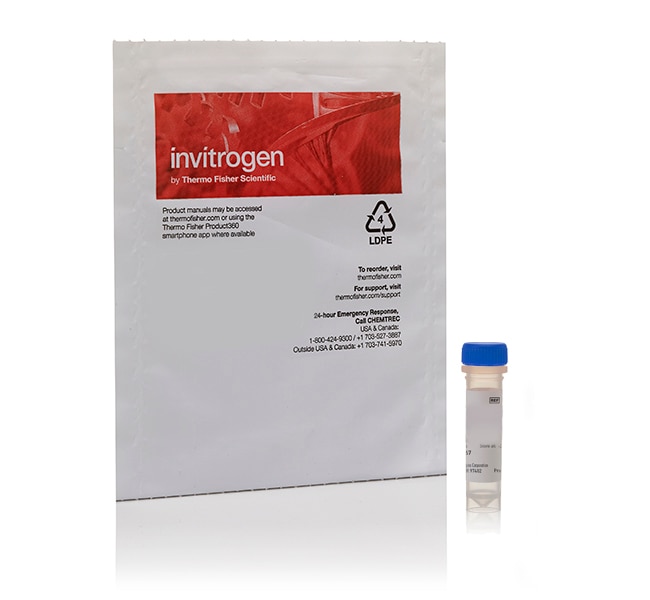
Alexa Fluor™ 647 Hydrazide
La hidrazida Alexa Fluor™ 647 es útil como trazador de células y como tinte reactivo para etiquetar aldehídos o cetonasMás información
| Número de catálogo | Cantidad |
|---|---|
| A20502 | 1 mg |
Número de catálogo A20502
Precio (MXN)
-
Cantidad:
1 mg
La hidrazida Alexa Fluor™ 647 es útil como trazador de células y como tinte reactivo para etiquetar aldehídos o cetonas en polisacáridos y glicoproteínas. Alexa Fluor™ 647 es un colorante con fluorescencia rojo lejano brillante y una excitación adaptada idealmente para la línea de láser de 633 nm. El tinte Alexa Fluor™ 647, empleado para la generación estable de señales para la obtención de imágenes en citometría de flujo, es soluble en agua e insensible al pH entre pH 4 y pH 10. Además de las formulaciones de colorante reactivo, ofrecemos el colorante Alexa Fluor™ 647 conjugado con una serie de anticuerpos, péptidos, proteínas, marcadores y sustratos de amplificación optimizados para la detección y el etiquetado celular (más información).
Información detallada acerca de esta hidracida Alexa Fluor™:
• Etiqueta de fluoróforo: Clorante Alexa Fluor™ 647
• Grupo reactivo: hidrazida
• Reactividad: Aldehídos o cetonas en polisacáridos y glicoproteínas
• Ex/em del conjugado: 649/666 nm
• Coeficiente de extinción: 250 000 cm - 1M - 1
• Colorantes espectralmente similares: APC, Cy5
• Peso molecular: ∼1200
Aplicaciones de seguimiento y rastreo de células
Las hidroxilaminas y las hidrazidas Alexa Fluor™ son útiles como trazadores de células de bajo peso molecular, que no penetran en la membrana y con fijación de aldehídos, que presentan fluorescencia brillante y mayor fotoestabilidad que los rastreadores celulares derivados de otros fluoróforos espectralmente similares. Estos se cargan fácilmente en células mediante microinyección, infusión con pipeta de parche o inducidos por absorción mediante nuestro reactivo de carga de célula pinocítica Influx™. Obtenga más información acerca del seguimiento y rastreo de células.
Aplicaciones de etiquetado de glicoproteínas y polisacáridos
Las hidroxilaminas y las hidrazidas Alexa Fluor™ son moléculas reactivas que se pueden usar para añadir una etiqueta fluorescente a biomoléculas que contienen aldehídos o cetonas. Los aldehídos y las cetonas se pueden introducir en los polisacáridos y las glicoproteínas mediante oxidación y cetonas pueden ser introducidas en polisacáridos y glicoproteínas mediante oxidación con periodato de dioles vecinales. La galactosa oxidasa también se puede utilizar para oxidar los residuos de galactosa terminal de las glucoproteínas a los aldehídos.
Hidracida frente a hidroxilamina
Los derivados de la hidracina reaccionan con cetonas y aldehídos para producir hidracinas relativamente estables. Los derivados de la hidroxilamina (compuestos aminoácidos) reaccionan con los aldehídos y las cetonas para producir oximas. Las oximas son superiores a las hidrazonas con respecto a la estabilidad hidrolítica. Tanto las hidrazonas como las oximas pueden reducirse con el borohidruro de sodio (NaBH4) para aumentar aún más la estabilidad del enlace.
Más información sobre el etiquetado de proteínas y anticuerpos
Ofrecemos una amplia selección de kits de etiquetado de proteínas y anticuerpos Molecular Probes™ para adaptarse a su material inicial y a su configuración experimental. Consulte nuestros kits de etiquetado de anticuerpos o utilice nuestra herramienta de selección química de etiquetado para otras opciones. Para obtener más información acerca de nuestros kits de marcado, lea la sección 1.2 sobrekits para marcado de proteínas y ácidos nucleicos del manual de Molecular Probes™.
Creamos conjugados personalizados
Si no encuentra lo que busca en nuestro catálogo en línea, le prepararemos el conjugado de anticuerpos o proteínas que desee. Nuestro servicio de conjugación personalizada es eficiente y confidencial, y garantizamos la calidad de nuestro trabajo. Contamos con la certificación ISO 9001:2000.
Productos relacionados
DMSO (dimetilsulfóxido) (D12345)
Kit de purificación de conjugado de anticuerpos de 0,5 a 1 mg (A33086)
Kit de purificación de conjugado de anticuerpos de 20 a 50 μg (A33087)
Kit de purificación de conjugado de anticuerpos de 50 a 100 μg (A33088)
Información detallada acerca de esta hidracida Alexa Fluor™:
• Etiqueta de fluoróforo: Clorante Alexa Fluor™ 647
• Grupo reactivo: hidrazida
• Reactividad: Aldehídos o cetonas en polisacáridos y glicoproteínas
• Ex/em del conjugado: 649/666 nm
• Coeficiente de extinción: 250 000 cm - 1M - 1
• Colorantes espectralmente similares: APC, Cy5
• Peso molecular: ∼1200
Aplicaciones de seguimiento y rastreo de células
Las hidroxilaminas y las hidrazidas Alexa Fluor™ son útiles como trazadores de células de bajo peso molecular, que no penetran en la membrana y con fijación de aldehídos, que presentan fluorescencia brillante y mayor fotoestabilidad que los rastreadores celulares derivados de otros fluoróforos espectralmente similares. Estos se cargan fácilmente en células mediante microinyección, infusión con pipeta de parche o inducidos por absorción mediante nuestro reactivo de carga de célula pinocítica Influx™. Obtenga más información acerca del seguimiento y rastreo de células.
Aplicaciones de etiquetado de glicoproteínas y polisacáridos
Las hidroxilaminas y las hidrazidas Alexa Fluor™ son moléculas reactivas que se pueden usar para añadir una etiqueta fluorescente a biomoléculas que contienen aldehídos o cetonas. Los aldehídos y las cetonas se pueden introducir en los polisacáridos y las glicoproteínas mediante oxidación y cetonas pueden ser introducidas en polisacáridos y glicoproteínas mediante oxidación con periodato de dioles vecinales. La galactosa oxidasa también se puede utilizar para oxidar los residuos de galactosa terminal de las glucoproteínas a los aldehídos.
Hidracida frente a hidroxilamina
Los derivados de la hidracina reaccionan con cetonas y aldehídos para producir hidracinas relativamente estables. Los derivados de la hidroxilamina (compuestos aminoácidos) reaccionan con los aldehídos y las cetonas para producir oximas. Las oximas son superiores a las hidrazonas con respecto a la estabilidad hidrolítica. Tanto las hidrazonas como las oximas pueden reducirse con el borohidruro de sodio (NaBH4) para aumentar aún más la estabilidad del enlace.
Más información sobre el etiquetado de proteínas y anticuerpos
Ofrecemos una amplia selección de kits de etiquetado de proteínas y anticuerpos Molecular Probes™ para adaptarse a su material inicial y a su configuración experimental. Consulte nuestros kits de etiquetado de anticuerpos o utilice nuestra herramienta de selección química de etiquetado para otras opciones. Para obtener más información acerca de nuestros kits de marcado, lea la sección 1.2 sobrekits para marcado de proteínas y ácidos nucleicos del manual de Molecular Probes™.
Creamos conjugados personalizados
Si no encuentra lo que busca en nuestro catálogo en línea, le prepararemos el conjugado de anticuerpos o proteínas que desee. Nuestro servicio de conjugación personalizada es eficiente y confidencial, y garantizamos la calidad de nuestro trabajo. Contamos con la certificación ISO 9001:2000.
Productos relacionados
DMSO (dimetilsulfóxido) (D12345)
Kit de purificación de conjugado de anticuerpos de 0,5 a 1 mg (A33086)
Kit de purificación de conjugado de anticuerpos de 20 a 50 μg (A33087)
Kit de purificación de conjugado de anticuerpos de 50 a 100 μg (A33088)
Para uso exclusivo en investigación. No apto para uso en procedimientos diagnósticos.
Especificaciones
Reactividad químicaÁcido carboxílico, cetona, aldehído
Emisión666 nm
Excitación649 nm
Etiqueta o tinteAlexa Fluor™ 647
Tipo de productoHidracida
Cantidad1 mg
Fracción reactivaAmina, hidracida
Condiciones de envíoTemperatura ambiente
Tipo de etiquetaColorantes Alexa Fluor
Línea de productosAlexa Fluor
Unit SizeEach
Contenido y almacenamiento
Almacenar a temperatura ambiente y proteger de la luz.
Preguntas frecuentes
What dye can I use that is non-reactive and can show an injection site?
I injected a fluorescent tracer, but cannot detect it after tissue is fixed and sectioned. What am I doing wrong?
I have labeled my neurons with an Alexa Fluor conjugated biocytin to look at transport but I wanted to examine only retrograde transport and biocytin appears to be moving retrograde and anterograde. What should I do?
Do you have a neuronal tracer similar to Lucifer Yellow but in another fluorescent color?
How do I know which tracer to choose for my experiment?
Citations & References (4)
Citations & References
Abstract
Zebrafish calls for reinterpretation for the roles of p/q calcium channels in neuromuscular transmission.
Journal:J Neurosci
PubMed ID:23616544
A long-held tenet of neuromuscular transmission is that calcium-dependent neurotransmitter release is mediated by N-type calcium channels in frog but P/Q-type channels in mammals. The N-type assignment in frog is based principally on pharmacological sensitivity to ?-conotoxin GVIA. Our studies show that zebrafish neuromuscular transmission is also sensitive to ?-conotoxin
Conformations of the signal recognition particle protein Ffh from Escherichia coli as determined by FRET.
Journal:J Mol Biol
PubMed ID:16005894
The signal recognition particle (SRP) initiates the co-translational targeting of proteins to the plasma membrane in bacteria by binding to the N-terminal signal sequence emerging from the translating ribosome. SRP in Escherichia coli is composed of one protein, Ffh, and 4.5S RNA. In the present work, we probe the structure
Selective release of molecules from Weibel-Palade bodies during a lingering kiss.
Journal:Blood
PubMed ID:18252862
Exocytosis of specialized endothelial cell secretory organelles, Weibel-Palade bodies (WPBs), is thought to play an important role in regulating hemostasis and intravascular inflammation. The major WPB core proteins are Von Willebrand factor (VWF) and its propolypeptide (Proregion), constituting more than 95% of the content. Although the composition of the WPBs
Differential regulation of macropinocytosis by Abi1/Hssh3bp1 isoforms.
Journal:PLoS One
PubMed ID:20479892
BACKGROUND: Macropinocytosis, which is a constitutive cellular process of fluid and macromolecule uptake, is regulated by actin cytoskeleton rearrangements near the plasma membrane. Activation of Rac1, which is proposed to act upstream of the actin polymerization regulatory Wave 2 complex, has been found to correlate with enhanced macropinocytosis. One of