Search


Citas y referencias (43)
Invitrogen™
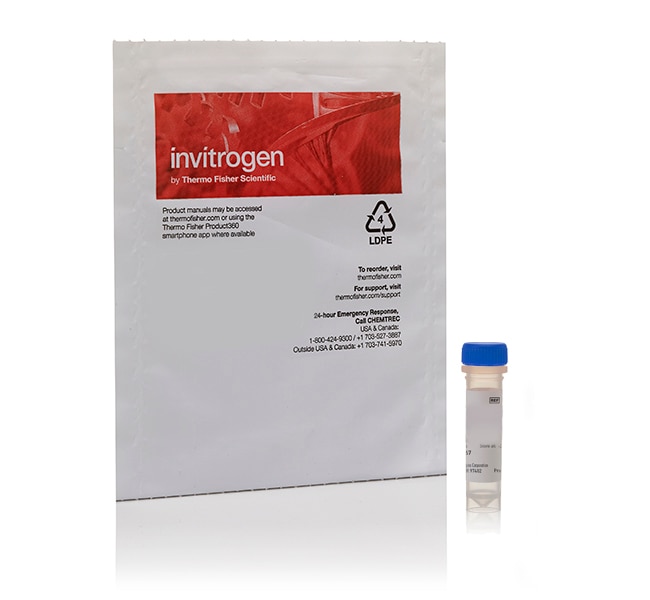
FluoZin™-3, AM, con permeabilidad celular
El indicador FluoZin™-3 es un indicador selectivo Zn2+- con una estructura similar a fluo-4. FluoZin™-3 muestra una alta afinidad deMás información
| Número de catálogo | Cantidad |
|---|---|
| F24195 | 100 μg |
Número de catálogo F24195
Precio (MXN)
-
Cantidad:
100 μg
El indicador FluoZin™-3 es un indicador selectivo Zn2+- con una estructura similar a fluo-4. FluoZin™-3 muestra una alta afinidad de unión Zn2+-que no se ve perturbada por concentraciones de Ca2+ de hasta menos de 1 µM. Además, muestra un aumento FluoZin™-3 > 50 veces mayor de fluorescencia en respuesta a los niveles de saturación de Zn2+. Aunque las aplicaciones de imágenes de FluoZin™-3 son predominantes, también se han desarrollado ensayos de microplaca basados en células y protocolos de citometría de flujo. El indicador FluoZin™-3 está disponible en un formato con permeabilidad celular.
Obtenga más información sobre los indicadores de iones, incluidos el calcio, el potasio, el pH y los indicadores de potencial de membrana ›
Especificaciones de los indicadores de Zinc fluorescente:
• Etiqueta (Ex/Em): FluoZin™-3 (∼494/516 nm)
• Kd (Zn2+) (en tampón): ∼15 nM
•El producto liofilizado puede disolverse en DMSO para su uso
• El producto normalmente se carga en las células añadiendo un indicador disuelto a células que contengan medios
Encuentre indicadores fluorescentes para el zinc y otros iones metálicos
Ofrecemos una serie de indicadores fluorescentes para determinar las concentraciones de catión polivalente dentro de las células, seguir el transporte de iones metálicos a través de canales iónicos, realizar mediciones en muestras ambientales, y mucho más. Consulte los indicadores fluorescentes para Zn2+ y otros iones metálicos, sección 19.7 en el manual de sondas moleculares™ para obtener más información sobre estos productos.
Para uso exclusivo en investigación. No apto para uso diagnóstico o terapéutico en humanos ni en animales.
Obtenga más información sobre los indicadores de iones, incluidos el calcio, el potasio, el pH y los indicadores de potencial de membrana ›
Especificaciones de los indicadores de Zinc fluorescente:
• Etiqueta (Ex/Em): FluoZin™-3 (∼494/516 nm)
• Kd (Zn2+) (en tampón): ∼15 nM
•El producto liofilizado puede disolverse en DMSO para su uso
• El producto normalmente se carga en las células añadiendo un indicador disuelto a células que contengan medios
Encuentre indicadores fluorescentes para el zinc y otros iones metálicos
Ofrecemos una serie de indicadores fluorescentes para determinar las concentraciones de catión polivalente dentro de las células, seguir el transporte de iones metálicos a través de canales iónicos, realizar mediciones en muestras ambientales, y mucho más. Consulte los indicadores fluorescentes para Zn2+ y otros iones metálicos, sección 19.7 en el manual de sondas moleculares™ para obtener más información sobre estos productos.
Para uso exclusivo en investigación. No apto para uso diagnóstico o terapéutico en humanos ni en animales.
Para uso exclusivo en investigación. No apto para uso en procedimientos diagnósticos.
Especificaciones
Método de detecciónFluorescente
Tipo de coloranteFluoZin-3
Longitud de onda de emisión516 nm
Longitud de onda de excitación494 nm
Peso molecular982.85 g/mol
Cantidad100 μg
Condiciones de envíoTemperatura ambiente
Para utilizar con (aplicación)Zinc Indicator
Para utilizar con (equipo)Microscopio de fluorescencia
Línea de productosFluoZin
Tipo de productoIndicador de zinc
Unit SizeEach
Contenido y almacenamiento
Almacenar en el congelador de -5 °C a -30 °C y proteger de la luz.
Preguntas frecuentes
Why don't I see a significant change in signal for my live-cell fluorescent indicator dye?
Citations & References (43)
Citations & References
Abstract
Demand for Zn2+ in acid-secreting gastric mucosa and its requirement for intracellular Ca2+.
Journal:PLoS One
PubMed ID:21698273
'Recent work has suggested that Zn(2+) plays a critical role in regulating acidity within the secretory compartments of isolated gastric glands. Here, we investigate the content, distribution and demand for Zn(2+) in gastric mucosa under baseline conditions and its regulation during secretory stimulation. Content and distribution of zinc were evaluated
The amyloid precursor protein (APP) of Alzheimer disease and its paralog, APLP2, modulate the Cu/Zn-Nitric Oxide-catalyzed degradation of glypican-1 heparan sulfate in vivo.
Journal:J Biol Chem
PubMed ID:15677459
'Processing of the recycling proteoglycan glypican-1 involves the release of its heparan sulfate chains by copper ion- and nitric oxide-catalyzed ascorbate-triggered autodegradation. The Alzheimer disease amyloid precursor protein (APP) and its paralogue, the amyloid precursor-like protein 2 (APLP2), contain copper ion-, zinc ion-, and heparan sulfate-binding domains. We have investigated
Clioquinol and pyrithione activate TRPA1 by increasing intracellular Zn2+.
Journal:Proc Natl Acad Sci U S A
PubMed ID:19416844
'The antifungal and amoebicidal drug clioquinol (CQ) was withdrawn from the market when it was linked to an epidemic of subacute myelo-optico-neuropathy (SMON). Clioquinol exerts its anti-parasitic actions by acting as a Cu/Zn chelator and ionophore. Here we show that local injections of CQ produce mechanical hyperalgesia and cold hypersensitivity
Intracellular zinc fluctuations modulate protein tyrosine phosphatase activity in insulin/insulin-like growth factor-1 signaling.
Journal:Exp Cell Res
PubMed ID:14644152
'Zinc is an effector of insulin/IGF-1 signaling and has insulinomimetic effects, the molecular basis of which is not understood. The present study establishes the capacity of zinc to inhibit protein tyrosine phosphatases (PTPs) as a cause for these effects and, moreover, demonstrates modulation of the insulin response by changes in
Interleukin-6 regulates the zinc transporter Zip14 in liver and contributes to the hypozincemia of the acute-phase response.
Journal:Proc Natl Acad Sci U S A
PubMed ID:15863613
'Infection and inflammation produce systemic responses that include hypozincemia and hypoferremia. The latter involves regulation of the iron transporter ferroportin 1 by hepcidin. The mechanism of reduced plasma zinc is not known. Transcripts of the two zinc transporter gene families (ZnT and Zip) were screened for regulation in mouse liver