Search



Thermo Scientific™
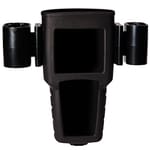
Medidor de conductividad portátil Orion Star™ A122
Tome mediciones sencillas de conductividad, TDS y temperatura con el medidor de conductividad portátil, con un funcionamiento sencillo para las pruebas básicas de campo.
Have Questions?
Cambiar vista

| Número de catálogo | Tipo de sonda |
|---|---|
| STARA1220 | Sensor de conductividad (se vende por separado) |
| STARA1225 | Sensor de conductividad (incluye sensor de conductividad de 2 celdas 011050MD Orion) |
Número de catálogo STARA1220
Precio (MXN)
-
Tipo de sonda:
Sensor de conductividad (se vende por separado)
Realice de forma sencilla mediciones rutinarias de conductividad, sólidos disueltos totales (TDS) y temperatura con el medidor de conductividad portátil Thermo Scientific™ Orion Star™ A122. Este instrumento, diseñado para un análisis básico de conductividad en el campo, es fácil de usar y económico. Obtenga lecturas compensadas de la temperatura con la opción lineal con temperaturas de referencia de 20 o 25 °C. Desplácese rápidamente por los menús de configuración y garantice unas calibraciones uniformes con el sencillo diseño del teclado y las indicaciones de texto de la pantalla. Este medidor resistente al agua tiene una carcasa de clasificación IP67 para una protección sólida en exteriores.
Los medidores de conductividad portátiles Thermo Scientific Orion Star A122 son una solución sencilla y económica para el análisis rutinario de muestras en exteriores. Los medidores de conductividad básicos Orion Star A122 cuentan con una tecla de medida resaltada, modos de lectura seleccionables y un indicador de estabilidad de la medición. Además, proporcionan mediciones en las que puede confiar a un precio asequible.
- Mida conductividad o TDS con temperatura.
- Realice una calibración manual o automática de un punto
- La calibración automática de los valores de conductividad ofrece lecturas uniformes en todo el intervalo de medición
- Utilice la compensación de temperatura lineal con temperaturas de referencia de 20 o 25 °C
- La pantalla simplificada y fácil de leer muestra la medición principal con un indicador de estabilidad y temperatura y un icono de estado del electrodo
- Funcionamiento sencillo con indicaciones de texto de calibración básica
- Recuperación sencilla de datos de calibración para las comprobaciones del procedimiento
- La memoria no volátil conserva el registro de datos interno de 50 puntos y la configuración del medidor, incluso con fallos eléctricos
- Opciones de potencia flexibles con pilas AA o adaptador de alimentación universal opcional
- Carcasa de clasificación IP67 resistente al agua para un funcionamiento sólido en el terreno
- Los kits de medidores incluyen un maletín de campo rígido y una coraza protectora para medidores con soportes de electrodos, cinturón o correa para la muñeca ajustables y soporte del medidor integrado
- Los medidores ofrecen certificaciones CE, TUV 3 en 1, FCC Clase A y garantía de sustitución de 3 años
Exención de responsabilidad de la restricción de uso para investigación interna: cualquier restricción impuesta al comprador para utilizar el producto o productos únicamente para fines de investigación interna no se aplica al producto o productos que aparecen en las páginas web asociadas a esta declaración.
Especificaciones
Adaptador de CAUniversal de 50 a 60 Hz, adaptador de potencia de 100 a 240 VCA (se vende por separado, n.º de cat. 1010003)
Exactitud (conductividad)0,5 % de la lectura ±1 dígito
Exactitud (TDS)0,5 % de la lectura ±1 dígito
Exactitud (temperatura)±0,1 °C
Duración de la batería2.000 horas
Batería, tipo4 AA (incluidas)
CalibraciónConductividad y temperatura
Puntos de calibración (conductividad)1
Constante de celdaDe 0,001 s 10cm-1
Certificaciones/conformidadCE, TUV 3-1, FCC Clase A
Canales1
Sondas compatiblesSensores de conductividad de 2 o 4 celdas con temperatura integrada
Detalles de gestión de datosMemoria interna de punto de datos
DescripciónMedidor portátil de conductividad/TDS Orion Star A122
Dimensiones (Largo x Ancho x Alto)24 x 10 x 6,5 cm (9,5 x 3,9 x 2,6 pulg)
IncluyeMedidor de conductividad Star A122, 4 pilas AA, CD de documentación, guía de inicio rápido impresa y certificado de prueba de medidores
EntradasMiniDIN de 8 pines (sensor de conductividad con temperatura integrada)
TecladoSencillo con llave de medición destacada, desplazamiento y teclas de método abreviado
IdiomasInglés
Tipo de función de registroRegistro automático de datos con modo de medición de lectura automática; registro manual de datos con modo de medición continuo
MemoriaLa memoria no volátil conserva la configuración y el registro
ModeloMedidor portátil de conductividad/TDS/temperatura Orion Star A122
SalidasNinguno
Fuente de alimentación4 pilas AA (incluidas) o adaptador de CA universal (se vende por separado)
Tipo de sondaSensor de conductividad (se vende por separado)
Intervalo de humedad relativaDel 5 al 85% (sin condensación)
Resolución (conductividad)0,01 μS mínimo, intervalo automático de hasta 3 dígitos significativos
Resolución (TDS)1 mg/l
Resolución (temperatura)0,1 °C (0,1 °F)
EstabilidadSmart Stability y Smart Averaging
Intervalo de factor de TDSLineal (de 0,02 a 9,99)
Compensación de la temperaturaLinear
Temperatura de funcionamiento (imperial)De 41° a 113 °F (ambiente)
Temperatura de funcionamiento (métrico)De 5 °C a 45 °C (ambiente)
Temperatura de referencia (métrico)20, 25 °C
Calibración de la sonda de temperaturaCalibración de desviación de la temperatura de 1 punto
Selección de temperaturaManual o automático con sonda ATC de temperatura
TipoPortable Conductivity Meter
GarantíaMedidor de 3 años
Peso (imperial)2 lb
Peso (métrico)0,5 kg
Puntos de datos50
Tipo de pantallaLCD
Clasificación IPIP67
Measurement ModesConductividad o TDS con temperatura, TDS with Temperature
Intervalo (conductividad)De 0,01 μS/cm a 200,0 mS/cm
Intervalo (TDS)1 to 19,999 mg/L
Intervalo de temperatura (métrico)De -5 °C a +105 °C
Unit SizeEach