Search


引用資料與參考文獻 (8)
Invitrogen™
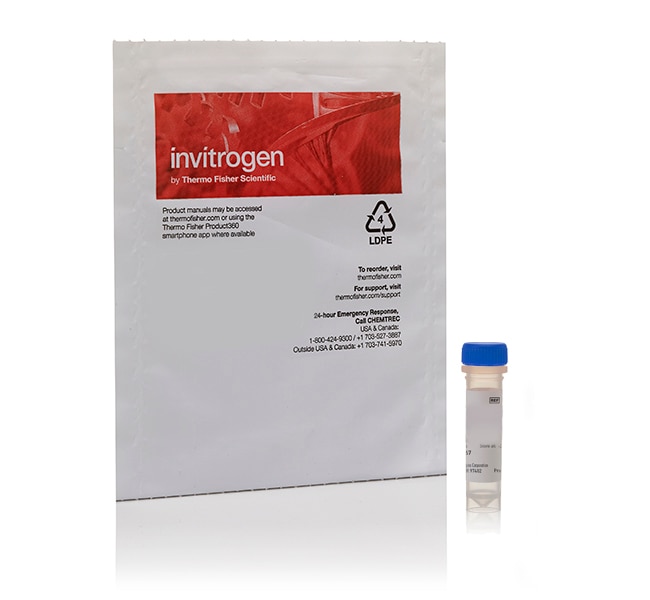
FluoSpheres™ Carboxylate-Modified Microspheres
Achieve the brightest fluorescence with Carboxylate-Modified FluoSphere Microspheres, available in different colors and particle sizes.
Have Questions?
變更視圖

| 產品號碼 | Diameter (Metric) | Color | Excitation/Emission | Quantity |
|---|---|---|---|---|
| F8795 亦稱為 F-8795 | 0.04 μm | Yellow-Green | 505/515 nm | 1 mL |
| F8803 | 0.1 μm | Yellow-Green | 505/515 nm | 10 mL |
| F8816 | 1.0 μm | Crimson | 625/645 nm | 2 mL |
| F8823 | 1.0 μm | Yellow-Green | 505/515 nm | 10 mL |
| F8801 | 0.1 μm | Red | 580/605 nm | 10 mL |
| F8811 | 0.2 μm | Yellow-Green | 505/515 nm | 10 mL |
| F8807 | 0.2 μm | Dark Red | 660/680 nm | 2 mL |
| F10720 | 0.04 μm | Yellow-Green, Orange, Red, Dark Red | 505/515, 540/560, 580/605, 660/680 nm | 1 mL/each |
| F20881 | 0.2 μm | Orange | 365/610 nm | 2 mL |
| F8783 亦稱為 F-8783 | 0.02 μm | Dark Red | 660/680 nm | 2 mL |
| F8786 | 0.02 μm | Red | 580/605 nm | 10 mL |
| F8813 | 0.5 μm | Yellow-Green | 505/515 nm | 10 mL |
| F8820 | 1.0 μm | Orange | 540/560 nm | 10 mL |
| F8825 | 2.0 μm | Nile Red | 535/575 nm | 2 mL |
| F8827 | 2.0 μm | Yellow-Green | 505/515 nm | 2 mL |
| F8781 亦稱為 F-8781 | 0.02 μm | Blue | 365/415 nm | 10 mL |
| F8782 亦稱為 F-8782 | 0.02 μm | Crimson | 625/645 nm | 2 mL |
| F8784 | 0.02 μm | Nile Red | 535/575 nm | 10 mL |
| F8787 | 0.02 μm | Yellow-Green | 505/515 nm | 10 mL |
| F8789 亦稱為 F-8789 | 0.04 μm | Dark Red | 660/680 nm | 1 mL |
| F8792 亦稱為 F-8792 | 0.04 μm | Orange | 540/560 nm | 1 mL |
| F8793 | 0.04 μm | Red | 580/605 nm | 1 mL |
| F8794 | 0.04 μm | Red-Orange | 565/580 nm | 1 mL |
| F8797 | 0.1 μm | Blue | 350/440 nm | 10 mL |
| F8799 | 0.1 μm | Infrared | 715/755 nm | 1 mL |
| F8800 亦稱為 F-8800 | 0.1 μm | Orange | 540/560 nm | 10 mL |
| F8805 | 0.2 μm | Blue | 365/415 nm | 10 mL |
| F8806 | 0.2 μm | Crimson | 625/645 nm | 2 mL |
| F8809 | 0.2 μm | Orange | 540/560 nm | 10 mL |
| F8810 | 0.2 μm | Red | 580/605 nm | 10 mL |
| F8812 | 0.5 μm | Red | 580/605 nm | 10 mL |
| F8814 | 1.0 μm | Blue | 365/415 nm | 10 mL |
| F8815 | 1.0 μm | Blue | 350/440 nm | 10 mL |
| F8819 | 1.0 μm | Nile Red | 535/575 nm | 10 mL |
| F8821 | 1.0 μm | Red | 580/605 nm | 10 mL |
| F8824 亦稱為 F-8824 | 2.0 μm | Blue | 365/415 nm | 2 mL |
| F8826 | 2.0 μm | Red | 580/605 nm | 2 mL |
產品號碼 F8795
亦稱為 F-8795
價格 (TWD)
17,840.00
Online offer
Ends: 31-Dec-2026
22,300.00您節省 4,460.00 (20%)
Each
Diameter (Metric):
0.04 μm
Color:
Yellow-Green
Excitation/Emission:
505/515 nm
Quantity:
1 mL
價格 (TWD)
17,840.00
Online offer
Ends: 31-Dec-2026
22,300.00您節省 4,460.00 (20%)
Each
Easily perform flow cytometry, microscopy, HTS, HCS, immunoassay, and other laboratory applications using our extensive selection of FluoSpheres Carboxylate-Modified Microspheres. FluoSphere beads can be used in passive adsorption or active, covalent coupling of proteins, nucleic acids, and biomolecules for particle capture applications. FluoSphere microspheres are loaded with proprietary fluorescent dyes, making them the brightest microspheres available.
Visualize the brightest fluorescence for laboratoy applications including fluorescence microscopy, flow cytometry, HTS, HCS, and cell tracing with our Carboxylate-Modified FluoSphere Microspheres, which are manufactured from polystyrene microspheres and loaded with different proprietary dyes. Using specialized staining methods enables all of the fluorescent dye molecules to be contained inside each polystyrene microsphere instead of on the bead's surface. This protective environment within the bead shields the dye from detrimental environmental effects, such as photobleaching. Our carboxylate-modified microspheres are coated with a hydrophilic polymer containing multiple carboxylic acids for covalent attachment of ligands. A range of particle sizes is available for different research uses and experiments.
For Research Use Only. Not for use in diagnostic procedures.
規格
Excitation/Emission505/515 nm
Product LineFLUOSPHERES
Quantity1 mL
Surface ModificationCarboxylate
ColorYellow-Green
Diameter (Metric)0.04 μm
For Use With (Application)Fluorescence Microscopy
MaterialPolystyrene
Product TypeCarboxylate-Modified Microsphere
Unit SizeEach
內容物與存放
Store in refrigerator (2°C to 8°C) and protect from light.
常見問答集 (常見問題)
I read that carboxylate-modified latex (CML) beads have a "fluffy coat" of carboxyl groups on their surface. What is meant by this?
I have some FluoSpheres polystyrene microspheres, with 20 nm diameter. They are aggregating a lot. What can I do about it?
I sonicated my 2.0 µm carboxylate-modified microspheres, as recommended, but saw foaming (bubbles) on top of the solution. Should I be concerned?
What is the warranty for FluoSpheres microspheres?
After washing and centrifugation, there was only a very small pellet left of my microsphere beads and the solution was transparent. Why is this?
引用資料與參考文獻 (8)
引用資料與參考文獻
Abstract
Nano-sized fluorescent particles as new tracers for sentinel node detection: experimental model for decision of appropriate size and wavelength.
Journal:Cancer Sci
PubMed ID:15958058
'The concepts of made-to-order and low-invasiveness medicines are becoming widely accepted. A treatment for cancer, with minimum invasive surgery and without lymph nodes dissection based on sentinel lymph node (SN) navigation surgery, would adhere to these concepts. Dyes and/or radioisotopes are employed for SN detection in standard methods, however, each
Why molecules move along a temperature gradient.
Journal:Proc Natl Acad Sci U S A
PubMed ID:17164337
'Molecules drift along temperature gradients, an effect called thermophoresis, the Soret effect, or thermodiffusion. In liquids, its theoretical foundation is the subject of a long-standing debate. By using an all-optical microfluidic fluorescence method, we present experimental results for DNA and polystyrene beads over a large range of particle sizes, salt
Oxidized low-density lipoprotein promotes mature dendritic cell transition from differentiating monocyte.
Journal:J Immunol
PubMed ID:11564795
'Proinflammatory oxidized phospholipids are generated during oxidative modification of low-density lipoproteins (LDL). The production of these proinflammatory oxidized phospholipids is controlled by secreted enzymes that circulate as proteins complexed with LDL and high-density lipoprotein. During the acute phase response to tissue injury, profound changes occur in lipoprotein enzymatic composition that
I5S: wide-field light microscopy with 100-nm-scale resolution in three dimensions.
Journal:Biophys J
PubMed ID:18326649
A new type of wide-field fluorescence microscopy is described, which produces 100-nm-scale spatial resolution in all three dimensions, by using structured illumination in a microscope that has two opposing objective lenses. Illumination light is split by a grating and a beam splitter into six mutually coherent beams, three of which
Determination of absolute protein numbers in single synapses by a GFP-based calibration technique.
Journal:Nat Methods
PubMed ID:16118638
To build a quantitative model of molecular organization of neurons, it is essential to have information about the number of protein molecules at individual synapses. Here we developed a method to estimate absolute numbers of individual proteins at actual excitatory synapses by calibrating the fluorescence intensity of microspheres with single