Search


引用資料與參考文獻 (161)
Invitrogen™
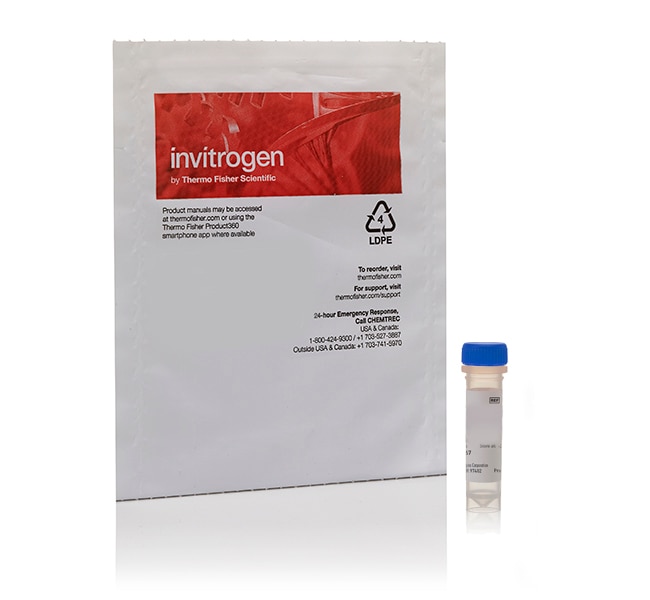
Low Density Lipoprotein from Human Plasma, DiI complex (DiI LDL)
Human low-density lipoprotein (LDL) is large protein complex (∼500,000 Da) that binds to a specific receptor on the surface of深入閱讀
| 產品號碼 | Quantity |
|---|---|
| L3482 | 200 μL |
產品號碼 L3482
價格 (TWD)
17,780.00
Online offer
Ends: 30-Sep-2026
25,400.00您節省 7,620.00 (30%)
Each
Quantity:
200 μL
價格 (TWD)
17,780.00
Online offer
Ends: 30-Sep-2026
25,400.00您節省 7,620.00 (30%)
Each
Human low-density lipoprotein (LDL) is large protein complex (∼500,000 Da) that binds to a specific receptor on the surface of vertebrate cells and delivers cholesterol via receptor-mediated endocytosis—our labeled LDL complexes are useful tools for studying this phenomenon. These experiments are typically performed by adding fluorescently labeled LDL to cultured cells and analyzing them by microscopy or flow cytometry. Alternatively the fluorescently labeled LDL can be injected into test animals, and the distribution of the label can be analyzed after the specified time period. We offer an unlabeled LDL and two classes of labeled LDLs: those containing an unmodified apoprotein (used to study normal cholesterol delivery and internalization) and those with an acetylated (Ac) apoprotein (used to study cell types that express receptors specific for this acetylated version (i.e., endothelial and microglial cells)).
LDL Specifications:
• Label (Ex/Em): Dil (554/571)
• Acetylated: No
• Amount: 200 μL (1.0 mg/mL)
Fresh LDL Produced Continually
We prepare our LDL and AcLDL products from fresh human plasma approximately every two months. The nonacetylated LDL products are shipped within two weeks of their preparation. All acetylated LDL products are available on a continuous basis.
Nonacetylated vs. Acetylated LDL
LDL containing an unmodified apoprotein is used to study normal cholesterol delivery and internalization. If the lysine residues of LDL’s apoprotein have been acetylated, the LDL complex no longer binds to the LDL receptor, but rather is taken up by endothelial and microglial cells that possess “scavenger” receptors specific for that modified form.
Key Applications for Labeled LDL
Some of the many applications for labeled LDL complexes include:
• Counting cell-surface LDL receptors, and analyzing their motion and clustering following internalization
• Quantitating LDL receptor activity in fibroblasts (replacing the radiolabeled LDL assay)
• Investigating LDL expression and identifying LDL receptor deficiencies in various cell lines
For Research Use Only. Not intended for any animal or human therapeutic or diagnostic use.
LDL Specifications:
• Label (Ex/Em): Dil (554/571)
• Acetylated: No
• Amount: 200 μL (1.0 mg/mL)
Fresh LDL Produced Continually
We prepare our LDL and AcLDL products from fresh human plasma approximately every two months. The nonacetylated LDL products are shipped within two weeks of their preparation. All acetylated LDL products are available on a continuous basis.
Nonacetylated vs. Acetylated LDL
LDL containing an unmodified apoprotein is used to study normal cholesterol delivery and internalization. If the lysine residues of LDL’s apoprotein have been acetylated, the LDL complex no longer binds to the LDL receptor, but rather is taken up by endothelial and microglial cells that possess “scavenger” receptors specific for that modified form.
Key Applications for Labeled LDL
Some of the many applications for labeled LDL complexes include:
• Counting cell-surface LDL receptors, and analyzing their motion and clustering following internalization
• Quantitating LDL receptor activity in fibroblasts (replacing the radiolabeled LDL assay)
• Investigating LDL expression and identifying LDL receptor deficiencies in various cell lines
For Research Use Only. Not intended for any animal or human therapeutic or diagnostic use.
For Research Use Only. Not for use in diagnostic procedures.
規格
Concentration1 mg⁄ml
Detection MethodFluorescence
Dye TypeOther Label(s) or Dye(s)
FormLiquid
Quantity200 μL
Shipping ConditionWet Ice
Product TypeSupplement
Unit SizeEach
內容物與存放
Store in refrigerator (2–8°C) and protect from light.
常見問答集 (常見問題)
If the Low Density Lipoprotein (LDL) from Human Plasma was accidentally frozen, can I still use it?
Can I use Low Density Lipoprotein (LDL) from Human Plasma on other species?
引用資料與參考文獻 (161)
引用資料與參考文獻
Abstract
Nobiletin attenuates VLDL overproduction, dyslipidemia, and atherosclerosis in mice with diet-induced insulin resistance.
Journal:Diabetes
PubMed ID:21471511
Increased plasma concentrations of apolipoprotein B100 often present in patients with insulin resistance and confer increased risk for the development of atherosclerosis. Naturally occurring polyphenolic compounds including flavonoids have antiatherogenic properties. The aim of the current study was to evaluate the effect of the polymethoxylated flavonoid nobiletin on lipoprotein secretion
Fluorescent labeling of lipoproteins.
Journal:Methods Enzymol
PubMed ID:3724556
SLAM is a microbial sensor that regulates bacterial phagosome functions in macrophages.
Journal:Nat Immunol
PubMed ID:20818396
'Phagocytosis is a pivotal process by which macrophages eliminate microorganisms after recognition by pathogen sensors. Here we unexpectedly found that the self ligand and cell surface receptor SLAM functioned not only as a costimulatory molecule but also as a microbial sensor that controlled the killing of gram-negative bacteria by macrophages.
Grp78 is involved in retention of mutant low density lipoprotein receptor protein in the endoplasmic reticulum.
Journal:J Biol Chem
PubMed ID:10906332
'The low density lipoprotein (LDL) receptor is responsible for removing the majority of the LDL cholesterol from the plasma. Mutations in the LDL receptor gene cause the disease familial hypercholesterolemia (FH). Approximately 50% of the mutations in the LDL receptor gene in patients with FH lead to receptor proteins that
[Lipid metabolism in retinal pigment epithelium. Possible significance of lipoprotein receptors]
Journal:Ophthalmologe
PubMed ID:10025142
'PURPOSE: The retinal pigment epithelium (RPE) regulates the lipid metabolism of the photoreceptors by catalysis of membrane outer segments and via choriocapillary perfusion is also exposed to the regulation of blood lipid levels. Since the uptake the metabolism of cholesterol are mediated by specific low-density lipoprotein (LDL) receptors, expression and