Search
Invitrogen
TGF beta-1,2,3 Monoclonal Antibody (1D11.16.8), Functional Grade, eBioscience™
{{$productOrderCtrl.translations['antibody.pdp.commerceCard.promotion.promotions']}}
{{$productOrderCtrl.translations['antibody.pdp.commerceCard.promotion.viewpromo']}}
{{$productOrderCtrl.translations['antibody.pdp.commerceCard.promotion.promocode']}}: {{promo.promoCode}} {{promo.promoTitle}} {{promo.promoDescription}}. {{$productOrderCtrl.translations['antibody.pdp.commerceCard.promotion.learnmore']}}
Additional Information:
{{banner.description}}

FIGURE: 1 / 2
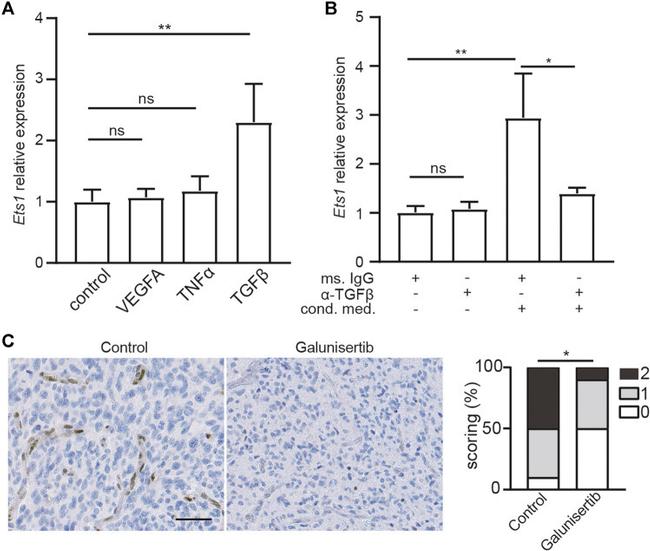
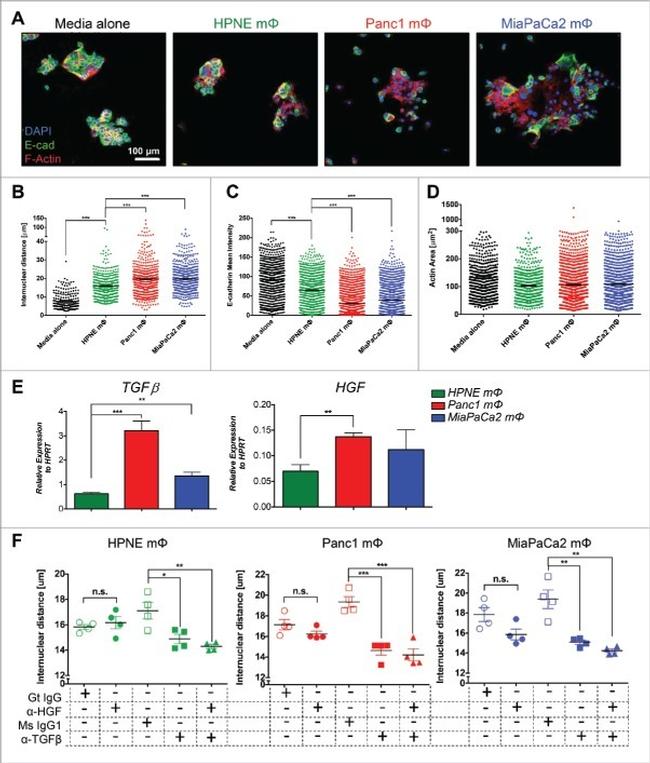
TGF beta-1,2,3 Antibody (16-9243-85) in Neu
Pathology oncology research : POR 2022 -
FIGURE 2 Ets1 upregulation in glioblastoma endothelial cells depend on TGFbeta signaling. (A) RNA levels of Ets1 in bEND.3 cells treated with VEGFA, TNFalpha or TGFbeta (mean + SD of four independent experiments; ** p < 0.01; ANOVA with Tukey's multiple comparisons test). (B) RNA levels of Ets1 in bEND.3 cells treated with conditioned medium from CT-2A glioma cells with TGFbeta neutralizing antibody or cont... View More


Product Details
16-9243-85
Applications
Tested Dilution
Publications
Product Specifications
Species Reactivity
Dog,
Hamster,
Human,
Mouse,
Non-human primate,
Rhesus monkey,
Rat
Published species
Human,
Mouse,
Rat
Host/Isotype
Mouse
/ IgG1
Class
Monoclonal
Type
Antibody
Clone
1D11.16.8
Conjugate
Form
Liquid
Concentration
1 mg/mL
Amount
500 µg
Purification
Affinity chromatography
Storage buffer
PBS, pH 7.2
Contains
no preservative
Storage conditions
4°C
Shipping conditions
Ambient (domestic); Wet ice (international)
RRID
Product Specific Information
Description: The monoclonal antibody 1D11.16.8 recognizes human, mouse, rat, hamster, canine and non-human primate Transforming Growth Factor (TGF) beta 1, 2 and 3. TGF beta is a pleiotropic cytokine that exists as five isoforms (TGF beta 1-5) that share 70-80% homology with each other. However, these isoforms are not homologous to TGF alpha. TGF beta 1 is highly conserved between human, murine, simian, bovine, porcine, and chicken proteins. TGF beta 1 is the most abundant isoform and is ubiquitously expressed by a variety of cell types, including platelets, macrophages, lymphocytes, endothelial cells, chondrocytes, and leukemic cells. However, the other isoforms exhibit a more restricted expression pattern.
TGF beta 1 is synthesized as a long precursor polypeptide, which is cleaved to yield the mature protein and the Latency Associated Peptide (LAP). LAP and mature TGF beta 1 remain non-covalently associated during secretion, forming homodimers known as the Small Latent Complex (SLC). Secretion can be induced by steroids, retinoids, EGF, NGF, vitamin D3, and IL-1. The bioactivity of mature TGF beta 1 is dependent on its release from LAP by conformational changes and proteolytic processing. Its activities include inhibition of cell growth in epithelial cells, endothelial cells, fibroblasts, neurons, lymphoid cells, and other hematopoietic cell types. TGF beta 1 also inhibits the proliferation of T and NK cells, downregulates the activities of activated macrophages, and blocks the anti-tumor activity of IL-2 - bearing lymphokine-activated killer (LAK) cells. Recently, TGF beta 1 has been found to play a critical role in the development of regulatory T cells and act as a costimulatory factor for expression of Foxp3. Dendritic cells exposed to tumors have been reported to secrete TGF beta 1 and stimulate the differntiation of CD4+CD25+ Treg cell from peripheral CD4+CD25- progeny. TGF beta 1-induced regulatory T cells have been termed iTregs.
Applications Reported: This 1D11.16.8 antibody has been reported for use in neutralization assays both in vivo and in vitro and immunohistochemical staining of formalin-fixed paraffin embedded tissue sections.
Storage and handling: Use in a sterile environment.
Filtration: 0.2 µm post-manufacturing filtered.
Purity: Greater than 90%, as determined by SDS-PAGE.
Endotoxin Level: Less than 0.001 ng/µg antibody, as determined by LAL assay.
Aggregation: Less than 10%, as determined by HPLC.
Target Information
TGF-beta1, -2, and -3 are a closely related group of proteins (70-80% sequence homology) that are produced by many cell types and function as growth and differentiation factors. The active forms of TGF-beta1, -2, and -3 are disulfide-linked homodimers.
For Research Use Only. Not for use in diagnostic procedures. Not for resale without express authorization.
Bioinformatics
Protein Aliases: BSC-1 cell growth inhibitor; Cetermin; G-TSF; Glioblastoma-derived T-cell suppressor factor; latency-associated peptide; polyergin; prepro-transforming growth factor beta-1; prepro-transforming growth factor beta-2; prepro-transforming growth factor beta-3; regulatory protein; tgf beta 1; TGF beta 2 protein; tgf beta 3; tgf beta1; TGF-beta 1; TGF-beta-1; TGF-beta-2; TGF-beta-3; TGF-beta3; Transforming growth factor; transforming growth factor beta-1; Transforming growth factor beta-1 proprotein; Transforming growth factor beta-2; Transforming growth factor beta-2 proprotein; Transforming growth factor beta-3; transforming growth factor beta-3 preproprotein; Transforming growth factor beta-3 proprotein; transforming growth factor beta-3-like protein; transforming growth factor beta1; transforming growth factor, beta 1; transforming growth factor, beta 1 (Camurati-Engelmann disease); transforming growth factor, beta 2; transforming growth factor, beta 3; transforming growth factor, beta-1; transforming growth factor-beta 1; transforming growth factor-beta-2 precursor; transforming growth factor-beta3; unnamed protein product
Gene Aliases: ARVD; ARVD1; BB105277; CED; DPD1; EGK_01648; EGK_18402; G-TSF; I79_000092; IBDIMDE; LAP; LDS4; LDS5; RNHF; TGF-B2; TGF-B3; TGF-beta1; TGF-beta2; TGF-beta3; TGFB; Tgfb-1; Tgfb-2; Tgfb-3; TGFB1; TGFB2; TGFB3; TGFbeta; TGFbeta1; TGFbeta2; TGFbeta3
UniProt ID: (Human) P01137, (Human) P61812, (Human) P10600, (Rat) P17246, (Mouse) P04202, (Mouse) P27090, (Rat) Q07257, (Rat) Q07258
Entrez Gene ID: (Human) 7040, (Dog) 403998, (Human) 7042, (Dog) 488596, (Rhesus monkey) 707540, (Human) 7043, (Dog) 490796, (Rhesus monkey) 703239, (Rat) 59086, (Chinese hamster) 100773359, (Mouse) 21803, (Chinese hamster) 100774918, (Mouse) 21808, (Rat) 81809, (Rat) 25717, (Mouse) 21809, (Chinese hamster) 100756831
type II transforming growth factor beta receptor binding
cytokine activity
transforming growth factor beta receptor binding
protein binding
growth factor activity
enzyme binding
type I transforming growth factor beta receptor binding
type III transforming growth factor beta receptor binding
deubiquitinase activator activity
identical protein binding
protein serine/threonine kinase activator activity
macromolecular complex binding
antigen binding
beta-amyloid binding
receptor binding
protein homodimerization activity
transforming growth factor beta binding
glycoprotein binding
protein heterodimerization activity
protein N-terminus binding
receptor signaling protein serine/threonine kinase activity
growth factor
negative regulation of transcription from RNA polymerase II promoter
cell morphogenesis
vasculogenesis
ureteric bud development
response to hypoxia
morphogenesis of a branching structure
cell activation
epithelial to mesenchymal transition
neural tube closure
regulation of sodium ion transport
sprouting angiogenesis
chondrocyte differentiation
columnar/cuboidal epithelial cell maturation
hematopoietic progenitor cell differentiation
connective tissue replacement involved in inflammatory response wound healing
adaptive immune response based on somatic recombination of immune receptors built from immunoglobulin superfamily domains
tolerance induction to self antigen
negative regulation of natural killer cell mediated cytotoxicity directed against tumor cell target
heart valve morphogenesis
aortic valve morphogenesis
protein export from nucleus
ATP biosynthetic process
phosphate-containing compound metabolic process
cellular calcium ion homeostasis
apoptotic process
inflammatory response
transforming growth factor beta receptor signaling pathway
Notch signaling pathway
negative regulation of neuroblast proliferation
salivary gland morphogenesis
endoderm development
heart development
female pregnancy
cell proliferation
positive regulation of cell proliferation
negative regulation of cell proliferation
germ cell migration
response to xenobiotic stimulus
response to wounding
response to glucose
gene expression
regulation of gene expression
positive regulation of vascular endothelial growth factor production
positive regulation of gene expression
negative regulation of gene expression
negative regulation of extracellular matrix disassembly
positive regulation of epithelial to mesenchymal transition
macrophage derived foam cell differentiation
positive regulation of fibroblast migration
negative regulation of macrophage cytokine production
oligodendrocyte development
positive regulation of microglia differentiation
regulation of striated muscle tissue development
neural tube development
hyaluronan catabolic process
T cell differentiation
negative regulation of ossification
negative regulation of cell growth
osteoclast differentiation
regulation of cell migration
positive regulation of cell migration
mammary gland development
organ regeneration
membrane protein intracellular domain proteolysis
positive regulation of protein complex assembly
positive regulation of exit from mitosis
response to estradiol
response to progesterone
regulation of interleukin-23 production
negative regulation of interleukin-17 production
positive regulation of interleukin-17 production
positive regulation of interleukin-6 production
positive regulation of tumor necrosis factor production
receptor catabolic process
positive regulation of superoxide anion generation
mononuclear cell proliferation
regulation of actin cytoskeleton organization
positive regulation of collagen biosynthetic process
response to vitamin D
response to laminar fluid shear stress
response to immobilization stress
myofibroblast differentiation
T cell proliferation
T cell activation
regulation of cell proliferation
negative regulation of T cell proliferation
regulation of protein import into nucleus
positive regulation of protein import into nucleus
odontogenesis of dentin-containing tooth
positive regulation of odontogenesis
myelination
T cell homeostasis
positive regulation of apoptotic process
positive regulation of vascular permeability
positive regulation of I-kappaB kinase/NF-kappaB signaling
surfactant homeostasis
proteasome-mediated ubiquitin-dependent protein catabolic process
positive regulation of MAPK cascade
positive regulation of blood vessel endothelial cell migration
negative regulation of blood vessel endothelial cell migration
regulatory T cell differentiation
cell-cell junction organization
response to ethanol
regulation of regulatory T cell differentiation
positive regulation of regulatory T cell differentiation
negative regulation of cell differentiation
positive regulation of cell differentiation
negative regulation of fat cell differentiation
negative regulation of myoblast differentiation
positive regulation of epidermal growth factor receptor signaling pathway
negative regulation of cell cycle
negative regulation of transcription, DNA-templated
positive regulation of transcription, DNA-templated
positive regulation of transcription from RNA polymerase II promoter
muscle cell cellular homeostasis
positive regulation of fibroblast proliferation
lung alveolus development
positive regulation of isotype switching to IgA isotypes
lymph node development
digestive tract development
negative regulation of skeletal muscle tissue development
positive regulation of smooth muscle cell proliferation
inner ear development
epithelial cell proliferation
positive regulation of epithelial cell proliferation
negative regulation of epithelial cell proliferation
positive regulation of protein secretion
positive regulation of inflammatory response
negative regulation of phagocytosis
defense response to fungus
negative regulation of T cell activation
positive regulation of chemotaxis
positive regulation of cellular component organization
positive regulation of smooth muscle cell differentiation
positive regulation of multicellular organismal process
positive regulation of protein metabolic process
negative regulation of release of sequestered calcium ion into cytosol
neuron apoptotic process
regulation of cell cycle
positive regulation of cell division
positive regulation of protein kinase B signaling
ventricular cardiac muscle tissue morphogenesis
phospholipid homeostasis
canonical Wnt signaling pathway
regulation of blood vessel remodeling
face morphogenesis
frontal suture morphogenesis
positive regulation of SMAD protein import into nucleus
bronchiole development
mammary gland branching involved in thelarche
branch elongation involved in mammary gland duct branching
regulation of branching involved in mammary gland duct morphogenesis
regulation of cartilage development
retina vasculature development in camera-type eye
connective tissue development
Langerhans cell differentiation
negative regulation of biomineral tissue development
regulation of enamel mineralization
lens fiber cell differentiation
positive regulation of ERK1 and ERK2 cascade
response to cholesterol
cellular response to mechanical stimulus
cellular response to glucose stimulus
cellular response to growth factor stimulus
cellular response to low-density lipoprotein particle stimulus
cellular response to hypoxia
cellular response to ionizing radiation
cellular response to dexamethasone stimulus
cellular response to transforming growth factor beta stimulus
positive regulation of mononuclear cell migration
odontoblast differentiation
stem cell proliferation
extracellular matrix assembly
positive regulation of branching involved in ureteric bud morphogenesis
positive regulation of canonical Wnt signaling pathway
extrinsic apoptotic signaling pathway
liver regeneration
cellular response to virus
transforming growth factor beta receptor superfamily signaling pathway
negative regulation of hyaluronan biosynthetic process
positive regulation of protein localization to nucleus
positive regulation of extracellular matrix assembly
response to salt
positive regulation of mesenchymal stem cell proliferation
regulation of miRNA transcription
negative regulation of pri-miRNA transcription from RNA polymerase II promoter
positive regulation of pri-miRNA transcription from RNA polymerase II promoter
negative regulation of protein localization to plasma membrane
positive regulation of vasculature development
positive regulation of STAT cascade
regulation of epithelial to mesenchymal transition involved in endocardial cushion formation
cellular response to acetaldehyde
cellular response to insulin-like growth factor stimulus
embryonic liver development
negative regulation of cell-cell adhesion mediated by cadherin
positive regulation of chemokine (C-X-C motif) ligand 2 production
positive regulation of endothelial cell apoptotic process
positive regulation of primary miRNA processing
positive regulation of stem cell proliferation
positive regulation of cardiac muscle cell differentiation
MAPK cascade
negative regulation of protein phosphorylation
positive regulation of protein phosphorylation
cell cycle arrest
mitotic cell cycle checkpoint
epidermal growth factor receptor signaling pathway
common-partner SMAD protein phosphorylation
SMAD protein complex assembly
positive regulation of peptidyl-threonine phosphorylation
positive regulation of pathway-restricted SMAD protein phosphorylation
cell migration
regulation of transforming growth factor beta receptor signaling pathway
negative regulation of cell-cell adhesion
positive regulation of bone mineralization
lipopolysaccharide-mediated signaling pathway
positive regulation of cellular protein metabolic process
positive regulation of peptidyl-serine phosphorylation
positive regulation of protein dephosphorylation
positive regulation of MAP kinase activity
protein kinase B signaling
positive regulation of phosphatidylinositol 3-kinase activity
ossification involved in bone remodeling
negative regulation of mitotic cell cycle
pathway-restricted SMAD protein phosphorylation
regulation of SMAD protein import into nucleus
cellular response to organic cyclic compound
positive regulation of NAD+ ADP-ribosyltransferase activity
positive regulation of transcription regulatory region DNA binding
skeletal system development
cartilage condensation
blood vessel development
eye development
kidney development
hair follicle development
blood vessel remodeling
heart morphogenesis
outflow tract septum morphogenesis
membranous septum morphogenesis
outflow tract morphogenesis
atrioventricular valve morphogenesis
pulmonary valve morphogenesis
endocardial cushion morphogenesis
cardiac right ventricle morphogenesis
ventricular trabecula myocardium morphogenesis
endocardial cushion fusion
atrial septum primum morphogenesis
neural retina development
activation-induced cell death of T cells
axon guidance
sensory organ development
glial cell migration
male gonad development
embryo development ending in birth or egg hatching
cardioblast differentiation
positive regulation of epithelial cell migration
striated muscle tissue development
negative regulation of angiogenesis
signaling
hemopoiesis
extracellular matrix organization
collagen fibril organization
positive regulation of cell growth
embryonic limb morphogenesis
neutrophil chemotaxis
epithelial cell differentiation
hair follicle morphogenesis
positive regulation of stress-activated MAPK cascade
regulation of transforming growth factor beta2 production
positive regulation of cell adhesion mediated by integrin
ascending aorta morphogenesis
wound healing
dopamine biosynthetic process
odontogenesis
uterine wall breakdown
regulation of apoptotic process
positive regulation of neuron apoptotic process
positive regulation of integrin biosynthetic process
positive regulation of Notch signaling pathway
positive regulation of cell cycle
positive regulation of heart contraction
negative regulation of Ras protein signal transduction
somatic stem cell division
embryonic digestive tract development
neuron fate commitment
neuron development
generation of neurons
positive regulation of immune response
regulation of timing of catagen
positive regulation of catagen
positive regulation of cardioblast differentiation
cardiac muscle cell proliferation
uterus development
cardiac epithelial to mesenchymal transition
ventricular septum morphogenesis
atrial septum morphogenesis
negative regulation of cartilage development
pharyngeal arch artery morphogenesis
secondary palate development
positive regulation of cardiac epithelial to mesenchymal transition
positive regulation of activation-induced cell death of T cells
positive regulation of extracellular matrix disassembly
extrinsic apoptotic signaling pathway in absence of ligand
regulation of apoptotic process involved in outflow tract morphogenesis
regulation of extracellular matrix organization
regulation of complement-dependent cytotoxicity
substantia propria of cornea development
pericyte cell differentiation
cranial skeletal system development
negative regulation of epithelial to mesenchymal transition involved in endocardial cushion formation
positive regulation of epithelial to mesenchymal transition involved in endocardial cushion formation
positive regulation of extrinsic apoptotic signaling pathway in absence of ligand
in utero embryonic development
negative regulation of neuron apoptotic process
positive regulation of filopodium assembly
positive regulation of stress fiber assembly
detection of hypoxia
negative regulation of vascular smooth muscle cell proliferation
positive regulation of occluding junction disassembly
protein import into nucleus, translocation
regulation of cell growth
protein phosphorylation
SMAD protein import into nucleus
aging
negative regulation of DNA replication
response to radiation
defense response to fungus, incompatible interaction
response to organic substance
response to organic cyclic compound
cell growth
evasion or tolerance of host defenses by virus
lung development
positive regulation of histone deacetylation
positive regulation of histone acetylation
response to drug
myeloid dendritic cell differentiation
regulation of MAPK cascade
negative regulation of immune response
positive regulation of NF-kappaB transcription factor activity
regulation of binding
regulation of DNA binding
SMAD protein signal transduction
negative regulation of gene silencing by miRNA
positive regulation of cell cycle arrest
regulation of actin cytoskeleton reorganization
regulation of miRNA metabolic process
CD4-positive, CD25-positive, alpha-beta regulatory T cell lineage commitment
defense response
skeletal muscle tissue development
organ morphogenesis
regulation of CD4-positive, CD25-positive, alpha-beta regulatory T cell differentiation
growth
cell development
T-helper 17 cell lineage commitment
cardiac left ventricle morphogenesis
cell death
negative regulation of alkaline phosphatase activity
positive regulation of phosphatidylinositol 3-kinase signaling
signal transduction by protein phosphorylation
activation of protein kinase activity
intracellular signal transduction
catagen
negative regulation of apoptotic process
response to estrogen
negative regulation of keratinocyte differentiation
embryonic neurocranium morphogenesis
response to cold
response to organonitrogen compound
thyroid gland development
hindbrain development
pancreas development
response to retinoic acid
response to cytokine
positive regulation of ossification
activation of MAPK activity
negative regulation of transforming growth factor beta receptor signaling pathway
regulation of epithelial cell differentiation
regulation of endothelial cell differentiation
positive regulation of DNA replication
regulation of epithelial cell proliferation
palate development
embryo development
Disclaimer

Clicking the images or links will redirect you to a website hosted by BenchSci that provides third-party scientific content. Neither the content nor the BenchSci technology and processes for selection have been evaluated by us; we are providing them as-is and without warranty of any kind, including for use or application of the Thermo Fisher Scientific products presented.

Performance Guarantee
If an Invitrogen™ antibody doesn't perform as described on our website or datasheet,we'll replace the product at no cost to you, or provide you with a credit for a future purchase.*
Learn more
We're here to help
Get expert recommendations for common problems or connect directly with an on staff expert for technical assistance related to applications, equipment and general product use.
Contact tech support