Hamburger Menu Button
Thermo Fisher Scientific Logo
Faça o login
Não tem uma conta? Criar Conta​
  • Produtos
    • Consumíveis de Laboratório
    • Equipamentos de Laboratório
    • Instrumentos de Laboratório
    • Clínica & Diagnóstico
    • Cromatografia
    • Espectrômetria de Massas
    • Cultura Celular
    • Análise Celular
    • Anticorpos
    • Biologia Molecular & Análise de Ácidos Nucleicos
    • Produtos Ácidos Nucleicos Específicos de Sequência
    • Veja todas as categorias de produtos
  • Aplicações
    • Cultura Celular e Transfecção
    • Citometria de Fluxo
    • Pesquisa em Oncologia
    • Cromatografia
    • Sequenciamento
    • PCR
    • Soluções Laboratoriais
    • Diagnóstico de Alergias
    • Veja todas as aplicações e técnicas
  • Serviços
    • Serviços de Instrumentos e Equipamentos de Laboratório
    • Serviços Personalizados
    • Serviços de Treinamento
    • Informática de Laboratório em Nível Empresarial
    • Serviços Financeiros e de Arrendamento
    • CDMO & Serviços de Ensaios Clínicos
    • Veja todas as serviços
  • Ajuda e suporte
    • Cadastre-se em nosso site
    • Como fazer o pedido
    • Entre em Contato Conosco
    • Mudança de Localização do Site
    • Veja todos os tópicos de ajuda e suporte
  • Popular
    • Our Instagram
      Nosso Instagram
    • Our Facebook
      Nosso Facebook
    • Blog Behind the Bench
      Blog Behind the Bench
    • Customer Experience Center (CEC)
      Customer Experience Center (CEC)
    • Ecommerce Exclusives
  • Quem atendemos
    • Setor de Biotecnologia
    • Indústria Biofarmacêutica
    • CDMO
    • Diagnósticos Laboratoriais
    • Ciência Industrial e Aplicada
  • Ofertas especiais
  • Fale Conosco
  • Pedido rápido
  • Documentos e certificados
Thermo Fisher Scientific Logo

Search

Search All
Search button
          • Fale Conosco
          • Pedido rápido
          • Faça o login
            Faça o login
            Não tem uma conta? Criar Conta​
            • Conta
            • Status do pedido
            • Produtos Customizados & Projetos
          • Primary Antibodies ›
          • LC3A/LC3B Antibodies

          Invitrogen

          LC3A/LC3B Polyclonal Antibody

          23 Published Figures
          39 References
          View all (12) LC3A/LC3B antibodies

          {{$productOrderCtrl.translations['antibody.pdp.commerceCard.promotion.promotions']}}

          {{$productOrderCtrl.translations['antibody.pdp.commerceCard.promotion.viewpromo']}}

          {{$productOrderCtrl.translations['antibody.pdp.commerceCard.promotion.promocode']}}: {{promo.promoCode}} {{promo.promoTitle}} {{promo.promoDescription}}. {{$productOrderCtrl.translations['antibody.pdp.commerceCard.promotion.learnmore']}}

          Datasheet
          Certificates
          Protocols
          Questions & Answers
          Tech Support
          Datasheet
          Certificates
          Protocols
          Questions & Answers
          Tech Support
          Datasheet
          Certificates
          Protocols
          Questions & Answers
          Tech Support

          Cite LC3A/LC3B Polyclonal Antibody

          Additional Information:
          {{banner.description}}
          {{$ctrl.isSkuNotesCollapsed ? 'View more' : 'View less'}}
          • Antibody Testing Data (5)
          • Published Figures (23)
          LC3A/LC3B Antibody in Immunocytochemistry (ICC/IF)
          Group 53 Created with Sketch.
          LC3A/LC3B Antibody in Immunocytochemistry (ICC/IF)
          Group 53 Created with Sketch.

          FIGURE: 1 / 28

          {{ $ctrl.currentElement.advancedVerification.fullName }}
          {{ $ctrl.currentElement.advancedVerification.text }}

          LC3A/LC3B Antibody (PA1-16931) in ICC/IF

          Immunocytochemistry analysis of LC3A/LC3B in HeLa cells. Samples were incubated with LC3A/LC3B polyclonal antibody (Product # PA1-16931) using a dilution of 5 µg/mL overnight at 4°C followed by anti-mouse DyLight 488 (Green) at a dilution of 1:500. Left panel shows untreated HeLa cells. Right panel shows HeLa cells that were treated with 50 µM CQ overnight. Cells were fixed for 10 minutes using 10% formalin... View More {{ $ctrl.currentElement.advancedVerification.fullName }} validation info. View more
          Published figure supplied by benchsci-logo
          PMID: {{$ctrl.currentElement.benchSciPubmedId}}
          View Product

          {{$ctrl.videoDesc}}

          {{$ctrl.videoLongDesc}}

          LC3A/LC3B Antibody in Immunocytochemistry (ICC/IF)
          LC3A/LC3B Antibody in Immunocytochemistry (ICC/IF)
          LC3A/LC3B Antibody in Western Blot (WB)
          LC3A/LC3B Antibody in Western Blot (WB)
          LC3A/LC3B Antibody in Western Blot (WB)
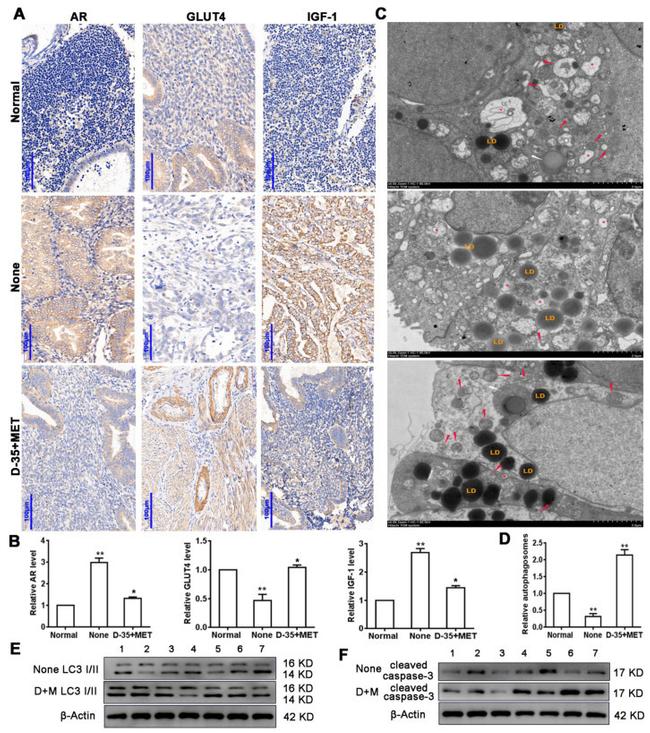
          LC3A/LC3B Antibody in Immunohistochemistry (Paraffin) (IHC (P))
          LC3A/LC3B Antibody in Western Blot (WB)
          LC3A/LC3B Antibody in Western Blot (WB)
          LC3A/LC3B Antibody in Immunocytochemistry (ICC/IF)
          LC3A/LC3B Antibody in Immunocytochemistry (ICC/IF)
          LC3A/LC3B Antibody in Western Blot, Immunocytochemistry (WB, ICC/IF)
          LC3A/LC3B Antibody in Western Blot, Immunohistochemistry, Immunocytochemistry (WB, IHC, ICC/IF)
          LC3A/LC3B Antibody in Immunohistochemistry (IHC)
          LC3A/LC3B Antibody in Immunohistochemistry (PFA fixed) (IHC (PFA))
          LC3A/LC3B Antibody in Western Blot (WB)
          LC3A/LC3B Antibody in Western Blot (WB)
          LC3A/LC3B Antibody in Western Blot (WB)
          LC3A/LC3B Antibody in Western Blot (WB)
          LC3A/LC3B Antibody in Western Blot (WB)
          LC3A/LC3B Antibody in Western Blot (WB)
          LC3A/LC3B Antibody in Western Blot (WB)
          LC3A/LC3B Antibody in Western Blot (WB)
          LC3A/LC3B Antibody in Western Blot (WB)
          LC3A/LC3B Antibody in Western Blot (WB)
          LC3A/LC3B Antibody in Western Blot (WB)
          LC3A/LC3B Antibody in Western Blot (WB)
          LC3A/LC3B Antibody in Western Blot (WB)
          LC3A/LC3B Antibody in Western Blot (WB)
          LC3A/LC3B Polyclonal Antibody

          Product Details

          PA1-16931

          Applications
          Tested Dilution
          Publications

          Western Blot (WB)

          2 µg/mL
          View 26 publications 26 publications

          Immunohistochemistry (IHC)

          -
          View 4 publications 4 publications

          Immunohistochemistry (Paraffin) (IHC (P))

          -
          View 3 publications 3 publications

          Immunohistochemistry (PFA fixed) (IHC (PFA))

          -
          View 1 publication 1 publication

          Immunohistochemistry (Frozen) (IHC (F))

          Assay-Dependent
          -

          Immunocytochemistry (ICC/IF)

          1:100-1:300
          View 5 publications 5 publications

          Immunoprecipitation (IP)

          20 µg/500 µg of lysate
          -

          ChIP assay (ChIP)

          Assay-Dependent
          -
          Product Specifications

          Species Reactivity

          Amphibian, Bovine, Dog, Fish, Human, Mouse, Plant, Rat, Zebrafish

          Published species

          Bison, Fish, Guinea pig, Human, Mouse, Rat

          Host/Isotype

          Rabbit / IgG

          Class

          Polyclonal

          Type

          Antibody

          Immunogen

          Synthetic peptide made to an internal portion of the human LC3 protein sequence (between residues 25-121).
          3D Epitope / Immunogen

          Conjugate

          Unconjugated Unconjugated Unconjugated

          Form

          Liquid

          Concentration

          1 mg/mL

          Amount

          100 µg

          Purification

          Antigen affinity chromatography

          Storage buffer

          PBS

          Contains

          0.02% sodium azide

          Storage conditions

          -20°C or -80°C if preferred

          Shipping conditions

          Ambient (domestic); Wet ice (international)

          RRID

          AB_2137583

          Product Specific Information

          This antibody detects both LC3A and LC3B.|Western blot bands are seen at ~19 kDa, representing LC3-I, and ~17 kDa, representing LC3-II. The observed molecular weight of the protein may vary from the listed predicted molecular weight due to post translational modifications, post translation cleavages, relative charges, and other experimental factors.

          Recommended positive controls: LC3B overexpression lysate, mouse brain whole tissue lysate (adult whole normal), human brain whole tissue lysate (adult whole normal), Neuro2a whole cell lysate, Neuro2a Chloroquine-treated/untreated cell lysate, HeLa chloroquine-treated/untreated cell lysate

          This antibody is predicted to react with Bovine based on 100% sequence homology.

          Target Information

          Autophagy is a process of intracellular bulk degradation in which cytoplasmic components, including organelles, are sequestered within double-membrane vesicles that deliver the contents to the lysosome/vacuole for degradation. During macroautophagy, the sequestering vesicles, termed autophagosomes, fuse with the lysosome or vacuole resulting in the delivery of an inner vesicle (autophagic body) into the lumen of the degradative compartment. There are 16 proteins participating in the autophagy pathway in human. The autophagy protein LC3, a mammalian homologue of Atg8, was originally identified as microtubule-associated protein 1 light chain 3. It is a component of both the MAP1A and MAP1B microtubule-binding domains and the heavy-chain independent regulation of LC3 expression might modify MAP1 microtubule-binding activity during development. LC3 is the only known mammalian protein identified that stably associates with the autophagosome membranes. LC3-I is cytosolic and LC3-II is membrane bound and enriched in the autophagic vacuole fraction. The detection of LC3-I to LC3-II conversion is a useful and sensitive marker for distinguishing autophagy in mammalian cells.

          For Research Use Only. Not for use in diagnostic procedures. Not for resale without express authorization.

          Bioinformatics

          Protein Aliases: Autophagy-related protein LC3 A; Autophagy-related protein LC3 B; Autophagy-related ubiquitin-like modifier LC3 A; Autophagy-related ubiquitin-like modifier LC3 B; LC3; LC3-like protein 1; MAP1 light chain 3-like protein 1; MAP1 light chain 3-like protein 2; MAP1A/1B; MAP1A/1B LC3; MAP1A/1B light chain 3 A; MAP1A/1B light chain 3 B; MAP1A/MAP1B LC3 A; MAP1A/MAP1B LC3 B; MAP1A/MAP1B LC3 B-like; MAP1A/MAP1B light chain 3 A; MAP1A/MAP1B light chain 3 B; MAP1A/MAP1B light chain 3 B-like; MAP1A1B-LC3; Microtubule-associated protein 1 light chain 3 alpha; Microtubule-associated protein 1 light chain 3 beta; Microtubule-associated protein 1 light chain 3 beta 2; microtubule-associated protein 1-light chain 3A; microtubule-associated proteins 1A/1B light chain 3; Microtubule-associated proteins 1A/1B light chain 3 beta 2; Microtubule-associated proteins 1A/1B light chain 3A; Microtubule-associated proteins 1A/1B light chain 3B; Microtubule-associated proteins 1A/1B light chain 3B-like; Microtubule-associated proteins 1A/1B light chain 3B-like protein; unnamed protein product

          View more View less

          Gene Aliases: 1010001C15Rik; 1010001H21Rik; 4922501H04Rik; Atg8; ATG8E; ATG8F; ATG8G; LC3; LC3A; LC3B; MAP1A/1BLC3; MAP1ALC3; MAP1BLC3; MAP1LC3; MAP1LC3A; MAP1LC3B; MAP1LC3B-a; MAP1LC3B2; Mpl3; wu:fb60g11; zbs559; zgc:56434; zgc:77094

          View more View less

          UniProt ID: (Human) Q9H492, (Bovine) Q2HJ23, (Bovine) O41515, (Human) Q9GZQ8, (Human) A6NCE7, (Mouse) Q91VR7, (Rat) Q6XVN8, (Mouse) Q9CQV6, (Rat) Q62625

          View more View less

          Entrez Gene ID: (Human) 84557, (Bovine) 514547, (Dog) 477201, (Dog) 479619, (Bovine) 408001, (Human) 81631, (Human) 643246, (Mouse) 66734, (Rat) 362245, (Mouse) 67443, (Rat) 64862, (Zebrafish) 406466, (Zebrafish) 322425

          View more View less

          Function(s)
          protein binding phospholipid binding microtubule binding phosphatidylethanolamine binding ubiquitin protein ligase binding ceramide binding molecular_function GABA receptor binding tubulin binding protein domain specific binding non-motor microtubule binding protein
          Process(es)
          autophagosome assembly mitophagy mitophagy autophagy cellular response to nitrogen starvation JNK cascade cellular response to starvation response to iron(II) ion response to lead ion macroautophagy response to nutrient levels cellular response to amino acid starvation p38MAPK cascade SMAD protein signal transduction cellular response to hydrogen peroxide cellular response to copper ion cellular response to oxygen-glucose deprivation autophagosome maturation positive regulation of mucus secretion nucleophagy membrane fusion positive regulation of protein binding regulation of mitophagy
          It has to be done as per old AB suggested Products section.

          Disclaimer

          Close

          Clicking the images or links will redirect you to a website hosted by BenchSci that provides third-party scientific content. Neither the content nor the BenchSci technology and processes for selection have been evaluated by us; we are providing them as-is and without warranty of any kind, including for use or application of the Thermo Fisher Scientific products presented.

          guarantee_icon

          Performance Guarantee

          If an Invitrogen™ antibody doesn't perform as described on our website or datasheet,we'll replace the product at no cost to you, or provide you with a credit for a future purchase.*

          Learn more
          help_icon

          We're here to help

          Get expert recommendations for common problems or connect directly with an on staff expert for technical assistance related to applications, equipment and general product use.

          Contact tech support
          Pedidos Plus Icon Minus Icon
          • Status do pedido
          • Ajuda para pedidos
          • Pedido rápido
          • Supply Center
          • eProcurement
          Suporte Plus Icon Minus Icon
          • Ajuda e suporte
          • Entre em Contato
          • Centros de Suporte Técnico
          • Obter Documentos e Certificados
          • Informe um Problema no Site
          Recursos Plus Icon Minus Icon
          • Centros de aprendizagem
          • Promoções
          • Eventos & Webinars
          • Mídia Sociais
          Sobre a Thermo Fisher Plus Icon Minus Icon
          • Sobre Nós Sobre Nós
          • Carreiras Carreiras
          • Investidores Investidores
          • Sala de Impresa Sala de Impresa
          • Responsabilidade Social Responsabilidade Social
          • Marcas
          • Políticas e avisos
          Nosso Portfólio Plus Icon Minus Icon
          • Thermo Scientific
          • Applied Biosystems
          • Invitrogen
          • Gibco
          • Ion Torrent
          • Fisher Scientific
          • Patheon
          • PPD
          • Terms & Conditions
          • Privacy Policy
          • Price & Freight Policy
          © 2006-2026 Thermo Fisher Scientific Inc. All rights reserved. All trademarks are the property of Thermo Fisher Scientific and its subsidiaries unless otherwise specified.
          Brasil flag icon
          Brasil

          Your items have has been added!


          Host server : magellan-search-blue-67655d8755-x75fr:80/100.66.77.4:80.
          git-commit: dddaa802cd395f65bf1581942d0e97a089c38f41
          git-url: https://github.com/thermofisher/magellan-search
          git-branch: release/2.46.0-Offline