Search
Invitrogen
TLR4/MD-2 Complex Monoclonal Antibody (MTS510), PE-Cyanine7, eBioscience™
{{$productOrderCtrl.translations['antibody.pdp.commerceCard.promotion.promotions']}}
{{$productOrderCtrl.translations['antibody.pdp.commerceCard.promotion.promocode']}}: {{promo.promoCode}} {{promo.promoTitle}} {{promo.promoDescription}}. {{$productOrderCtrl.translations['antibody.pdp.commerceCard.promotion.learnmore']}}
{{$ctrl.translations['antibody.pdp.skuNotes.additionalInformation']}}:

FIGURE: 1 / 12
TLR4/MD-2 Complex Antibody (25-9924-82) in Flow
Staining of thioglycolate-induced peritoneal exudate cells with 0.5 µg of Rat IgG2a K Isotype Control PE-Cyanine7 (Product # 25-4321-82) (open histogram) or 0.5 µg of Anti-Mouse TLR4/MD-2 Complex PE-Cyanine7 (filled histogram). Total viable cells were used for analysis.


Please note: We are reviewing Western blot images included in the antibody testing data in our catalog, including those provided by third parties. Unless expressly labeled or annotated as “raw-unedited”, Western blot images included in the antibody testing data in our catalog may have been edited, optimized or otherwise adjusted for presentation.






Product Details
25-9924-82
Applications
Tested Dilution
Publications
Product Specifications
Species Reactivity
Mouse
Published species
Human,
Mouse
Host/Isotype
Rat
/ IgG2a, kappa
Recommended Isotype Control
Class
Monoclonal
Type
Antibody
Clone
MTS510
Conjugate
PE-Cyanine7
PE-Cyanine7
PE-Cyanine7
Excitation/Emission Max
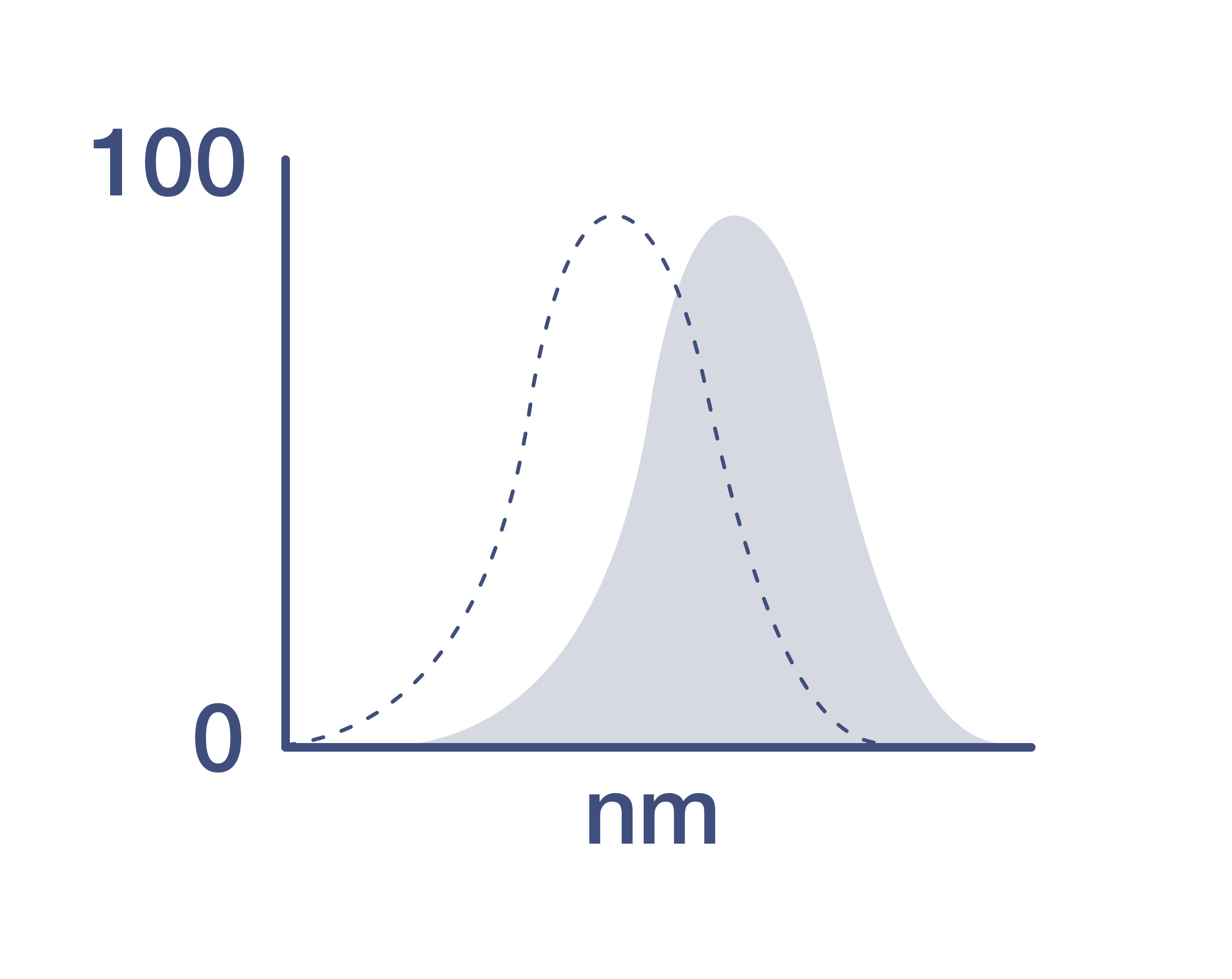
569/780 nm
View spectra
Form
Liquid
Concentration
0.2 mg/mL
Amount
100 µg
Purification
Affinity chromatography
Storage buffer
PBS, pH 7.2
Contains
0.09% sodium azide
Storage conditions
4°C, store in dark, DO NOT FREEZE!
Shipping conditions
Ambient (domestic); Wet ice (international)
RRID
Product Specific Information
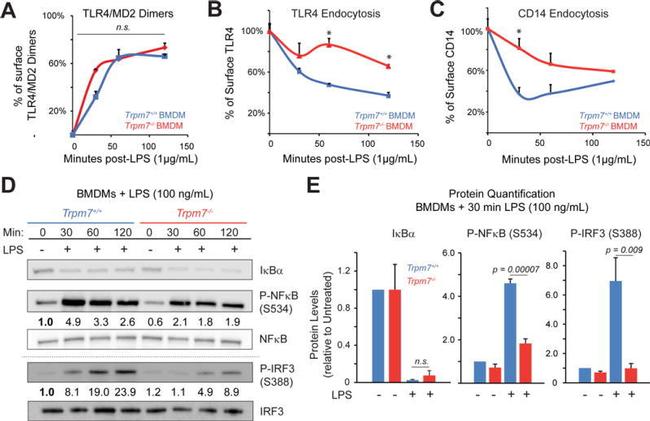
Description: The MTS510 monoclonal antibody reacts with the mouse Toll-like receptor 4 (TLR4)/MD-2 complex. At least ten members of the Toll family have been identified. This family of type I transmembrane proteins is characterized by an extracellular domain with leucine-rich repeats and a cytoplasmic domain with homology to the type I IL-1 receptor. Two of these receptors, TLR2 and TLR4, are pattern recognition receptors and signaling molecules in response to bacterial lipoproteins and have been implicated in innate immunity and inflammation. TLR4 physically associates with MD-2, and together with CD14, this complex is responsible for LPS recognition and signaling. In the mouse, TLR4 is expressed by thioglycolate-elicited peritoneal macrophages. Incubation of peritoneal macrophages with LPS results in down regulation of surface TLR4/MD-2. The TLR4 gene is defective in C3H/HeJ and C57BL/10ScCr mice, both of which have been well characterized as hyporesponders to LPS.
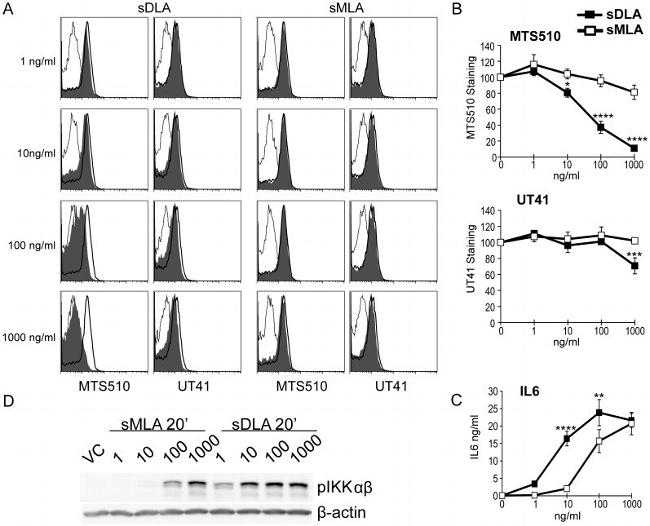
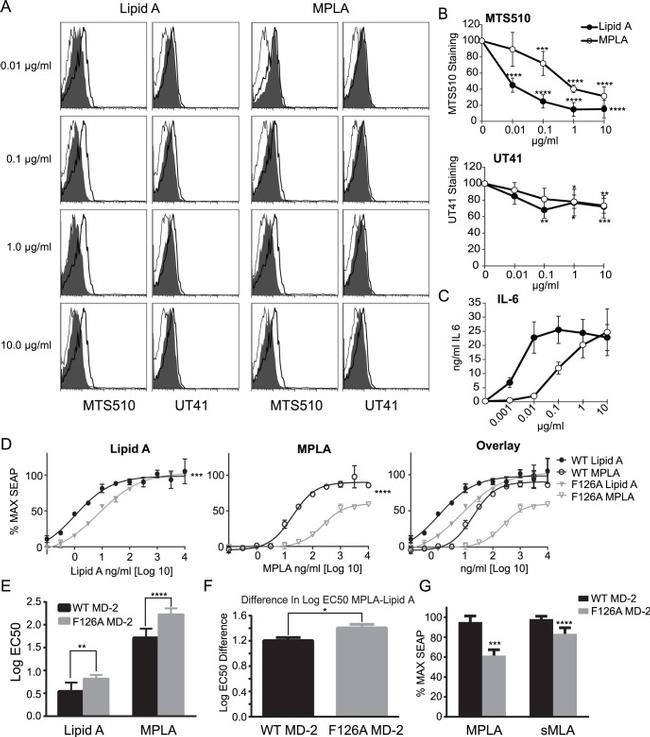
The MTS510 monoclonal antibody co-immunoprecipitates MD-2 (~30 kDa) and TLR4 (~100 kDa), and preferentially reacts with TLR4 that is associated with MD-2. In comparison, binding of the UT41 monoclonal antibody occurs with and without formation of the TLR4/MD-2 complex. Please contact eBioscience Technical Support for further information.
Applications Reported: This MTS510 antibody has been reported for use in flow cytometric analysis.
Applications Tested: This MTS510 antibody has been tested by flow cytometric analysis of mouse peritoneal-exudate cells. This can be used at less than or equal to 2 µg per test. A test is defined as the amount (µg) of antibody that will stain a cell sample in a final volume of 100 µL. Cell number should be determined empirically but can range from 10^5 to 10^8 cells/test. It is recommended that the antibody be carefully titrated for optimal performance in the assay of interest.
Light sensitivity: This tandem dye is sensitive photo-induced oxidation. Please protect this vial and stained samples from light.
Fixation: Samples can be stored in IC Fixation Buffer (Product # 00-8222) (100 µL cell sample + 100 µL IC Fixation Buffer) or 1-step Fix/Lyse Solution (Product # 00-5333) for up to 3 days in the dark at 4°C with minimal impact on brightness and FRET efficiency/compensation. Some generalizations regarding fluorophore performance after fixation can be made, but clone specific performance should be determined empirically.
Excitation: 488-561 nm; Emission: 775 nm; Laser: Blue Laser, Green Laser, Yellow-Green Laser.
Filtration: 0.2 µm post-manufacturing filtered.
Target Information
MD-2 is a member of the Toll/interleukin-1 receptor (TIR) family, a group of proteins that include the Toll-like receptors (TLRs). TLRs are signaling molecules that recognize different pathogen-associated molecular patterns (PAMPs) and serve as an important link between the innate and adaptive immune responses. TLR4, the major signaling receptor for lipopolysaccharide (LPS), requires the binding of MD-2 to its extracellular region for maximal response to LPS. The specificity of this response is determined by the species of MD-2; e.g., human MD-2 transfected into mouse cells can cause mouse TLR4 to react to LPS analogs that are normally antagonistic to human but not mouse TLR4.
For Research Use Only. Not for use in diagnostic procedures. Not for resale without express authorization.
How to use the Panel Builder
Watch the video to learn how to use the Invitrogen Flow Cytometry Panel Builder to build your next flow cytometry panel in 5 easy steps.
Bioinformatics
Protein Aliases: ARMD10; cytokine; hToll; lipopolysaccharide response; ly-96; MD-2; MD-2B; myeloid differentiation factor-2; myeloid differentiation protein-2; protein MD-2; TLR-4; TLR4; Tlr4; similar to Toll/IL-1 superfamily; TOLL; toll homolog; Toll like receptor 4; unnamed protein product
Gene Aliases: ESOP-1; Lps; Ly87; MD-2; MD2; Ran/M1; Rasl2-8
UniProt ID: (Mouse) Q9JHF9, (Mouse) Q9QUK6
Entrez Gene ID: (Mouse) 17087, (Mouse) 21898
positive regulation of cytokine production
regulation of cytokine-mediated signaling pathway
pattern recognition receptor signaling pathway
toll-like receptor signaling pathway
lipopolysaccharide-mediated signaling pathway
positive regulation of lipopolysaccharide-mediated signaling pathway
response to lipopolysaccharide
detection of lipopolysaccharide
positive regulation of tumor necrosis factor production
toll-like receptor 4 signaling pathway
innate immune response
cellular response to lipopolysaccharide
microglial cell activation
activation of innate immune response
wound healing involved in inflammatory response
immune effector process
B cell proliferation involved in immune response
nitric oxide production involved in inflammatory response
regulation of dendritic cell cytokine production
MyD88-dependent toll-like receptor signaling pathway
innate immune response-activating signal transduction
growth plate cartilage morphogenesis
leukotriene metabolic process
phagocytosis
inflammatory response
immune response
response to oxidative stress
signal transduction
I-kappaB kinase/NF-kappaB signaling
activation of NF-kappaB-inducing kinase activity
I-kappaB phosphorylation
response to bacterium
gene expression
positive regulation of platelet activation
positive regulation of gene expression
astrocyte development
microglia differentiation
positive regulation of smooth muscle cell migration
neurogenesis
signal transduction involved in regulation of gene expression
positive regulation of cell migration
positive regulation of B cell proliferation
regulation of tumor necrosis factor production
negative regulation of interferon-gamma production
negative regulation of interleukin-17 production
negative regulation of interleukin-23 production
negative regulation of interleukin-6 production
negative regulation of tumor necrosis factor production
positive regulation of chemokine production
positive regulation of interferon-alpha production
positive regulation of interferon-beta production
positive regulation of interferon-gamma production
positive regulation of interleukin-1 beta production
positive regulation of interleukin-1 production
positive regulation of interleukin-10 production
positive regulation of interleukin-12 production
positive regulation of interleukin-13 production
positive regulation of interleukin-6 production
positive regulation of interleukin-8 production
positive regulation of stress-activated MAPK cascade
regulation of toll-like receptor 4 signaling pathway
TRIF-dependent toll-like receptor signaling pathway
cellular response to platelet-derived growth factor stimulus
macrophage activation
defense response to bacterium
positive regulation of macrophage activation
positive regulation of apoptotic process
positive regulation of I-kappaB kinase/NF-kappaB signaling
leukocyte activation
positive regulation of MHC class II biosynthetic process
positive regulation of nitric oxide biosynthetic process
response to ethanol
mast cell activation
positive regulation of transcription, DNA-templated
positive regulation of transcription from RNA polymerase II promoter
positive regulation of JNK cascade
positive regulation of smooth muscle cell proliferation
positive regulation of lymphocyte proliferation
regulation of inflammatory response
positive regulation of inflammatory response
positive regulation of peptidyl-tyrosine phosphorylation
defense response to Gram-negative bacterium
detection of temperature stimulus involved in sensory perception of pain
detection of mechanical stimulus involved in sensory perception of pain
NK T cell activation
detection of stimulus
bone morphogenesis
intestinal epithelial structure maintenance
positive regulation of macrophage cytokine production
ERK1 and ERK2 cascade
negative regulation of ERK1 and ERK2 cascade
positive regulation of ERK1 and ERK2 cascade
positive regulation of nucleotide-binding oligomerization domain containing 1 signaling pathway
positive regulation of nucleotide-binding oligomerization domain containing 2 signaling pathway
response to fatty acid
cellular response to lipoteichoic acid
cellular response to mechanical stimulus
cellular response to interferon-gamma
negative regulation of cold-induced thermogenesis
cellular response to oxidised low-density lipoprotein particle stimulus
negative regulation of cytokine production involved in inflammatory response
positive regulation of cytokine production involved in inflammatory response
positive regulation of NLRP3 inflammasome complex assembly
positive regulation of reactive oxygen species biosynthetic process
positive regulation of cellular response to macrophage colony-stimulating factor stimulus
positive regulation of matrix metallopeptidase secretion
cellular response to beta-amyloid
positive regulation of chemokine (C-X-C motif) ligand 2 production
positive regulation of extrinsic apoptotic signaling pathway
Disclaimer

Clicking the images or links will redirect you to a website hosted by BenchSci that provides third-party scientific content. Neither the content nor the BenchSci technology and processes for selection have been evaluated by us; we are providing them as-is and without warranty of any kind, including for use or application of the Thermo Fisher Scientific products presented.

Performance Guarantee
If an Invitrogen™ antibody doesn't perform as described on our website or datasheet,we'll replace the product at no cost to you, or provide you with a credit for a future purchase.*
Learn more
We're here to help
Get expert recommendations for common problems or connect directly with an on staff expert for technical assistance related to applications, equipment and general product use.
Contact tech support