Search
Invitrogen
CD194 (CCR4) Monoclonal Antibody (D8SEE), PerCP-eFluor™ 710, eBioscience™
{{$productOrderCtrl.translations['antibody.pdp.commerceCard.promotion.promotions']}}
{{$productOrderCtrl.translations['antibody.pdp.commerceCard.promotion.promocode']}}: {{promo.promoCode}} {{promo.promoTitle}} {{promo.promoDescription}}. {{$productOrderCtrl.translations['antibody.pdp.commerceCard.promotion.learnmore']}}
{{$ctrl.translations['antibody.pdp.skuNotes.additionalInformation']}}:

FIGURE: 1 / 2
CD194 (CCR4) Antibody (46-1949-42) in Flow
Staining of normal human peripheral blood cells with Anti-Human CD4 FITC (Product # 11-0049-42) and Mouse IgG1 K Isotype Control PerCP-eFluor® 710 (Product # 46-4714-82) (left) or Anti-Human CD194 (CCR4) PerCP-eFluor® 710 (right). Cells in the lymphocyte gate were used for analysis.


Please note: We are reviewing Western blot images included in the antibody testing data in our catalog, including those provided by third parties. Unless expressly labeled or annotated as “raw-unedited”, Western blot images included in the antibody testing data in our catalog may have been edited, optimized or otherwise adjusted for presentation.

Product Details
46-1949-42
Applications
Tested Dilution
Publications
Product Specifications
Species Reactivity
Human
Published species
Human
Host/Isotype
Mouse
/ IgG1, kappa
Recommended Isotype Control
Class
Monoclonal
Type
Antibody
Clone
D8SEE
Conjugate
PerCP-eFluor™ 710
PerCP-eFluor™ 710
PerCP-eFluor™ 710
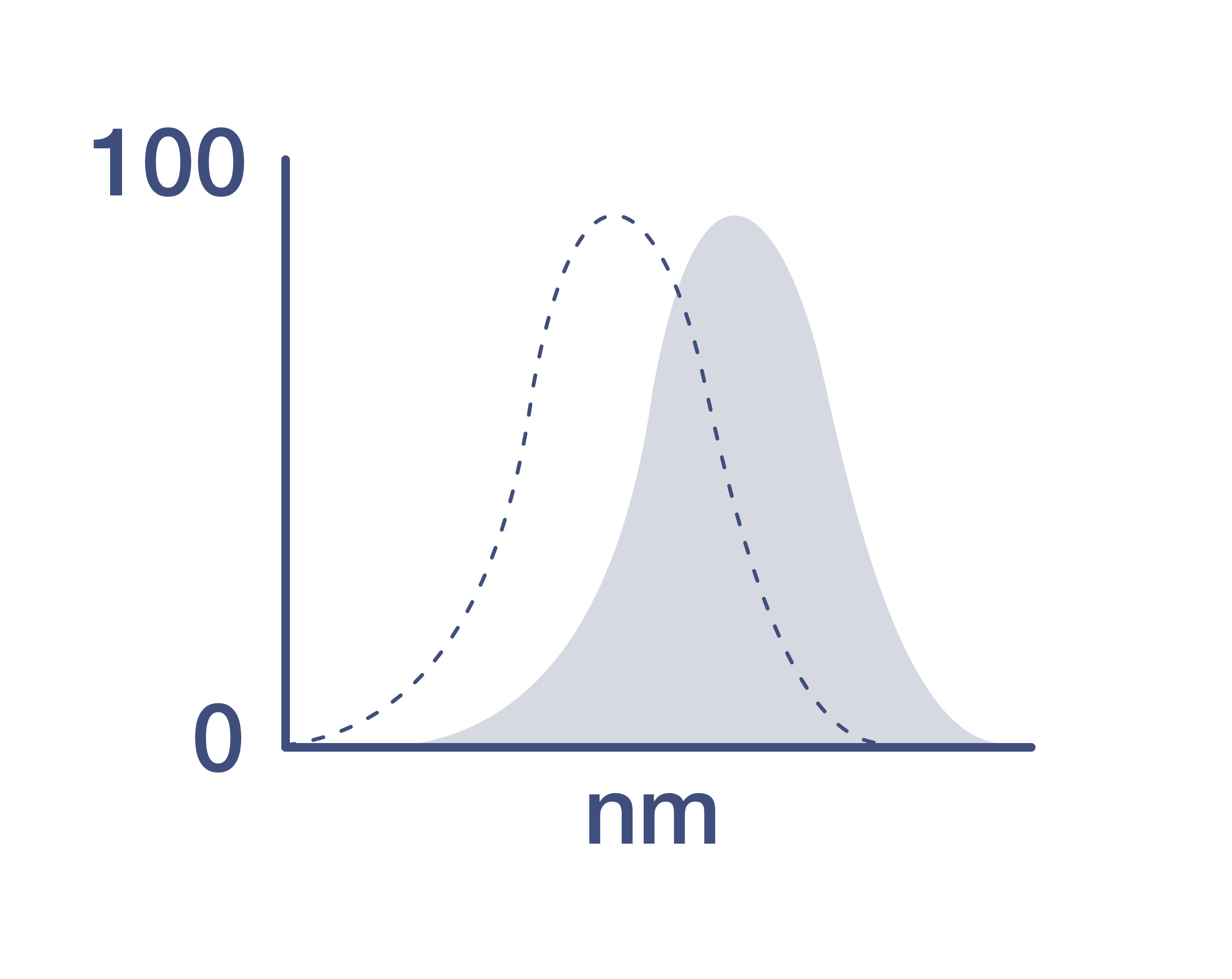
Excitation/Emission Max
482/708 nm
View spectra
Form
Liquid
Concentration
5 µL/Test
Purification
Affinity chromatography
Storage buffer
PBS, pH 7.2, with BSA
Contains
0.09% sodium azide
Storage conditions
4°C, store in dark, DO NOT FREEZE!
Shipping conditions
Ambient (domestic); Wet ice (international)
RRID
Product Specific Information
Description: This D8SEE monoclonal antibody reacts with human CD194 (CCR4). CD194, also known as C-C Chemokine Receptor 4 (CCR4) is a member of the G protein-coupled receptor family, a large family characterized by seven transmembrane alpha helical domains. The ligands for CCR4 are CCL17 (TARC) and CCL22 (MDC), which direct the migration of target cells. CCR4 and its ligands, along with the other receptors CCR10 and CLA, are particularly important for the recruitment of T cells into the skin, where they may also play a role in adhesion and extravasation. Although CCR4 expression was originally believed to be restricted to Th2 cells, it has since been observed in some subsets of Th17, Treg, and Th1 cells. It is not expressed by naive T cells, indicating a role in memory or effector function. Other cells that express CCR4 are activated NK cells, platelets, monocytes, and basophils.
Applications Reported: This D8SEE antibody has been reported for use in flow cytometric analysis.
Applications Tested: This D8SEE antibody has been pre-titrated and tested by flow cytometric anaylis of normal human peripheral blood cells. This can be used at 5 µL (0.125 µg) per test. A test is defined as the amount (µg) of antibody that will stain a cell sample in a final volume of 100 µL. Cell number should be determined empirically but can range from 10^5 to 10^8 cells/test.
PerCP-eFluor® 710 emits at 710 nm and is excited with the blue laser (488 nm); it can be used in place of PerCP-Cyanine5.5. We recommend using a 710/50 bandpass filter, however, the 695/40 bandpass filter is an acceptable alternative. Please make sure that your instrument is capable of detecting this fluorochrome.
Fixation: Samples can be stored in IC Fixation Buffer (Product # 00-822-49) (100 µL of cell sample + 100 µL of IC Fixation Buffer) or 1-step Fix/Lyse Solution (Product # 00-5333-54) for up to 3 days in the dark at 4°C with minimal impact on brightness and FRET efficiency/compensation. Some generalizations regarding fluorophore performance after fixation can be made, but clone specific performance should be determined empirically.
Excitation: 488 nm; Emission: 710 nm; Laser: Blue Laser.
Filtration: 0.2 µm post-manufacturing filtered.
Target Information
CCR4 is a chemokine receptor and is preferentially expressed on type 2 helper T (Th2-type) cells. In contrast to other chemokine receptors, the expression of CCR4 and CCR8 on Th2 cells is transiently increased following TCR and CD28 engagement. Moreover, activated Th1 cells up-regulate CCR4 expression and functional responsiveness to thymus- and activation-regulated chemokine. Chemokines are a group of small (approximately 8 to 14 kD), mostly basic, structurally related molecules that regulate cell trafficking of various types of leukocytes through interactions with a subset of 7-transmembrane, G protein-coupled receptors. Chemokines also play fundamental roles in the development, homeostasis, and function of the immune system, and they have effects on cells of the central nervous system as well as on endothelial cells involved in angiogenesis or angiostasis. Chemokines are divided into 2 major subfamilies, CXC and CC, based on the arrangement of the first 2 of the 4 conserved cysteine residues; the 2 cysteines are separated by a single amino acid in CXC chemokines and are adjacent in CC chemokines.
For Research Use Only. Not for use in diagnostic procedures. Not for resale without express authorization.
How to use the Panel Builder
Watch the video to learn how to use the Invitrogen Flow Cytometry Panel Builder to build your next flow cytometry panel in 5 easy steps.
Bioinformatics
Protein Aliases: C-C CKR-4; CCR-4; chemokine (C-C motif) receptor 4; chemokine (C-C) receptor 4; MGC88293; unnamed protein product
Gene Aliases: CC-CKR-4; CD194; ChemR13; CKR4; CMKBR4; HGCN:14099; K5-5
UniProt ID: (Human) P51679
Entrez Gene ID: (Human) 1233
Disclaimer

Clicking the images or links will redirect you to a website hosted by BenchSci that provides third-party scientific content. Neither the content nor the BenchSci technology and processes for selection have been evaluated by us; we are providing them as-is and without warranty of any kind, including for use or application of the Thermo Fisher Scientific products presented.

Performance Guarantee
If an Invitrogen™ antibody doesn't perform as described on our website or datasheet,we'll replace the product at no cost to you, or provide you with a credit for a future purchase.*
Learn more
We're here to help
Get expert recommendations for common problems or connect directly with an on staff expert for technical assistance related to applications, equipment and general product use.
Contact tech support