I used to joke in graduate school that how fast I could actually graduate depended on how often our instruments broke down.
Case in point: As soon as I was ready to analyze my freshly synthesized products … bam! The HPLC was down again, which meant another unplanned delay in starting our cell studies.

Truth be told, I often fantasized about having an “Office Space” printer moment with our high performance liquid chromatography system. I’m sure you can relate.
Just like your car, your HPLC has a limited performance lifetime. Parts wear and tear. At some point, you must decide between dealing with even more unplanned downtime or solving your problems by investing in newer technology.
Besides, there are plenty of benefits to replacing your old system with a modern one, like increased productivity, thanks to more instrument uptime and better efficiency from automation.
From frequent and costly visits by the service engineer, recurring issues with method transfer, or too many errors caused by manual operation, here are five signs your lab might need a technology upgrade.
1. Your new best friend is your service engineer
Service engineers are like the surgeons of instruments. Chances are you’re happy to see them for yearly scheduled maintenance and small repairs. But when you get to the point of regular fixes because your system constantly breaks down, your HPLC needs to retire.
As the performance and robustness of your instrument fade, you’ll notice a decline in the quality and reproducibility of your data. Some noteworthy things to look for in a dying HPLC are lower sensitivity in UV detectors as the optics alter, inability to replace worn parts, and inefficient column temperature control.
While your new HPLC won’t last a lifetime, you can opt for a new system with built-in technology that alerts you of issues needing immediate attention to help prevent premature damage.
2. You need to shorten your analysis time
If you’re a quality control or contract lab running hundreds of samples a day, maximizing sample throughput to increase revenue is probably at the top of your priority list.
Now consider the situation where your manager says the standard 30-minute method you use for a routine analysis is too slow and tasks you with finding a solution to shorten the analysis time.
How should you proceed?
A few ways to boost your analytical throughput includes switching from HPLC to a UHPLC method and using smaller/shorter columns to reduce analysis time and increase sample capacity.
You can easily incorporate all these changes by adopting a system that supports higher backpressures, along with software that enables automated data collection and reporting.
3. You regularly struggle to adopt methods from different labs
Ah, method transfer. This process can be downright complicated, time-consuming, and troublesome without the right tools. Think of trying to hammer a screw in your wall.
If you regularly struggle with transferring methods between labs, chances are your technology is outdated. A common way to know if your instrument can handle outside methods is by running a system suitability test (SST). The SST criteria include things like retention window, relative retention times, resolution, and signal-to-noise ratio.
If your current HPLC cannot perform in the range of these specific criteria, you’ll need to find a system that can handle versatile run parameters. Little things like a tunable gradient delay volume and custom injection programs go a long way.
You can’t afford to waste time on repeated method transfer failures.
Not to mention your sanity.
4. You need to increase sample throughput but have limited space
Are you constantly asked to get more work done with less? You’re not alone. This theme is common nowadays, especially in high-volume testing labs and manufacturing facilities where productivity is pushed to the max.
Now, I don’t want you to confuse run time with analytical throughput. Because you can increase sample throughput without changing your method parameters.
So, if your method is optimized for time, or you cannot adjust parameters due to sample complexity, the only real solution to higher throughput is to buy more instruments or replace your single-channel ones with dual channels.
But limited lab space is where dual LC systems really shine. You won’t have to sacrifice bench space because dual-channel systems have two flow paths with the footprint of a single system.
Now you can run an impurity analysis on two separate batches of finished goods, which enhances your lab’s productivity and return on investment.
Your finance team will definitely appreciate the switch.
5. Your operators generate too many errors because of manual method setups
All HPLC workflows are similar: You inject samples, compounds elute after separation on the column, the detector captures signals, and the software generates results.
But, as they say, the devil is in the details. Workflows differ in the details, like instrument conditions, injection sequence requirements, and the techniques for calculating results. These differences can confuse your operators and increase the likelihood of data errors.
Using HPLC software with customizable templates helps your lab get accurate results faster. Ideally, your CDS should have tools like e-Workflows to guide operators through a minimal number of choices needed to create a complete correct sequence.
The goal is simple: Ensure your users can create and start a run, process the data, and get results quickly and intuitively.
Discover all the benefits of modern LC technology

Making the switch to a new instrument and software might seem scary.
But in reality, technological advances benefit your lab by creating smoother workflows, better efficiency and fewer human errors. Which translates to a happier lab.
Learn more about how (and why) you should consider modernizing your lab today. You can grow your lab’s productivity with ease.
On LinkedIn? Visit our LinkedIn page #LabProductivity #MethodTransfer
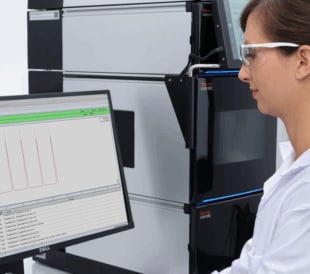
Elevate Your HPLC Performance with a Modern CDS
You may have the best HPLC system on the market, but to maxi...
Read More
Episode 3: Understanding How Charged Aerosol Detection (CAD) Works
Welcome back to our series on Charged Aerosol Detection (CAD...
Read More
Episode 2: The Benefits of CAD Compared to Other Universal Detectors: ELSD and MALS
Welcome back to our series on Charged Aerosol Detection (CAD...
Read More
Episode 1: The Benefits of Charged Aerosol Detection (CAD) in High-Performance Liquid Chromatography (HPLC)
High-Performance Liquid Chromatography (HPLC) is a cornersto...
Read More