


As we transition to treating COVID-19 as an endemic disease, tracking SARS-CoV-2 changes at the molecular level will provide critical understanding of the virus’s behavior over time. When new combinations of mutations are identified, local and global public health bodies must act fast to determine differences in spread patterns, COVID-19 severity, vaccine protection, and treatment efficacy. From these learnings, clinicians can choose how to best treat patients given a particular variant’s dominance and clinical characteristics.
Efficient workflows and accessible technologies for monitoring mutations will ensure new variants are quickly identified, closely tracked, and appropriately managed. During a recent Clinical Virology Symposium (CVS) presentation, Manoj Gandhi, M.D., Ph.D. ƚ from Thermo Fisher and Jeremy Davis-Turak, Ph.D. ƚƚ from ROSALIND outlined some of the surveillance tools and programs that are helping to deliver the key variant insights needed to gain and keep control of the pandemic.
Sequencing offers a complete look at mutations, with key limitations for widespread surveillance
Sequencing is the conventional way to monitor for SARS-CoV-2 mutations. This approach provides a complete look at the virus’s genome to help identify new mutations but comes with limitations when relied on as the sole means for tracking known variants.
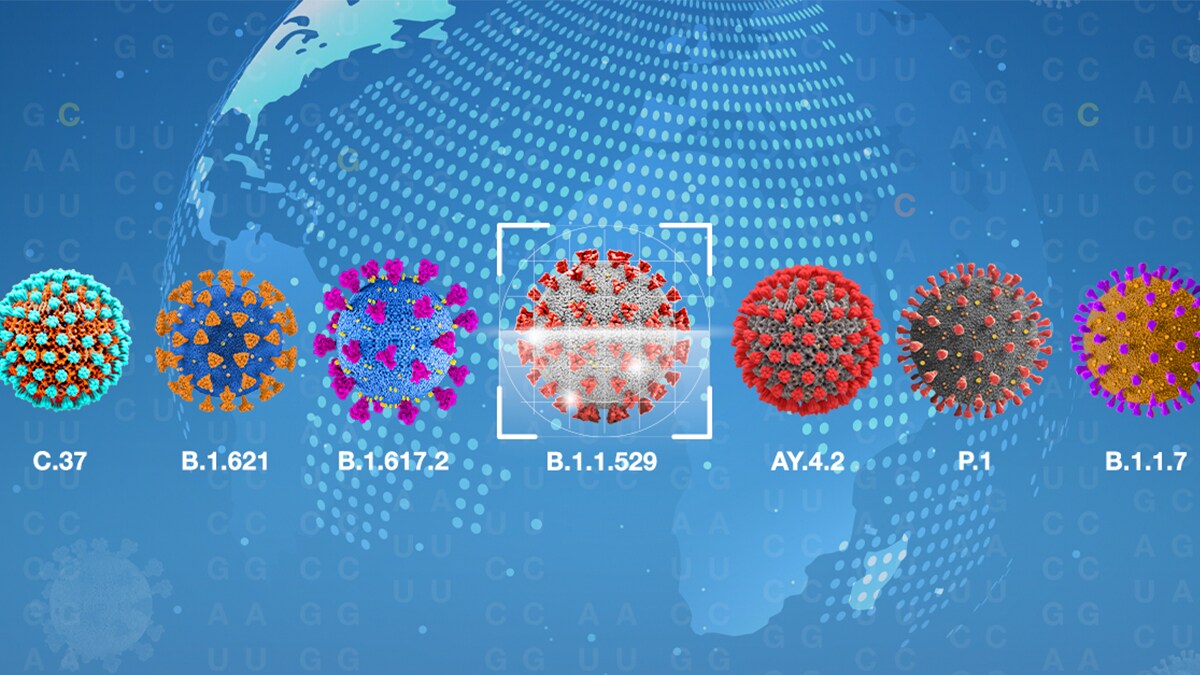
With some sequencing methods requiring up to two weeks for processing and results, there’s a significant delay between real-time spread patterns and reporting, making it hard for public health officials to react quickly. The equipment needed to conduct sequencing can also be costly, limiting surveillance to large laboratories that are often dedicated to infectious disease research and monitoring. Because of the associated time and expense, only a small subset of positive samples can go on to be sequenced, with the potentially biased assumption that this sample set represents a broader population.
PCR assays are an accessible way to identify known variants quickly and cost effectively
The ability to use PCR technology as a surveillance tool was first brought to light with the S-gene drop out patterns seen in diagnostic tests that analyze multiple SARS-CoV-2 targets, such as Thermo Fisher’s TaqPath COVID-19 Combo Kit*. Between Alpha, Delta, Omicron BA.1 and Omicron BA.2 transitions, fluctuation between S-gene target failure and S-gene target positive samples served as a signal of different variants being introduced and eventually becoming dominant.
Building on this tactic, Thermo Fisher developed the TaqMan SARS-CoV-2 Mutation Panel**. This convenient and customizable PCR-based genotyping assay allows labs to test samples for specific mutations and identify known variants. Since these assays are less costly to run than sequencing and can be processed on the same equipment as diagnostic PCR tests, they are more readily accessible to a wide range of laboratories across the world. With approximately one hour from RNA extraction to results and the ability to use RNA extracted for diagnostic testing, this scalable solution can also deliver fast findings for a large volume of samples.
Using PCR and sequencing together can drive comprehensive SARS-CoV-2 surveillance
A workflow leveraging both PCR-based genotyping and sequencing has the potential to deliver the greatest insight for surveillance. The faster, less expensive PCR assay can be used first to determine if a sample contains a known variant. If it does, no further testing is needed. If it doesn’t, that sample can then go on to be sequenced, since PCR panels designed around known mutations can’t identify new variants. This approach optimizes the use of available resources to maximize testing throughput and gain broad knowledge of variant activity.
In partnership with the National Institutes of Health (NIH) and others, Thermo Fisher and ROSALIND have helped put the concept of combining PCR and sequencing into practice with the ROSA project. Listen to the recent CVS presentation to learn more about how this initiative is driving more robust surveillance through efficient and innovative sample testing strategies.
And for more information about COVID-19 testing and surveillance solutions from Thermo Fisher Scientific, please visit: https://www.thermofisher.com/covid19
ƚ Manoj Gandhi, M.D., Ph.D, Senior Director of Medical affairs, Genetic Sciences at Thermo Fisher Scientific
ƚƚ Jeremy Davis-Turak, Ph.D., Chief Technology Officer at ROSALIND
*For Emergency Use Authorization (EUA) only. For prescription use only. For in vitro diagnostic use.
**For Research Use Only. Not for use in diagnostic procedures.