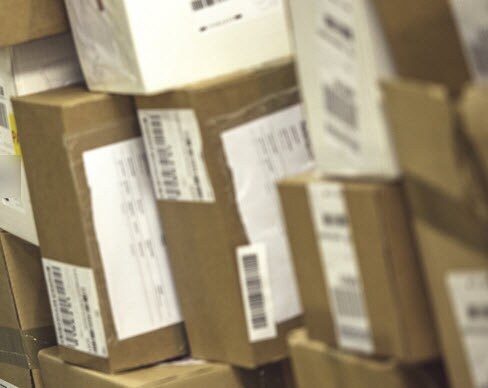
 When curiosity gets the best of the inspectors because of what they see on the screen, it’s time to remove the package from the conveyor belt and take a closer look. According to an article on Channel News Asia (cna), Singapore’s Immigration & Checkpoints Authority (ICA) officers have found dangerous and prohibited items almost every day during screenings of packages as they try to pass through the post office.
According to the article, ICA figures the “total number of articles cleared at the parcel post section each year has gone up from 5.2 million in 2016 to 6.1 million in 2018. In the same period, contraband cases detected annually increased from about 14,000 to almost 17,000.”
The ICA credits much of the initial finds of banned material to the keen eyes of its officers. However, in order to definitively confirm what the suspected item is, many items require further testing with portable devices and swabs which can detect narcotics, radiation, explosives and chemical warfare agents.
One of the instruments they use in the additional screening process is a handheld radiation isotope identifier, which can identify radioactive material that could be used to make a dirty bomb. Officers can quickly scan the material with the instrument, which analyzes the acquired ID spectrum in real time, and automatically displays the optimum scan time to accurately detect the presence of special nuclear material (SNM) Plutonium, Uranium, and Neptunium (Pu, U, Np). It’s critical to know the exact isotope of the radioactive material in order to assess the potential threat and quickly initiate a plan of action.
The U.S. Nuclear Regulatory Commission (NRC) divides SNM into three main categories, according to the risk and potential for its direct use in a clandestine fissile explosive or for its use in the production of nuclear material for use in a fissile explosive.
Singapore officials say it does not have significant nuclear material or facilities but they still take their responsibilities seriously. At the Nuclear Security Summit in 2016, Singapore released a statement that included:
Since the start of the Nuclear Security Summit process, we have tightened up our export control regime and upgraded radiation screening technology at our ports. We track every case of nuclear fuel transiting through Singapore and from time to time, we have intercepted cargo and confiscated items. In one recent case, we discovered a significant amount of thorium, a radioactive element. It had been imported into Singapore not as nuclear material, but as a contaminant of another chemical used as a coolant for printed circuit boards.
The handheld radiation isotope identifier enables the officer to view the real-time spectra build of isotopes present in the environment as the identification scan is in process. Isotopes are color coded to visually alert the operator to the presence of isotopes and indicates the moment an accurate identification is made. In addition a removable gamma detector allows close inspection of samples with included 5ft extension cable and can be combined with a low background shield for low radioactivity levels in samples such as food, soil or water.
In the article, one of the screening officers said: “I feel a sense of fulfillment when I am able to play my part in preventing security-sensitive materials from being smuggled into Singapore, which could have serious repercussions for society.”
I’m sure the people of Singapore feel more secure as well.
From monitoring to emergency response situations, advanced, integrated radiation detection and radioactivity measurement instruments mitigate the threat and keep people safe. There is a variety of radiation detectors, radiation monitoring devices, and radiation measurement instruments that provide comprehensive, real-time monitoring.
More info:
- Access the page: Radiation Detection FAQs
- Join the mailing list

Addressing Radiation Contamination in Scrap Metal Recycling
Radiation-contaminated scrap metal poses serious risks to en... Johnny Long
Read More
Evolving Approaches to CBRNE and Radiation Threat Preparedness
A Persistent and Expanding Challenge Chemical, Biological,... Marlene Gasdia-Cochrane, Editor
Read More
Was that Fireworks or an Explosion?
Last year, there was an estimated crowd of 250,000 people wh...
Read More
Avoiding Health Risks by Understanding Water Contaminants
Ensuring the quality of drinking water is crucial for mainta...
Read More


Leave a Reply