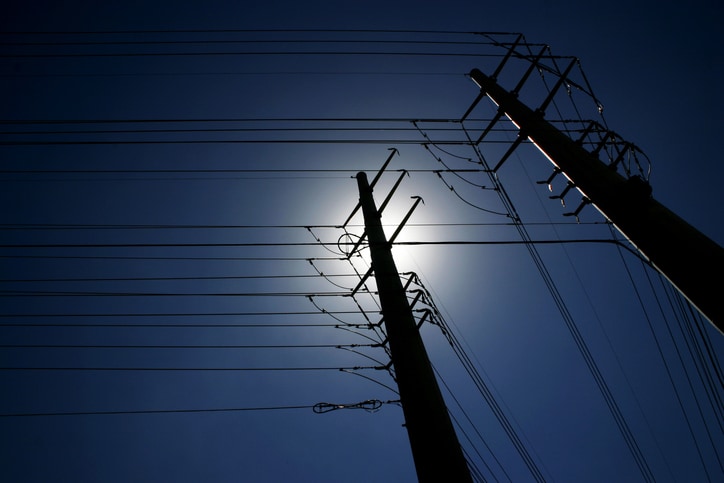
 Occasional short-term power failures and a small geographic block can cause frustration. However, what if a power failure lasts for many days or hours and affects thousands, or even hundreds of thousands of people?
The President’s National Infrastructure Advisory Council (NIAC) published a December 2018 report that examined the nation’s ability to respond to significant power outages. The report noted that “Significant public and private action is needed to prepare for and recover from a catastrophic outage that could leave large parts of the nation without power for weeks or months, and cause service failures in other sectors— including water and wastewater, communications, transportation, healthcare, and financial services—that are critical to public health and safety and our national and economic security.”
In 2019, a former Los Angeles deputy sheriff was concerned that the role of local police or fire departments were somewhat ignored in reports. He believed it was assumed, and taken for granted, that police and fire would be able to respond to emergencies. “Agencies must keep in mind that during such a disaster, gas pumps would not work leaving many firefighters and police officers stranded and unable to report for duty,” he wrote. “In southern California, for example, most police and firefighters live more than 50 miles away from their duty stations and many of the deputies I worked with lived more than 70 miles away from the station…. If such a disaster did happen, police and fire departments would remain the primary responders.”
There may only be a slight chance that power outages of great magnitude may happen, but it’s good to know that there are plans in place for first responders and law enforcement if it does happen. But it doesn’t have to last weeks or months to monumentally affect the public. One year ago, Indonesia experienced one of its worst power outages which impacted more than 100 million people in Jakarta and its neighboring provinces West Java and Banten.
One news agency reported that this 9-hour power blackout during August 2019 forced the temporary closure of its new mass rapid transit system and caused sporadic disruptions in mobile phone services and some traffic lights, aggravating the capital’s notorious congestion, while some buildings were left in the dark. Hospitals had to rely on generators. Hundreds of passengers were stuck on the trains which led to children crying, and adults shouting and pounding on the doors to open. 800,000 people were stranded and had to be bussed because the trains stopped running. ATMs stopped working and businesses closed.
One can assume that law enforcement and first responders were busy that day.
Yet, all this disruption may have been able to be avoided.
Faulty transmission circuits on power lines were blamed for the outage. There are different metals and alloys used in transmission circuits, and if they are made of the wrong material, there could be a chance of failure.
Available throughout the industry are cloned bolts or non-genuine OEM components that are inferior to those of the genuine components. These cloned bolts look just like the original components but have different material composition. As such, these cloned bolts may have much shorter and unpredictable lifespan than the bolts specified in the documentation provided by the power generator manufacturer. The use of the cloned bolt past its lifespan could potentially damage the power generator device or cause accidents and endanger the lives of plant operators.
The best way to mitigate risks of power outage is for a power plant personnel to verify that the composition of materials used in the power generator, including bolts and fasteners, matches the specification given by the power generator’s manufacturer.
One power plant operator in Indonesia has deployed a “trust but verify” program using positive material identification (PMI) to validate the incoming spare bolts or components and to ensure that these are not cloned bolts or bolts of lower quality. This process has been made easy with the aid of handheld XRF analyzer, a spectrometer which enables power plant operators to conduct on-site elemental analysis of the spare parts, assess material remaining lifespan, as well as verify material coating thickness.
The inspection team was able to rapidly verify the authenticity of incoming materials against the company’s purchase order and the certificate of conformity. Following the inspection, materials that do not fulfill the standard requirements would be rejected. This helped the team at the power plant to provide fast, accurate and reliable PMI of parts for the power generator, reducing the potential risk of unexpected downtime from low-quality OEM components.
Maybe law enforcement should focus some efforts on counterfeit power plant metal parts and add a handheld XRF analyzer to their toolbelt.
Read the full case study: Indonesia’s Power Producer Achieves Safety, Reliability and Operational Excellence with X-ray Fluorescence Spectrometry

Evolving Approaches to CBRNE and Radiation Threat Preparedness
A Persistent and Expanding Challenge Chemical, Biological,... Marlene Gasdia-Cochrane, Editor
Read More
Was that Fireworks or an Explosion?
Last year, there was an estimated crowd of 250,000 people wh...
Read More
Avoiding Health Risks by Understanding Water Contaminants
Ensuring the quality of drinking water is crucial for mainta...
Read More
Audit Addresses Prevention of Controlled Substances (Drugs) from Entering Prisons
I was recently looking over a 2023 report from the Office of...
Read More

Leave a Reply