 Steel is an alloy of iron and carbon. The World Steel Organization defines steel more specifically as containing less than 2% carbon and 1% manganese and small amounts of silicon, phosphorus, sulphur and oxygen. Changing the amount of carbon can change the properties of the steel, making it more or less strong, hard, ductile or malleable.
The weldability of a steel is primarily influenced by its carbon content. Additionally the contribution of other elements such as manganese, chromium, molybdenum, vanadium, copper, nickel and silicon within the steel’s composition also has an effect on its carbon equivalence (CE). These additional elements can really add up in scrap-fed electric arc furnace steels that now predominate in our market and carry over into finished product.
Carbon equivalent (CE) formulae were originally developed to assign a numerical value for a given steel composition indicating a carbon content which would contribute to an equivalent level of hardenability for that steel. Even further, carbon equivalent (CE) formulas represent the contribution of the materials composition to the cold-cracking (hydrogen cracking) susceptibility of the steel.
In welding, carbon equivalent (CE) calculations are used to predict heat affected zone (HAZ) hardenability. By understanding any differences in chemistry through carbon equivalency calculation, it can be determined if the properties of two materials being joined together via a filler metal component are compatible for the process or when selecting the appropriate weld procedure specification (WPS) when conducting weld repairs.
If the components are too dissimilar or if carbon equivalent (CE) approaches a higher, undesirable value (as seen in the table below) then special precautions may be needed prior to and during welding such as prescriptive heat treatment, use of low hydrogen electrodes, and controlling heat input. Many of these guidelines are published in NACE (formerly the National Association of Corrosion Engineers) standards NACE MR0175/ISO 15156 and NACE MR0103/ISO 17945 intended for offshore, petrochemical and natural gas applications where carbon steels in the presence of hydrogen sulfide (H2S, sour service) are susceptible to sulfide stress cracking (SSC) or hydrogen stress cracking (HSC).
Table 1
| Sample | CE-IIW | CE-AWS | C | Mn | Cu | Si | Ni | Cr | Mo | V | Ti | Al |
| X65 | 0.287 | 0.335 | 0.049 | 1.061 | 0.118 | 0.286 | 0.117 | 0.090 | 0.056 | 0.081 | 0.005 | 0.038 |
| X65 | 0.306 | 0.352 | 0.042 | 1.209 | 0.118 | 0.279 | 0.095 | 0.087 | 0.064 | 0.087 | 0.005 | 0.024 |
| X65 | 0.291 | 0.338 | 0.040 | 1.134 | 0.125 | 0.277 | 0.105 | 0.091 | 0.061 | 0.085 | 0.005 | 0.030 |
| X65 | 0.290 | 0.338 | 0.042 | 1.116 | 0.118 | 0.284 | 0.112 | 0.096 | 0.065 | 0.077 | 0.005 | 0.031 |
| X65 | 0.300 | 0.346 | 0.039 | 1.196 | 0.116 | 0.276 | 0.094 | 0.080 | 0.068 | 0.088 | 0.005 | 0.028 |
| X65 | 0.294 | 0.341 | 0.034 | 1.171 | 0.113 | 0.280 | 0.102 | 0.092 | 0.078 | 0.083 | 0.005 | 0.030 |
| X65 | 0.278 | 0.326 | 0.039 | 1.091 | 0.124 | 0.289 | 0.106 | 0.090 | 0.049 | 0.069 | 0.006 | 0.032 |
| X65 | 0.295 | 0.340 | 0.046 | 1.127 | 0.116 | 0.273 | 0.109 | 0.087 | 0.063 | 0.081 | 0.005 | 0.034 |
| X65 | 0.282 | 0.333 | 0.041 | 1.078 | 0.117 | 0.310 | 0.107 | 0.095 | 0.059 | 0.075 | 0.004 | 0.038 |
| X65 | 0.280 | 0.325 | 0.036 | 1.115 | 0.110 | 0.275 | 0.098 | 0.089 | 0.053 | 0.079 | 0.005 | 0.034 |
| AVG | 0.290 | 0.337 | 0.041 | 1.130 | 0.118 | 0.283 | 0.105 | 0.090 | 0.062 | 0.080 | 0.005 | 0.032 |
| STDEV | 0.009 | 0.008 | 0.004 | 0.049 | 0.004 | 0.011 | 0.007 | 0.005 | 0.008 | 0.006 | 0.000 | 0.004 |
| RSD | 3.1% | 2.4% | 10.7% | 4.3% | 3.8% | 3.8% | 7.1% | 5.1% | 13.3% | 7.2% | 9.1% | 13.7% |
Table 2
| Common CE Value Classifications | |
| Carbon Equivalent (CE) | Weldability |
| Up to 0.35 | Excellent |
| 0.36-0.40 | Very Good |
| 0.41-0.45 | Good |
| 0.46-0.50 | Fair |
| Over 0.50 | Poor |
There are two commonly used equations for expressing carbon equivalent (CE); International Institute of Welding (IIW) and American Welding Society (AWS).
- CE-IIW = C+Mn/6+(Cr+Mo+V)/5+(Cu+Ni)/15
- CE-AWS = C+(Mn+Si)/6+(Cr+Mo+V)/5+(Cu+Ni)/15
LIBS technology (Laser Induced Breakdown Spectroscopy) can be utilized to help accurately and repeatedly capture carbon content as well as automatically calculate carbon equivalency using a prescribed formula via pseudo element feature. A handheld LIBS analyzer fires a pulsed laser at the sample vaporizing the material to form a plasma on the surface with ~200 pulses per reading. Excited electrons return to ground state in atoms and ions, emitting light which is collected by onboard spectrometers. The instrument’s software and calibrations compare the wavelengths and intensity of spectral lines to quantify the concentrations of elements, and using a prescribed formula via a pseudo element feature, enables automatic calculation of carbon equivalency.
For more information:
- FAQs – Niton Apollo Handheld LIBS Analyzer
- Low Alloy / Carbon Steel Library Technical Reference Sheet
- How Does LIBS Work? Technology page
- Handheld XRF & LIBS Safety Training
Editor’s Note: Thursday, November 12 is World Quality Day, an annual event held on the second Thursday of November to recognize the contributions of quality professionals across the globe. Various sources report that it was started by The Chartered Quality Institute (CQI), a global professional body advancing the practice of quality management in all sectors.
Additional Resources:
- Download our free eBook: A Practical Guide to Improving Steel Manufacturing Processes and Production Methods
- Visit our center for Improving Steel Manufacturing Processes and Production

Using XRF + LIBS Together: When and How It Makes Sense
Introduction In the digital age, technology such as handheld... Mathieu Bauer
Read More
Why Sinter Chemistry is Important and How to Get it Right
When sinter chemistry fluctuates, it can significantly impac... Kevin Gordon
Read More
I Use XRF Analyzers on Metals… Is it Safe?
Do you use portable x-ray fluorescence (XRF) analyzers for... Esa Nummi
Read More
Could a Metal Screw or Fastener Affect Airplane Safety?
With the media focused lately on the airplanes, helicopters,... Pete Anzalone
Read More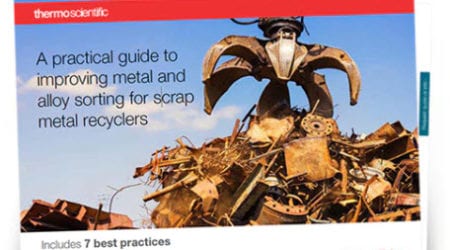


Leave a Reply