Old Ships Find New Life as Scrap Metal
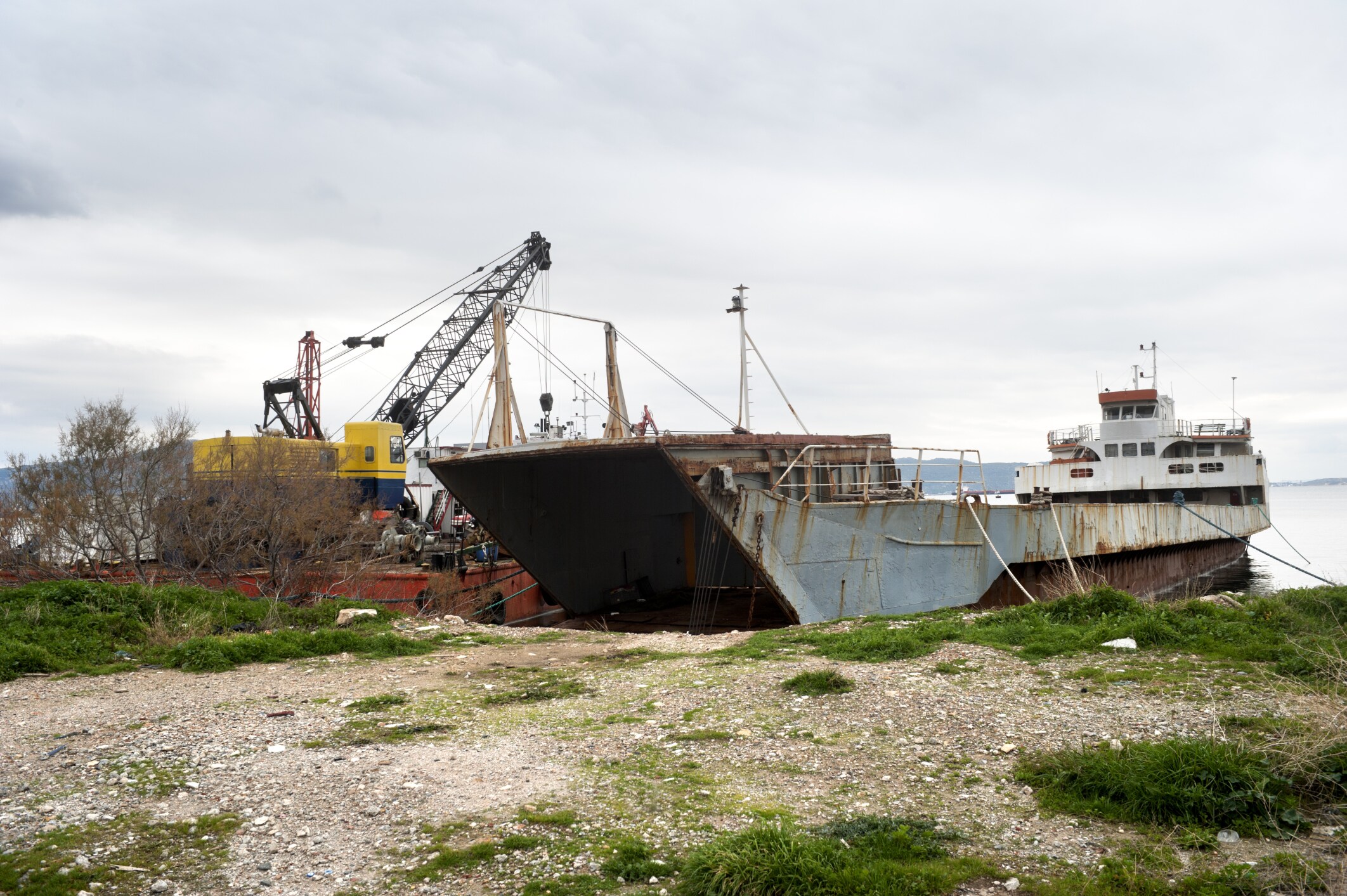
An interesting source of scrap metal that has gained attention recently is decommissioned naval ships. The practice of breaking down old ships for scrap is sometimes known as “ship breaking.” According to an article on Recycling Today, in May of this year the U.S. Navy awarded a contract to Esco Marine, a full service marine yard and recycling operation in Brownsville, Texas, to tow, dismantle and recycle the decommissioned aircraft carrier Saratoga. This follows a contract awarded last year to Star Metals of Brownsville for the former USS Forrestal. A third contract is expected to go to International Shipbreaking Ltd. of Brownsville for the former USS Constellation.
There are an estimated 130 decommissioned ships in the U.S. Naval ships have an active life of about 25 to 30 years and are decommissioned when their upkeep and maintenance becomes financially unfeasible. If no one wants the vessel as a museum or similar purpose, the ship is sold for scrap. According to the The U.S. Navy’s Team Ships website, all U.S. Navy vessels must be dismantled by U.S. companies who demonstrate “acceptable environmental and occupational safety management plans as well as the facilities, technical processes, and trained personnel necessary to properly dismantle and recycle a Navy ship.” The site adds that due to increasing scrap metal commodity prices over the past decade, the cost of dismantling the ships has been reduced to pennies.
Ship recycling yields primarily ferrous metals such as steel, but also non-ferrous metals such as aluminum, copper, and brass, as well as a variety of usable parts. Most of the metal that is recovered is sent to Mexico, just a few miles away from Brownsville, where it is manufactured into automobile frames, engines, and parts which are shipped back to the U.S.
While metal scrap recycling has obvious financial and environmental advantages, the introduction of scrap into the metal production line also poses issues when its exact chemical composition, including the existence of contaminants or hazardous elements, is unknown. When positive identification of the grade and composition of the scrap material is a problem, x-ray fluorescence (XRF) technology is the solution.
Handheld XRF brings immense value to scrap metal recyclers because they can rapidly analyze the elemental and alloy composition of incoming scrap, positively identify metals and alloy grades at material transfer points, and guarantee the quality of their product to their customers. Additionally, smelters and foundry operators are able to quickly determine and fine-tune the composition of the feed material, giving them tremendous speed, safety, regulatory, and cost-saving advantages.
As more decommissioned ships enter into the scrap marketplace, how do you think your business will be impacted? We welcome your comments.
P.S. Speaking of U.S. Naval ships … Happy Flag Day – June 14. People across the United States celebrate each year to honor the United States flag and to commemorate the flag’s adoption. On the same day, the United States Army celebrates its birthday.

INFOGRAPHIC: 8 Fun Facts About Copper
What do pennies, asparagus and police officers have in commo...
Read More
I Use XRF Analyzers on Metals… Is it Safe?
Do you use portable x-ray fluorescence (XRF) analyzers for...
Read More
Why Scrap Metal Recycling Companies Are Getting Partnership Offers from Mining Operators
There are reports that there is a new trend in mining – th... Pete Anzalone
Read More
Why Do Li-ion Battery Recyclers Use Handheld XRF?
Lithium-ion batteries have become increasingly popular due t... Mathieu Bauer
Read More

[…] Old Ships Find New Life as Scrap Metal SThere are an estimated 130 decommissioned ships in the U.S. Naval ships have an active life of about 25 to 30 years and are decommissioned when their upkeep and maintenance becomes financially unfeasible. If no one wants the vessel as a museum or similar purpose, the ship is sold for scrap. Ship recycling yields primarily ferrous metals such as steel, but also non-ferrous metals such as aluminum, copper, and brass, as well as a variety of usable parts. Most of the metal that is recovered is sent to Mexico, just a few miles away from Brownsville, where it is manufactured into automobile frames, engines, and parts which are shipped back to the U.S. Read about best practices for scrap metal recyclers. […]