 Guess what? The most read articles this year are almost identical to the most read articles last year. Because those articles keep gaining readership, it will be difficult for the newer articles to catch up. So instead of just repeating last year’s list, we have narrowed the articles down to Top 10 Analylzing Metals articles that were published this year. Here they are, starting from most views:
- Are Titanium and Tungsten Good Choices for Jewelry? A retired jeweler from California discusses why titanium and tungsten metals and alloys may be appropriate materials for planes, armor plating, naval ships, spacecraft, and missiles, but not for wedding rings.
- Calculating the Value of Automotive Catalytical Converters. Our XRF expert answered a question from a scrap metal recycler who read our blog article Catalytic Converter Theft in The News Again, and wanted to know how to calculate the ppm weight of catalyst material analyzed on a handheld XRF analyzer.
- Catalytic Converter Theft in The News Again. Catalytic converters are a hot topic in the scrap metal recycling industry because of the precious metals that the discarded auto parts contain. However, they are often stolen and sold for hundreds of dollars in cash for each converter. Read about the crime spree and how the items are valued.
- Every Gram of Silver Counts. Read why local pawnbrokers, cash-for-gold operators, and precious metals dealers were seeing an increase in people cashing in their metal jewelry and coins for cash and how they can accurately assess the value and prevent fraud.
- The Importance of Material Verification in Metal Fabrication. Portable metal analyzers are important tools for performing material identification and confirmation of materials. Read about a sampling of industries where the latest XRF and LIBS technologies are being used for quality control in foundries and manufacturing.
- The Advantage of Sealed Argon in LIBS Analyzers for PMI of Steel. Learn about Laser Induced Breakdown Spectroscopy (LIBS), the analytical technique that utilizes a highly focused laser that ablates the surface of a material in order to determine its chemical composition. It must have a very pure argon atmosphere in order to avoid the loss of signal with the carbon emission line at low levels of concentration. Read about the best practice of requiring a complete seal of the argon atmosphere in the burn chamber, with an indicator so the operator knows when the integrity of that seal is lost.
- Shedding Some Light on Sheet Metal Pinholes. During steel manufacturing, pickling (acid wash) can cause pinholes and edge cracks which compromise the overall quality of sheet metal resulting in downgraded material or scrap. Discover how to monitor flat sheets to help ensure such defects are caught before the product is shipped out the door.
- How Temperature Stabilization of a LIBS Spectrometer can Affect the Accuracy of Alloy Analysis. Did you know the material used to mount the LIBS spectrometer changes dimension ever so slightly with temperature? This causes errors in the readings and could ultimately cause catastrophes. Learn how to avoid this hot issue.
- Meeting the Demand for Quality Galvanized Steel. To meet the demand and supply quality products, manufacturers of galvanized steel must overcome these two key challenges associated with creating accurate standards for calibration of online X-ray Fluorescence (XRF) based coating weight gauges. Find out what they are.
- How to Get Accurate Silicon Readings when Analyzing Silicon in Steel. To help prevent pipeline failure incidents from occurring, silicon analysis of carbon steel is done. In order to get the accurate silicon readings by XRF analyzers, all surface contamination must be removed in the area to be analyzed. Here’s how to prepare the surface.
Whether you are interested in identifying precious metals in jewelry, catalytic converters, or scrap recycling facilities, or if you are concerned with the quality of your steel products, or any manufactured metal product for that matter, when it comes to analyzing and confirming metals and alloys, you’ll find something valuable to learn on our blog. Read the above top ten and subscribe so you won’t miss any in the new year.
Additional Resources:
- Download our free eBook: A Practical Guide to Improving Steel Manufacturing Processes and Production Methods
- Visit our center for Improving Steel Manufacturing Processes and Production

What’s Everyone Reading this Year?
According to Google, here are the Top 10 read articles this ... Marlene Gasdia-Cochrane, Editor
Read More
Here’s a Free Periodic Table for Your Halloween Goody-Bag
No tricks here. Download this handy periodic table and X-ray... Marlene Gasdia-Cochrane, Editor
Read More
Metallic Microneedle Manufacturing
A metallic microneedle manufacturer faces challenges ensurin... Marc Liu
Read More
INFOGRAPHIC: 8 Fun Facts About Copper
What do pennies, asparagus and police officers have in commo...
Read More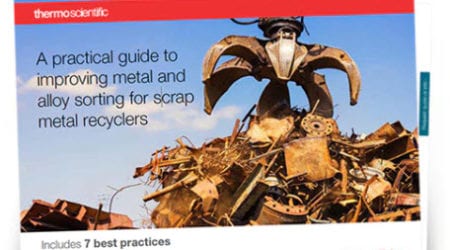

Leave a Reply