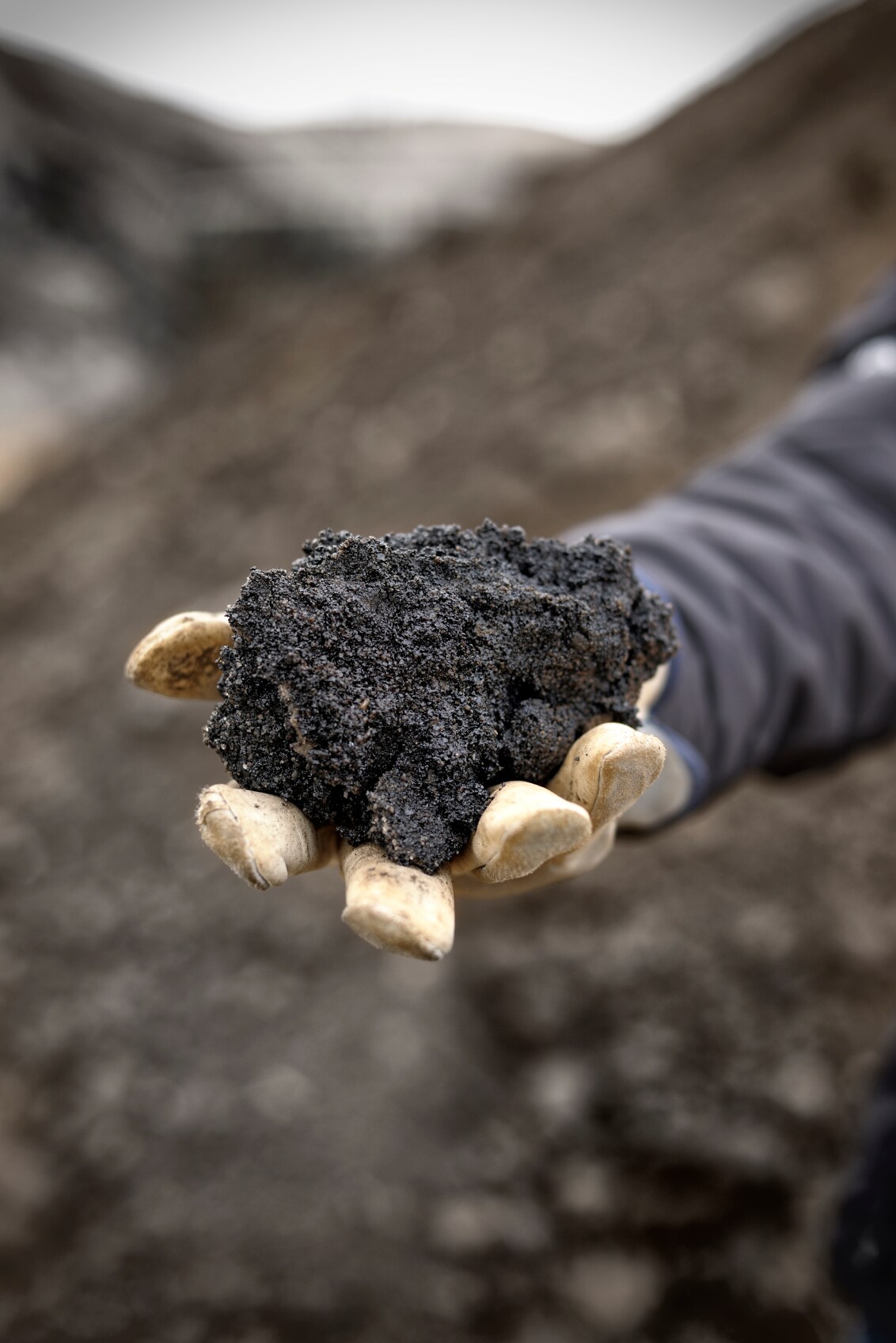
 The oil sands are large deposits of bitumen, a sticky, black and highly viscous liquid or semi-solid form of petroleum. The largest deposit is located in northeastern Alberta, Canada. A report issued by Alberta’s Oil Sands Discovery Centre states there are an estimated 1.7 to 2.5 trillion barrels of bitumen in Alberta representing 39% of Canada’s total oil production. Approximately 1.3 million barrels are produced per day and production is expected to grow to three million barrels per day by 2020. According to a 2013 report by the Canadian Association of Petroleum Producers, Canadian crude oil production is predicted to grow at a compounded annual growth rate of nearly 7% from 2015 to 2020. The oils sands extraction process is composed of an extraction step and a characterization step. The first step is the extraction with heated toluene into three components; bitumen, solids content (sand & clay), and water. The second step is the characterization of bitumen to determine the asphaltene content (tar residue that is either rejected, or converted to low value products) in the bitumen. Asphaltene is a low value added product present in the bitumen. The higher the asphaltene content, the lower the value of the bitumen. Drilled core samples are used to determine which area contains the lowest asphaltene content. For more information visit the Petroleum Technology Alliance Canada (PTAC) website. The Soxhlet-Dean Stark Extraction (SDSE) technique is the recognized standard for bitumen extraction. It is used to measure the water content in oil sands but typically requires substantial amounts of time (4–48 hours per sample) and solvent (200–500 mL per sample). The accelerated solvent extraction technique uses elevated temperatures and pressure to extract compounds from solid and semi-solid matrices. Bitumen can also be extracted using the accelerated solvent extraction technique by loading the oil sands sample into a stainless steel extraction cell and subjecting it to hot toluene at elevated pressure. The accelerated solvent extraction technique uses less time (0.2–0.3 hours per sample) and solvent (15–45 mL per sample). Both techniques are shown to be effectively the same when extracting bitumen, solids, and water content from oil sands. The difference is that the accelerated solvent extraction technique introduces a pressure component which, when combined with heat, enables the extraction process to occur in about one-tenth the time and thus shows potential to replace SDSE as the industry standard for bitumen extraction from oil sands. Read Accelerated Solvent Extraction for Bitumen Extraction from Oil Sands to see data and analysis comparing the extraction efficiency of these two techniques for extraction bitumen, solids, and water content from three grades of oil sands.

The Critical Role of Process Mass Spectrometry in e-Fuels Production
Climate-friendly energy The thermometer is rising, all over ... Daniel Merriman
Read More
How to Safely Use a Process Raman Analyzer in a Hazardous Location
When your process takes place in a hazardous environment, pr... Janam Pandya
Read More
How to Use In-line Raman for Real-Time Natural Gas Compositional Analysis
Why Raman spectroscopy for natural gas analysis? Raman spe...
Read More
Where Do Flowmeter Measurements Factor Into Downstream Oil and Gas?
In the downstream sector of the oil and gas industry—where...
Read More

Leave a Reply