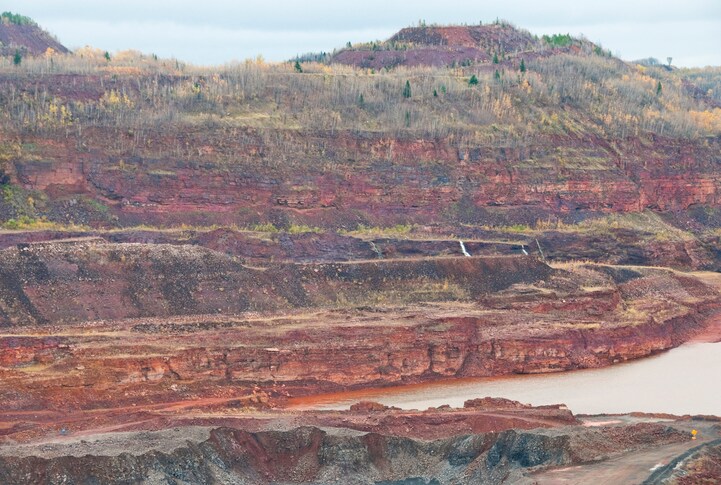
 This summer, the Minnesota Museum of Mining plans to begin work on a new exhibit, “From Ore to Steel: The Mining Process,” which tells the story of steel making.
Carol Borich, treasurer for the Minnesota Museum of Mining Board of Directors, shared details of the project in a recent interview appearing on the Mesabi Daily News website.
“So, it’s really the story of how mining happens, and how ore is explored for and discovered,” explained Borich. She also provided a basic rundown of some of the steps that the exhibit will depict, including geology and ore exploration, test drilling, and sampling and evaluation. If mining is feasible, it proceeds with drilling, blasting, hauling, crushing, separating, pelletizing and steel making.
Each stage of the steel manufacturing production process is designed to produce quality strip in a manner that maximizes mill yield and minimizes scrap while meeting stringent customer specifications for thickness, width, hardness, and strength.
The mining raw materials needed for the steel manufacturing process must be carefully processed to ensure quality finished products that meet specifications. There are more than 3,500 different grades of steel with many different physical, chemical, and environmental properties. Adding metals such as nickel, chromium, and tungsten produce a wide range of alloy steels such as stainless steel.
Sinter is the primary feed material for making iron in a blast furnace. The production of high-quality sinter is crucial for assuring consistent, stable furnace productivity with a low consumption of reductants. Sinter quality begins with the proper selection and mixing of the raw materials. Inhomogeneous raw mix can affect permeability and cause an increase in fuel consumption.
Precise feeding of process materials is critical to maintaining product quality, but measuring and ensuring steel raw material quality control can be challenging. Equipment used to ensure raw material quality control includes:
- Online elemental analyzers configured for the sinter feed application measure sinter feed chemistry on-line and provides minute by minute, reliable chemical analysis data to enable control of basicity in real time. Cross-Belt systems based on Prompt Gamma Neutron Activation Analysis (PGNAA) are well suited for raw material analysis both by themselves and in combination with X-ray fluorescence (XRF) analysis. PGNAA data can be combined with XRF lab results for improved process optimization.
- Conveyor belt scale systems monitor steel raw material feed to crushers, mills, screens, preparation plants, and coal-fired power plants to help ensure precise feeding of process materials and maintain product quality.
- Weighbelt feeders accurately control process material feed rates.
Visit the Steel Manufacturing web site, including an overview of Raw Materials Quality Control for Steel Manufacturing.
PGNAA Improves Process and Quality Control in Cement Production
In the world of cement production, precision is key. Getting... Darrell Leetham
Read More
Don’t Abandon the Treasures: Fill Your Trick-or-Treat Bags with Free eBooks for Mining and Cement Operations
Ghost towns have more to do with the abandonment of mining t... Marlene Gasdia-Cochrane, Editor
Read More
Why Mining Organizations are Increasing Investment in Tailings Management
Mining as an industrial activity is set to continue expandin... John Margeson
Read More
The Advantages of Monitoring Variability on Copper Mill Feed
In the copper mining industry, monitoring variability on cop... Kevin Gordon
Read More


Leave a Reply