Search
 Elementsuche
 Struktursuche


Thermo Scientific Chemicals
2-Vinylpyridin, 97 %, stab. mit 0.1 % 4-tert-Butylcatechol, Thermo Scientific Chemicals
CAS: 100-69-6 | C7H7N | 105.14 g/mol
Have Questions?
Ansicht ändern

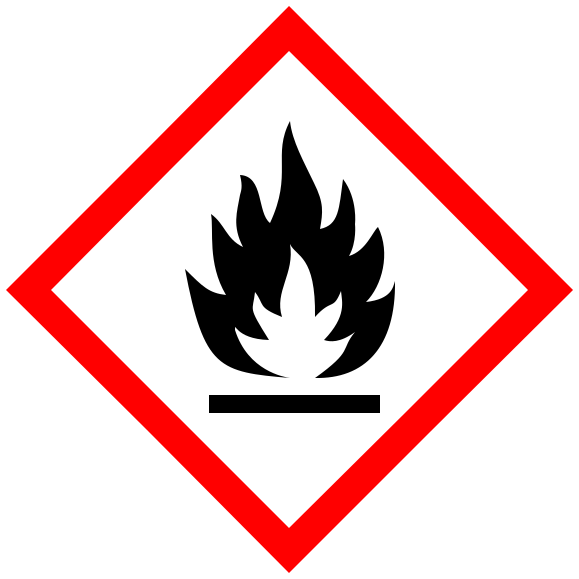
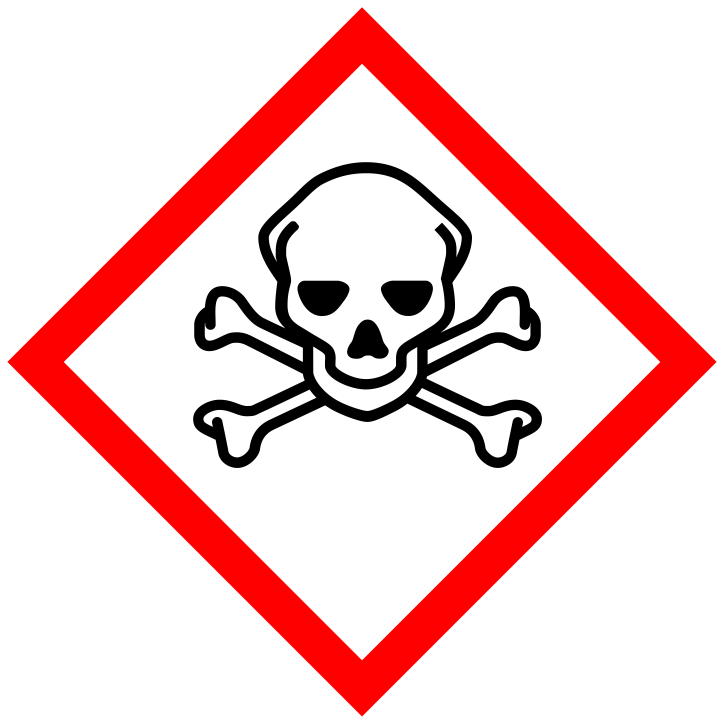

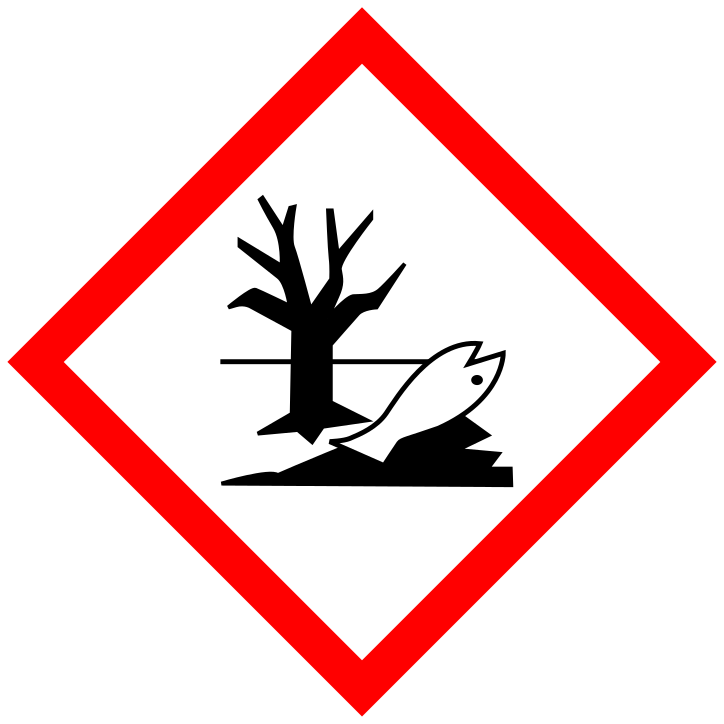

Katalognummer A14056.AE
auch als A14056-AE bezeichnet
Preis (EUR)
39,40
Each
Menge:
100 mL
Preis (EUR)
39,40
Each
Chemikalien-Kennzeichnungen
CAS100-69-6
IUPAC Name2-ethenylpyridine
Molecular FormulaC7H7N
InChI KeyKGIGUEBEKRSTEW-UHFFFAOYSA-N
SMILESC=CC1=CC=CC=N1
Mehr anzeigen
Specifications Datenblatt
FormLiquid
Identification (FTIR)Conforms
Appearance (Color)Clear, colorless or pale yellow to brown
Solution Test10% w/v in methanol: clear
Assay (GC)≥96.0%
Mehr anzeigen
2-Vinylpyridine is a pyridine derivative used in the preparation of poly(2-vinylpyridine) via radical polymerization. 2-Vinylpyridine is used to improve effectiveness of protective polymer coatings on metals. It is a reagent for pyridylethylation for new protection method for active hydrogen compounds.. It is also used as basic materials for one of largest-selling plastic, manufacturing pharmaceuticals and bio-compounds.
This Thermo Scientific Chemicals brand product was originally part of the Alfa Aesar product portfolio. Some documentation and label information may refer to the legacy brand. The original Alfa Aesar product / item code or SKU reference has not changed as a part of the brand transition to Thermo Scientific Chemicals.
Anwendungen
2-Vinylpyridin ist ein Pyridinderivat, das bei der Herstellung von Poly(2-Vinylpyridin) mittels radikaler Polymerisation verwendet wird. 2-Vinylpyridin wird zur Verbesserung der Wirksamkeit von schützenden Polymerbeschichtungen auf Metallen verwendet. Es ist ein Reagenz für die Pyridylethylierung für eine neue Schutzmethode für aktive Wasserstoffverbindungen. Es wird auch als Ausgangsmaterial für einen der meistverkauften Kunststoffe verwendet, der für die Herstellung von Pharmazeutika und Bioverbindungen eingesetzt wird.
Löslichkeit
In Wasser löslich (27 g/l). Schwer löslich in Chloroform und Methanol.
Hinweise
Halten Sie den Behälter dicht verschlossen. Von Oxidationsmitteln entfernt aufbewahren.
RUO – Research Use Only
Allgemeine Referenzen:
- Hanno Hückstädt; Astrid Göpfert; andVolker Abetz. Synthesis and morphology of ABC heteroarm star terpolymers of polystyrene, polybutadiene and poly(2-vinylpyridine). Macromolecular Chemistry and Physics. 2000, 201(3), 296-307.
- Lyudmila M. Bronstein; Stas N. Sidorov; Pyotr M. Valetsky; Jürgen Hartmann; Helmut Cölfen; and Markus Antonietti. Induced Micellization by Interaction of Poly(2-vinylpyridine)-block-poly(ethylene oxide) with Metal Compounds. Micelle Characteristics and Metal Nanoparticle Formation. Langmuir. 1999, 15(19), 6256-6262.
- Reagiert mit Chlorocarbenen, photochemisch, thermisch oder mit Ultraschall bewirkt, um Indolizine in einem Schritt zu erzeugen: J. Chem. Soc., Chem. Commun., 509 (1994); z. B. Chlorphenylcarbene, thermisch erzeugt aus 3-Chloro-3-Phenyldiazirin: