Search
 Elementsuche
 Struktursuche


Thermo Scientific Chemicals
Diphenylamin, ≥ 98 %, Thermo Scientific Chemicals
CAS: 122-39-4 | C12H11N | 169.227 g/mol
Have Questions?
Ansicht ändern

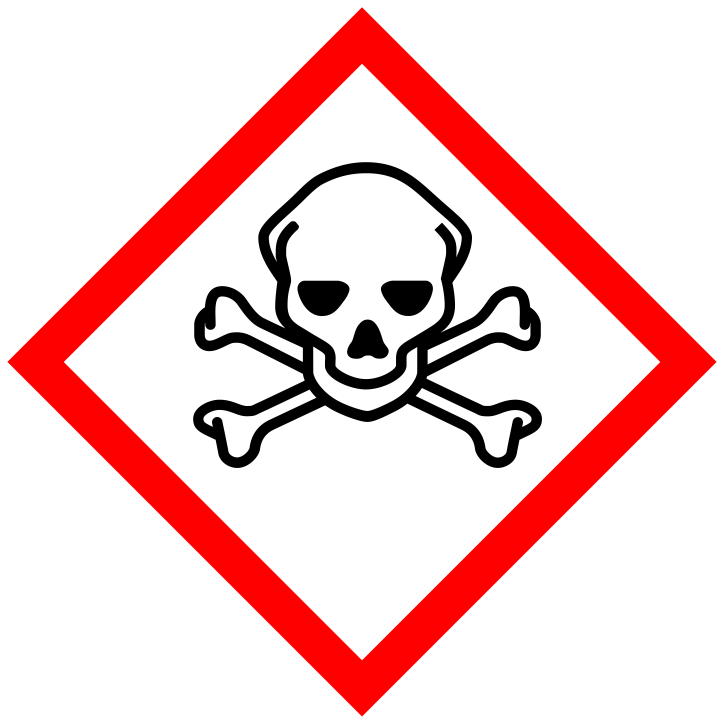

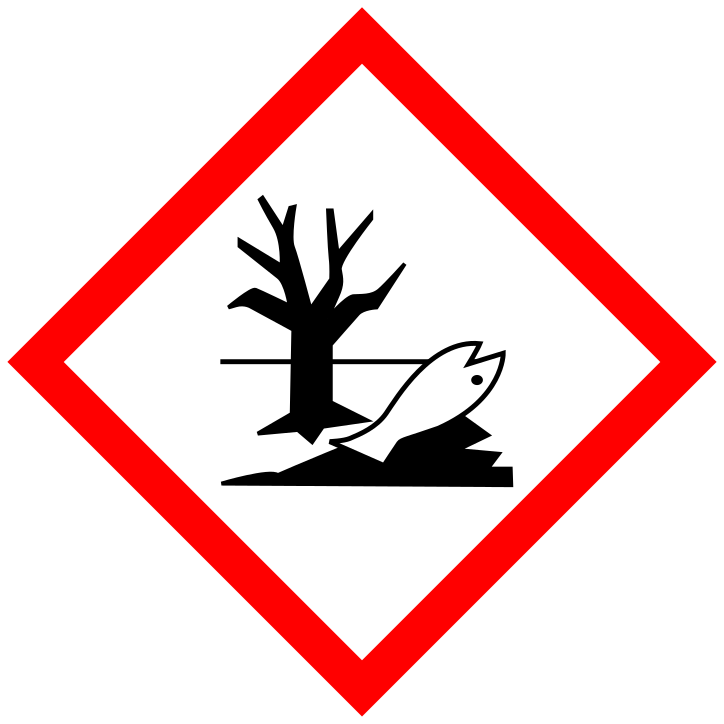

Katalognummer A18265.0E
auch als A18265-0E bezeichnet
Preis (EUR)
164,00
Each
Menge:
2500 g
Preis (EUR)
164,00
Each
Chemikalien-Kennzeichnungen
CAS122-39-4
IUPAC NameN-phenylaniline
Molecular FormulaC12H11N
InChI KeyDMBHHRLKUKUOEG-UHFFFAOYSA-N
SMILESN(C1=CC=CC=C1)C1=CC=CC=C1
Mehr anzeigen
Specifications Datenblatt
Appearance (Color)White to yellow to pale brown
FormFlakes
Assay (GC)≥98.0%
Identification (FTIR)Conforms
Melting Point (clear melt)50-55°C
Diphenylamine is employed as harvest scald inhibitor for apples indoor drench treatments due to its antioxidant property. Alkyl derivatives of diphenylamine are used as anti-ozonants in the rubber manufacturing. It is used as lubricants and acts as a stabilizer for plastics. In the analytical chemistry, it is used to test the nitrate ion in association with ammonium chloride in sulfuric acid.
This Thermo Scientific Chemicals brand product was originally part of the Alfa Aesar product portfolio. Some documentation and label information may refer to the legacy brand. The original Alfa Aesar product / item code or SKU reference has not changed as a part of the brand transition to Thermo Scientific Chemicals.
Anwendungen
Diphenylamin wird wegen seiner antioxidativen Eigenschaft als Schalenbräune-Hemmer bei Apfeltrocknungsbehandlungen eingesetzt. Alkylderivate von Diphenylamin werden als Antiozonmittel in der Gummiherstellung verwendet. Es wird als Schmiermittel verwendet und dient als Stabilisator für Kunststoffe. In der analytischen Chemie wird es zur Prüfung des Nitrations in Verbindung mit Ammoniumchlorid in Schwefelsäure verwendet.
Löslichkeit
Löslich in Ethanol, Aceton, Benzol, Kohlenstofftetrachlorid, Pyridin und Ethylacetat. Geringfügig löslich in Chloroform.
Hinweise
Inkompatibel mit starken Säuren und starken Oxidationsmitteln. Den Behälter dicht verschlossen in einem kühlen und gut belüfteten Bereich aufbewahren.
RUO – Research Use Only
Allgemeine Referenzen:
- Redox indicator.
- An improved procedure for Ullmann-type coupling of aryl iodides with diarylamines to give triarylamines uses K2CO3/ 18-crown-6, in the presence of Cu powder in o-dichlorobenzene: Synthesis, 383 (1987).
- Liu, C.; Fu, Q.; Zou, Y.; Yang, C.; Ma, D.; Qin, J. Low turn-on voltage, high-power-efficiency, solution-processed deep-blue organic light-emitting diodes based on starburst oligofluorenes with diphenylamine end-capper to enhance the HOMO level. Chem. Mater. 2014, 26 (10), 3074-3083.
- Kang, S. H.; Choi, I. T.; Kang, M. S.; Eom, Y. K.; Ju, M. J.; Hong, J. Y.; Kang, S. H.; Kim, H. K. Novel D-π-A structured porphyrin dyes with diphenylamine derived electron-donating substituents for highly efficient dye-sensitized solar cells. J. Mater. Chem. A 2013, 1 (12), 3977-3982.