Search


Citations & References (4)
Invitrogen™
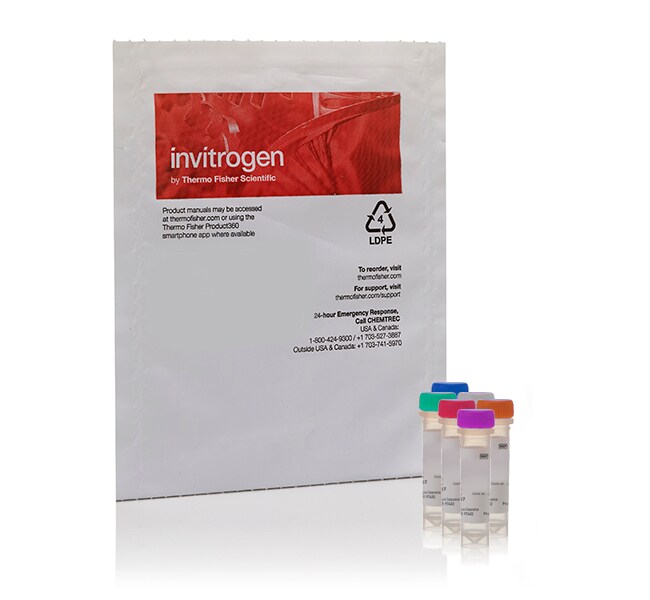
HCS LipidTOX™ Phospholipidosis and Steatosis Detection Kit, for high-content screening, for cellular imaging
HCS LipidTOX™ Phospholipidosis and Steatosis Detection Kit offers a complete set of reagents for performing image-based high-content screening (HCS) assaysRead more
| Catalog Number | Quantity |
|---|---|
| H34158 | 1200 Assays |
Catalog number H34158
Price (USD)
948.65
Online exclusive
988.00Save 39.35
Each
Quantity:
1200 Assays
Price (USD)
948.65
Online exclusive
988.00Save 39.35
Each
HCS LipidTOX™ Phospholipidosis and Steatosis Detection Kit offers a complete set of reagents for performing image-based high-content screening (HCS) assays to characterize phospolipidosis and steatosis, toxic side effects on lipid metabolism that can be triggered by drugs or other compounds. The kit supplies LipidTOX™ Red phospholipid stain and LipidTOX™ Green neutral lipid stain, which can be used sequentially for the analysis of phospholipidosis and steatosis, respectively, or can be used in isolation for single-parameter analysis. Both fluorescent probes can be easily detected with fluorescence microscopes and can be quantified with stand-alone image analysis software or the built-in image analysis software of most HCS readers. In addition to the phospholipid and neutral lipid stains, this kit supplies the nuclear stain Hoechst 33342, propranolol and cyclosporin A (control compounds), and DMSO. Sufficient reagents are supplied for 2, 96-well plates (H34157) or 10, 96-well plates (H34158).
WARNING: Cancer and Reproductive Harm – www.P65Warnings.ca.gov
For Research Use Only. Not for use in diagnostic procedures.
Specifications
Detection MethodFluorescence
Dye TypeOther Label(s) or Dye(s)
Format96-well plate
Quantity1200 Assays
Shipping ConditionRoom Temperature
For Use With (Equipment)High Content Analysis Instrument
Product LineLipidTOX, Molecular Probes
Product TypePhospholipidosis and Steatosis Detection Kit
Unit SizeEach
Contents & Storage
When stored at -20°C, desiccated, and protected from light, the kit is stable for at least 6 months.
Frequently asked questions (FAQs)
I'm seeing aggregates in my thawed LipidTox stain solutions. Is this okay?
Citations & References (4)
Citations & References
Abstract
Fluorescent high-content imaging allows the discrimination and quantitation of E-LDL-induced lipid droplets and Ox-LDL-generated phospholipidosis in human macrophages.
Journal:Cytometry A
PubMed ID:20014301
'Macrophage foam cells formed during uptake of atherogenic lipoproteins are a hallmark of atherosclerotic lesion development. In this study, human macrophages were incubated with two prototypic atherogenic LDL modifications enzymatically degraded LDL (E-LDL) and oxidized LDL (Ox-LDL) prepared from the same donor LDL. To detect differences in macrophage lipid storage,
In vitro detection of drug-induced phospholipidosis using gene expression and fluorescent phospholipid based methodologies.
Journal:Toxicol Sci
PubMed ID:17567588
'Phospholipidosis (PLD) is characterized by the excessive intracellular accumulation of phospholipids. It is well established that a large number of cationic amphiphilic drugs have the potential to induce PLD. In the present study, we describe two facile in vitro methods to determine the PLD-inducing potential of a molecule. The first
Melanoma Persister Cells Are Tolerant to BRAF/MEK Inhibitors via ACOX1-Mediated Fatty Acid Oxidation.
Journal:Cell Rep
PubMed ID:33238129
Increased Akt-Driven Glycolysis Is the Basis for the Higher Potency of CD137L-DCs.
Journal:Front Immunol
PubMed ID:31068941