Search


Citations & References (7)
Invitrogen™
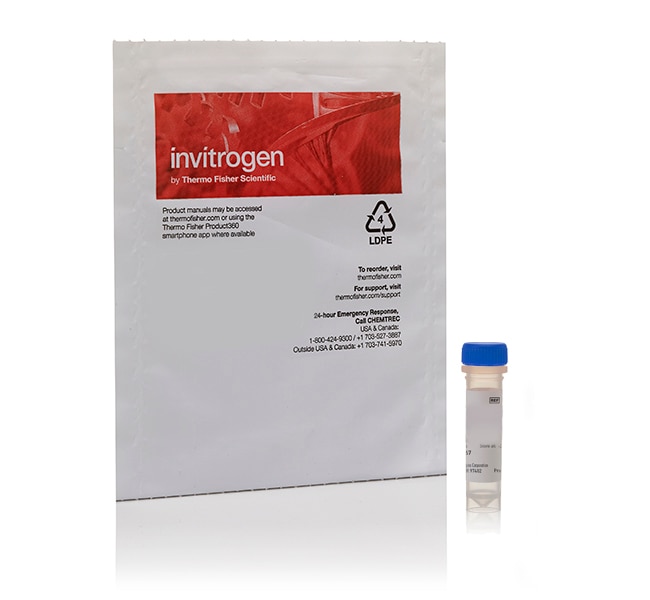
Oregon Green™ 488 1,2-Dihexadecanoyl-sn-Glycero-3-Phosphoethanolamine (Oregon Green™ 488 DHPE)
The phospholipid, Oregon Green® 488 DHPE is labeled on the head group with the green-fluorescent Oregon Green® fluorophore with excitation/emissionRead more
| Catalog Number | Quantity |
|---|---|
| O12650 also known as O-12650 | 1 mg |
Catalog number O12650
also known as O-12650
Price (USD)
269.00
Each
Quantity:
1 mg
Price (USD)
269.00
Each
The phospholipid, Oregon Green® 488 DHPE is labeled on the head group with the green-fluorescent Oregon Green® fluorophore with excitation/emission maxima ∼501/526 nm. This fluorinated analog of fluorescein overcomes some of the key limitations of fluorescein, including greater photostability and a lower pKa (pKa ∼4.7 versus 6.4 for fluorescein), making its fluorescence essentially pH insensitive in the physiological pH range.
For Research Use Only. Not for use in diagnostic procedures.
Specifications
Chemical Name or MaterialPhospholipids
Recommended StorageStore in freezer (-5 to -30°C) and protect from light.
Physical FormSolid
Product LineOregon Green
Quantity1 mg
Unit SizeEach
Citations & References (7)
Citations & References
Abstract
Zero mode waveguides for single-molecule spectroscopy on lipid membranes.
Journal:Biophys J
PubMed ID:16461393
'Zero mode waveguides (ZMWs), subwavelength optical nanostructures with dimensions ranging from 50 to 200 nm, have been used to study systems involving ligand-receptor interactions. We show that under proper conditions, lipid membranes will invaginate into the nanostructures, which confine optical excitation to subattoliter volumes. Fluorescence correlation spectroscopy (FCS) was used
Early endosomal SNAREs form a structurally conserved SNARE complex and fuse liposomes with multiple topologies.
Journal:EMBO J
PubMed ID:17159904
'SNARE proteins mediate membrane fusion in eukaryotic cells. They contain conserved SNARE motifs that are usually located adjacent to a C-terminal transmembrane domain. SNARE motifs spontaneously assemble into four helix bundles, with each helix belonging to a different subfamily. Liposomes containing SNAREs spontaneously fuse with each other, but it is
Surface-coupled proton exchange of a membrane-bound proton acceptor.
Journal:Proc Natl Acad Sci U S A
PubMed ID:20160117
Proton-transfer reactions across and at the surface of biological membranes are central for maintaining the transmembrane proton electrochemical gradients involved in cellular energy conversion. In this study, fluorescence correlation spectroscopy was used to measure the local protonation and deprotonation rates of single pH-sensitive fluorophores conjugated to liposome membranes, and the
Effects of linker sequences on vesicle fusion mediated by lipid-anchored DNA oligonucleotides.
Journal:Proc Natl Acad Sci U S A
PubMed ID:19164559
Synthetic lipid-oligonucleotide conjugates inserted into lipid vesicles mediate fusion when one population of vesicles displays the 5'-coupled conjugate and the other the 3'-coupled conjugate, so that anti-parallel hybridization allows the membrane surfaces to come into close proximity. Improved assays show that lipid mixing proceeds more quickly and to a much
Interplay between H1N1 influenza a virus infection, extracellular and intracellular respiratory tract pH, and host responses in a mouse model.
Journal:PLoS One
PubMed ID:33979408