Search


Zitierungen und Referenzen (1)
Invitrogen™
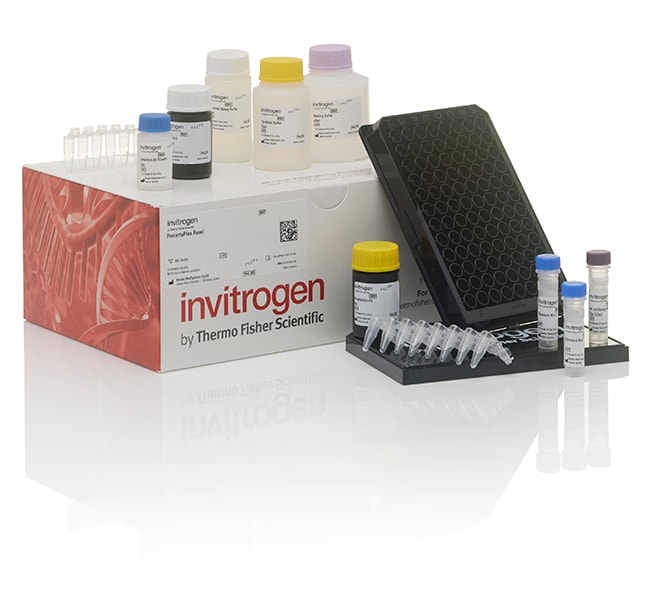
ProcartaPlex™ Human Immune Monitoring Panel for MAGPIX, 65plex
Das ProcartaPlex 65-Plex-Human-Immunmonitoring-Panel für MAGPIX ist ein vorkonfiguriertes Multiplex-Immunassay-Kit, das 65 Zytokine, Chemokine und Wachstumsfaktoren mithilfe der Luminex xMAP Technologie misst.
| Katalognummer | Menge |
|---|---|
| EPX650-16500-901 | 96 Tests |
Katalognummer EPX650-16500-901
Preis (EUR)
12.200,00
Each
Menge:
96 Tests
Preis (EUR)
12.200,00
Each
Das Human Immunmonitoring 65-plex ProcartaPlex Panel für MAGPIX ist ein vorkonfiguriertes Multiplex-Immunoassay-Kit, das 65 Cytokine, Chemokine und Wachstumsfaktoren mithilfe der Luminex xMAP Technologie misst. Analysieren Sie diese 65 Ziele gleichzeitig für ein effizientes Immunantwort-Profiling, die Biomarker-Entdeckung und die Validierung. Dieses Kit besteht aus zwei separaten Kits: einem 43-plex- und einem 22-plex-Kit, die speziell für die Verwendung auf dem MAGPIX-Gerät entwickelt wurden, dass bis zu 50 Ziele gleichzeitig nachweisen kann. Luminex 100- und FLEXMAP 3D-Anwender sollten das Immunmonitoring 65 Plex Panel (Art.- Nr. EPX650-10065-901) verwenden, das alle 65 Ziele in einem einzigen Panel enthält. Die Panels (43-Plex und 22-Plex) sind gebrauchsfertig und werden mit einzelnen Fläschchen mit Capture- und Nachweisreagenzien bereitgestellt, die in 1-facher Konzentration formuliert sind und weniger Pipettierung sowie weniger Aufwand bei der Einrichtung der Experimente erfordern.
Vorkonfigurierte ProcartaPlex Panels werden umfassend auf die Kombinierbarkeit, Interferenz und Kreuzreaktivität von Analyten getestet, um ein Höchstmaß an Validierung und Präzision zu gewährleisten. Alle ProcartaPlex Panels werden mit den erforderlichen Reagenzien für den Assay geliefert.
ProcartaPlex Multiplex-Panel sind in verschiedenen Formaten für sechs Spezies erhältlich (Mensch, Maus, Ratte, nichtmenschlicher Primat, Schwein und Hund).
Zielliste [Bead-Region]:
22-Plex: APRIL [52], BAFF [65], BLC (CXCL13) [15], CD30 [34], ENA-78 (CXCL5) [55], Eotaxin-2 (CCL24) [37], Eotaxin-3 (CCL26) [77], FGF-2 [75], Fraktalkin (CX3CL1) [39], IL-16 [47], IL-2R (CD25) [22], IL-20 [26], I-TAC (CXCL11) [46], MCP-2 (CCL8) [18], MCP-3 (CCL7) [66], MDC (CCL22) [30], MIF [67], MIG (CXCL9) [54], TNF-RII [45], TRAIL (CD253) [29], TSLP [61], TWEAK [35]
43-plex: CD40L (CD154) [74], Eotaxin (CCL11) [33], Gro-alpha (CXCL1) [61], G-CSF (CSF-3) [42], GM-CSF [44], HGF [46], IFN alpha [48], IP-10 (CXCL10) [22], IFN gamma [43], IL-1 alpha [62], IL-1 beta [18], IL-2 [19], IL-3 [73], IL-4 [20], IL-5 [21], IL-6 [25], IL-7 [26], IL-8 (CXCL8) [27], IL-9 [52], IL-10 [28], IL-12p70 [34], IL-13 [35], IL-15 [65], IL-17A (CTLA-8) [36], IL-18 [66], IL-21 [72], IL-22 [76], IL-23 [63], IL-27 [14], IL-31 [37], LIF [15], M-CSF [67], MCP-1 (CCL2) [51], MIP-1 alpha (CCL3) [12], MIP-1 beta (CCL4) [47], MIP-3 alpha (CCL20) [56], MMP-1 [64], NGF beta [55], SDF-1 alpha (CXCL12) [13], SCF [39], TNF alpha [45], TNF beta [54], VEGF-A [78]
Über ProcartaPlex Assays für die Luminex Plattform
ProcartaPlex Immunassays basieren auf den Prinzipien eines Sandwich-ELISA, wobei zwei hochspezifische Antikörper verwendet werden, die an verschiedene Epitope eines Proteins gebunden sind, um alle Proteinziele gleichzeitig mit einem Luminex Gerät zu quantifizieren. ProcartaPlex Multiplex-Assays benötigen nur 25 µl Plasma oder Serum bzw. 50 µl Zellkulturüberstand und es dauert nur vier Stunden, bis analysierte Ergebnisse zur Verfügung stehen.
Zu den Merkmalen gehören:
• Reproduzierbare, zuverlässige Ergebnisse – dieses Panel wurde nach dem höchsten Industriestandard validiert und umfasst sowohl die Möglichkeit zur Kombination von Proteinzielen als auch einen Kreuzreaktivitätstest
• Mehr Ergebnisse pro Probe – gleichzeitige Messung mehrerer Proteinziele in einer einzigen Probe von 25 – 50 µl
• Bewährte Luminex Technologie – vielfach referenzierte Multiplexing-Plattform für den Nachweis und die Quantifizierung von Proteinen
ProcartaPlex Assays verwenden Luminex xMAP (Multianalyt-Profiling) Technologie für den gleichzeitigen Nachweis und die Quantifizierung von bis zu 65 Proteinzielen in einer einzigen Probe von 25 – 50 µl aus Plasma, Serum, Zellkulturüberständen und anderen Körperflüssigkeiten.
Vorkonfigurierte ProcartaPlex Panels werden umfassend auf die Kombinierbarkeit, Interferenz und Kreuzreaktivität von Analyten getestet, um ein Höchstmaß an Validierung und Präzision zu gewährleisten. Alle ProcartaPlex Panels werden mit den erforderlichen Reagenzien für den Assay geliefert.
ProcartaPlex Multiplex-Panel sind in verschiedenen Formaten für sechs Spezies erhältlich (Mensch, Maus, Ratte, nichtmenschlicher Primat, Schwein und Hund).
Zielliste [Bead-Region]:
22-Plex: APRIL [52], BAFF [65], BLC (CXCL13) [15], CD30 [34], ENA-78 (CXCL5) [55], Eotaxin-2 (CCL24) [37], Eotaxin-3 (CCL26) [77], FGF-2 [75], Fraktalkin (CX3CL1) [39], IL-16 [47], IL-2R (CD25) [22], IL-20 [26], I-TAC (CXCL11) [46], MCP-2 (CCL8) [18], MCP-3 (CCL7) [66], MDC (CCL22) [30], MIF [67], MIG (CXCL9) [54], TNF-RII [45], TRAIL (CD253) [29], TSLP [61], TWEAK [35]
43-plex: CD40L (CD154) [74], Eotaxin (CCL11) [33], Gro-alpha (CXCL1) [61], G-CSF (CSF-3) [42], GM-CSF [44], HGF [46], IFN alpha [48], IP-10 (CXCL10) [22], IFN gamma [43], IL-1 alpha [62], IL-1 beta [18], IL-2 [19], IL-3 [73], IL-4 [20], IL-5 [21], IL-6 [25], IL-7 [26], IL-8 (CXCL8) [27], IL-9 [52], IL-10 [28], IL-12p70 [34], IL-13 [35], IL-15 [65], IL-17A (CTLA-8) [36], IL-18 [66], IL-21 [72], IL-22 [76], IL-23 [63], IL-27 [14], IL-31 [37], LIF [15], M-CSF [67], MCP-1 (CCL2) [51], MIP-1 alpha (CCL3) [12], MIP-1 beta (CCL4) [47], MIP-3 alpha (CCL20) [56], MMP-1 [64], NGF beta [55], SDF-1 alpha (CXCL12) [13], SCF [39], TNF alpha [45], TNF beta [54], VEGF-A [78]
Über ProcartaPlex Assays für die Luminex Plattform
ProcartaPlex Immunassays basieren auf den Prinzipien eines Sandwich-ELISA, wobei zwei hochspezifische Antikörper verwendet werden, die an verschiedene Epitope eines Proteins gebunden sind, um alle Proteinziele gleichzeitig mit einem Luminex Gerät zu quantifizieren. ProcartaPlex Multiplex-Assays benötigen nur 25 µl Plasma oder Serum bzw. 50 µl Zellkulturüberstand und es dauert nur vier Stunden, bis analysierte Ergebnisse zur Verfügung stehen.
Zu den Merkmalen gehören:
• Reproduzierbare, zuverlässige Ergebnisse – dieses Panel wurde nach dem höchsten Industriestandard validiert und umfasst sowohl die Möglichkeit zur Kombination von Proteinzielen als auch einen Kreuzreaktivitätstest
• Mehr Ergebnisse pro Probe – gleichzeitige Messung mehrerer Proteinziele in einer einzigen Probe von 25 – 50 µl
• Bewährte Luminex Technologie – vielfach referenzierte Multiplexing-Plattform für den Nachweis und die Quantifizierung von Proteinen
ProcartaPlex Assays verwenden Luminex xMAP (Multianalyt-Profiling) Technologie für den gleichzeitigen Nachweis und die Quantifizierung von bis zu 65 Proteinzielen in einer einzigen Probe von 25 – 50 µl aus Plasma, Serum, Zellkulturüberständen und anderen Körperflüssigkeiten.
Nur für Forschungszwecke. Nicht zur Verwendung bei diagnostischen Verfahren.
Specifications
Assay-BereichSiehe Analysezertifikat
Assay-Empfindlichkeit:Siehe Analysezertifikat
NachweisverfahrenFluoreszenz
Zur Verwendung mit (Geräte)Luminex™ Geräte
FormatMultiplex-Kit
ProduktlinieProcartaPlex
ProbentypSerum, Plasma, Zellkulturüberstände, Plasma, Cell Culture Supernatants
ProbenvolumenSerum/Plasma: 25 μl; CCS: 50 μl
VersandbedingungNasseis
CombinabilityNicht kombinierbar
ProdukttypMultiplex-Panel
Menge96 Tests
Research AreaImmunology
SpeziesHuman
Unit SizeEach
Inhalt und Lagerung
- 4 Fläschchen Human-Standard-Mix M (gefriergetrocknet)
- 1 Fläschchen Beads-Mix M1 (1x)
- 1 Fläschchen Beads-Mix M2 (1x)
- 1 Fläschchen biotinylierter Nachweis-Antikörper-Mix M1 (1 x)
- 1 Fläschchen biotinylierter Nachweis-Antikörper-Mix M2 (1 x)
- 4 Fläschchen Human-Control-High
- 4 Fläschchen Human-Control-Low
- 1 Flasche Lesepuffer (1x)
- 1 Flasche Waschpuffer (10x)
- 1 Flasche Streptavidin-PE (1x)
- 1 Flasche Universeller Assay-Puffer (1x)
- Streifen mit 8 Röhrchen
- Klebefolie
- 2 96-Well-Platten mit flachem Boden, schwarz
- Bei 2 ° bis 8 °C lagern
Häufig gestellte Fragen (FAQ)
What is the size of the Luminex beads you currently use?
I am interested in performing Luminex assays using BioSource kits, and I have a Luminex xMAP system. Besides the kits and system, what other reagents and equipment will I need?
Do the Luminex beads require special care in handling?
Why would the Luminex acquisition software display "Sample Empty" messages during analysis?
What are the Luminex beads made of?
Zitierungen und Referenzen (1)
Zitierungen und Referenzen
Abstract
Multiplexing protein and gene level measurements on a single Luminex platform.
Journal:Methods
PubMed ID:30742996
'The ability to simultaneously measure multiple secreted proteins and the corresponding gene expression levels from a single sample is valuable for comprehensive analysis. Bottlenecks to traditional immunoassays and gene expression assays include large sample consumption, time consuming experimental procedures, and complex data analysis.'