Search




Thermo Scientific™
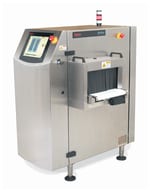
NextGuard™ Röntgenerkennungssysteme
Wechseln Sie schnell und einfach vom Metallnachweis zu unserem vielseitigen Röntgenerkennungssystem und garantieren Sie so Ihren Kunden sichere Produkte.
Have Questions?
Ansicht ändern

| Katalognummer | Verfügbare Förderbandhöhen | Maximales Transportgewicht des Produkts | Röntgenstrahlenschutzverordnung | Verfügbare System-/Förderbandlängen |
|---|---|---|---|---|
| NEXTGUARDC330 | 800 mm (31.5 in.), 900 mm (35.4 in.), 1000 mm (39.4 in.), 1100 mm (43.3 in.) <80± mm | 10 kg (22 lb) | FDA CFR 21 Part 1020.40, RED Act (Kanada), IRR99 (VK), NCF 74-100 (Frankreich), UNE 73-302 (Spanien), GB18871-2002 (China) und weitere. Hinweis: VK, Kanada und Spanien fordern optional erweiterte Schutzmaßnahmen und Frankreich fordert optional erweiterte Abschirmung. | Standardlänge 1 m (3,3 Fuß), C330: Ausgefahren 1,4 m (4,6 Fuß) |
| NEXTGUARDC500 | 800 mm (31.5 in.), 900 mm (35.4 in.), 1000 mm (39.4 in.), 1100 mm (43.3 in.) <80± mm | 11 kg (25 lb.) | FDA CFR 21 Part 1020.40, RED Act (Kanada), IRR99 (VK), NCF 74-100 (Frankreich), UNE 73-302 (Spanien), GB18871-2002 (China) und weitere. Hinweis: VK, Kanada und Spanien fordern optional erweiterte Schutzmaßnahmen und Frankreich fordert optional erweiterte Abschirmung. | 1.2 m (47.4 ft.) |
| NEXTGUARDPRO | 800/950/1.100 mm (31,5/37,4/43,3 in.) ± 75 mm (3,0 in) | 11 kg (25 lb.) bis 50 kg (110 lbs.) | FDA CFR 21 Teil 1020.40, RED Act. (Kanada) und andere. Hinweis: Kanada, das Vereinigte Königreich, Spanien und Frankreich verlangen eine zusätzliche Abschirmung | 1,5 m (59 in.) standardmäßig mit optionalen Fördererenden, die das System um 200/400/600/800/1000 mm (7,9/15,8/23,6/31,5/39,4 in.) am Einlauf- oder am Auslaufende verlängern. |
Katalognummer NEXTGUARDC330
Preis (EUR)
-
Verfügbare Förderbandhöhen:
800 mm (31.5 in.), 900 mm (35.4 in.), 1000 mm (39.4 in.), 1100 mm (43.3 in.) <80± mm
Maximales Transportgewicht des Produkts:
10 kg (22 lb)
Röntgenstrahlenschutzverordnung:
FDA CFR 21 Part 1020.40, RED Act (Kanada), IRR99 (VK), NCF 74-100 (Frankreich), UNE 73-302 (Spanien), GB18871-2002 (China) und weitere. Hinweis: VK, Kanada und Spanien fordern optional erweiterte Schutzmaßnahmen und Frankreich fordert optional erweiterte Abschirmung.
Verfügbare System-/Förderbandlängen:
Standardlänge 1 m (3,3 Fuß), C330: Ausgefahren 1,4 m (4,6 Fuß)
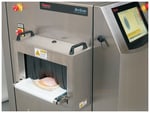
Finden Sie mit den Thermo Scientific™ NextGuard™ Röntgenerkennungssystemen metallische und nichtmetallische Fremdkörper und vermeiden Sie die Auswirkungen von nassen Produkten auf Metalldetektoren. NextGuard ist für eine Vielzahl von Lebensmittelanwendungen konzipiert und verfügt durch seine einfach konfigurierbare Vision-Software über hervorragende Funktionen zur Überprüfung verpackter Produkte auf fehlende Bestandteile oder Komponenten, Unter- und Überfüllungen und anderer Qualitätsprobleme. Sowohl der Conveyor als auch die C500 Modelle sind anwenderfreundliche, kostengünstige und durchdachte Systeme für die Überwindung der bisherigen Hindernisse beim Wechsel vom Metallnachweis zur Röntgenerkennung.
Neue und verbesserte Funktionen des NextGuard Röntgenerkennungssystems:
- Die Softwareoptionen zur Produktprüfung decken ein breites Spektrum an Größen, Positionen und Mengen ab.
- Die Software für die Packungsverteilung ermöglicht die genaue Erkennung eines fehlenden Produkts oder eines teilweise fehlenden Produkts in der Verpackung von Produkten, die gestapelt geliefert werden.
- Zusätzliche Algorithmen ermöglichen den Nachweis von weniger dichten Fremdkörpern wie Glas oder Steinen in komplexen, strukturierten Produkten wie Nüssen oder Teebeutelkartons.
- Eine optionale Software zur Masseschätzung verwendet die Dichtedaten aus dem Röntgenbild zur Schätzung des Gewichts und zur Erkennung von Produkt-Über- bzw. -Unterfüllungen.
- Konfigurierbar für eine duale Zurückweisung, bei der zwischen Produktkontamination und anderen Qualitätsfehlern unterschieden wird.
- Der serienmäßige Systemprozessor ist jetzt sechsmal schneller als bei der ersten NextGuard-Generation, sodass eine sehr schnelle Fremdkörpererkennung und -prüfung sowie bessere Ansprechzeiten möglich sind.
- Der optionale 0,4 mm-Pixel-Detektor verfügt für eine bessere Metallerkennung in leichten und homogenen Produkten wie Pulvern oder Käse über eine 3,2-mal höhere Auflösung.
Weitere Vorteile:
- Kompakte Größe für einfache Installation und Anwendung
- Einzigartiger, nicht-linearer Detektor, um nicht erfasste Untersuchungsbereiche auszuschliessen.
- Abnehmbares Förderband zur einfachen Änderung der Förderrichtung und Wartung
- Intuitive Thermo Scientific™ VersaWeigh™ Bedienoberfläche und Software
- Modulare Bauweise für hohe Zuverlässigkeit und schnelle Diagnose und Reparatur
- Betriebsdaueranzeige für Strahlenquelle und Detektor, um teure Stillstandszeiten zu minimieren.
- Integrierte Überwachungsfunktion für schnelle Fehlererkennung
Optionen zur Anpassung Ihres Systems:
- Umfassende Zurückweisungssysteme oder -mechanismen zur Anwendung am nachgeschalteten Förderband
- Klimaanlage aus Edelstahl für Nassanwendungen
- Alarmsignalanlage, keine Vorhänge, Lenkrollen oder Führungsschienen aus Blei
- Strahlenschutzmessanlage
- CE, cCSAus
- Ersatzteil-Kits
Specifications
FörderbandmaterialUSDA/FDA Approved Urethane
BandgeschwindigkeitC330SPSR, C330 HPSR, C330 HPHR: 10-80m/min (33-262ft/min), C330HPSR: 10-120m/min (33-393ft/min)
Zertifizierung/KonformitätISO9001 certified facility
Verfügbare Förderbandhöhen800 mm (31.5 in.), 900 mm (35.4 in.), 1000 mm (39.4 in.), 1100 mm (43.3 in.) <80± mm
Auflösung Detektor0.8 mm standard
Digitale EingängeFour inputs, 24VDC 25 mA, NPN/PNP (jumper selectable), assignable function
Digitale AusgängeFour outputs, 24VDC 0.5A, assignable function
Elektrische Anforderungen208 to 250 VAC, 50/60 Hz, autosensing, single phase, 10 amps
Export-/SicherheitsverordnungCE, cCSAus
Mensch-Maschine-Schnittstelle (HMI)Windows Operating System, touchscreen, 307 mm (12.1 in) diagonal
Verfügbare PrüfalgorithmenImage processing/thresholding/blob analysis, grayscale profiling and mass estimation
Sprachauswahl BenutzeroberflächeEnglish, Spanish, French, Italian, German, Chinese, Russian, Polish, Czech, Portuguese, Dutch, Thai, Indonesian. Contact factory for additional languages
Maximales Transportgewicht des Produkts10 kg (22 lb)
NetzwerkanschlussWatertight Ethernet port standard
Betriebstemperatur5°C to 30°C (41°F to 86°F) with cooling fan or 5°C to 40°C (41°F to 104°F); with air conditioner
AusgängeExcel, PDF, or xml format selectable
RöntgenstrahlenschutzverordnungFDA CFR 21 Part 1020.40, RED Act (Kanada), IRR99 (VK), NCF 74-100 (Frankreich), UNE 73-302 (Spanien), GB18871-2002 (China) und weitere. Hinweis: VK, Kanada und Spanien fordern optional erweiterte Schutzmaßnahmen und Frankreich fordert optional erweiterte Abschirmung.
Ausschuss-SystemIntegrated variable speed conveyors. Air blast or pusher. Lockable reject bin and reject/bin full photo sensors. Dual rejectors possible
Relative Luftfeuchtigkeit20 to 90% non-condensing
SicherheitsmerkmaleX-ray power key, four level password system, emergency X-ray/conveyor stop button, lead/lead-free curtains, failsafe LED x-ray imminent and on indication light
Empfindlichkeit
≥ 1mm diameter for Fe, non-Fe, SS, >=3mm for other dense contaminants such as glass or stone (always verify application performance via a product test)
Verfügbare System-/FörderbandlängenStandardlänge 1 m (3,3 Fuß), C330: Ausgefahren 1,4 m (4,6 Fuß)
USB-AnschlussWatertight USB 2.0 Standard
Gewicht (angloamerikanisch)780 lb
Gewicht (metrisch)354 kg
Material des RöntgenvorhangsTeflon coated (no-lead)
Röntgenleistung100 W (80 kV/1.25mA) or 160 W (80 kV/2mA)
Detection Algorithms AvailableSimple Threshold, Gradient, Morphologies and Contaminant Area Measure
Scan-Rate DetektorUp to 1667 Lines/sec.
IP-BewertungIP65 with air conditioner, IP54 with cooling fans
Unit SizeEach