Search

Invitrogen™
Bolt™ Bis-Tris Welcome Pack, 8%
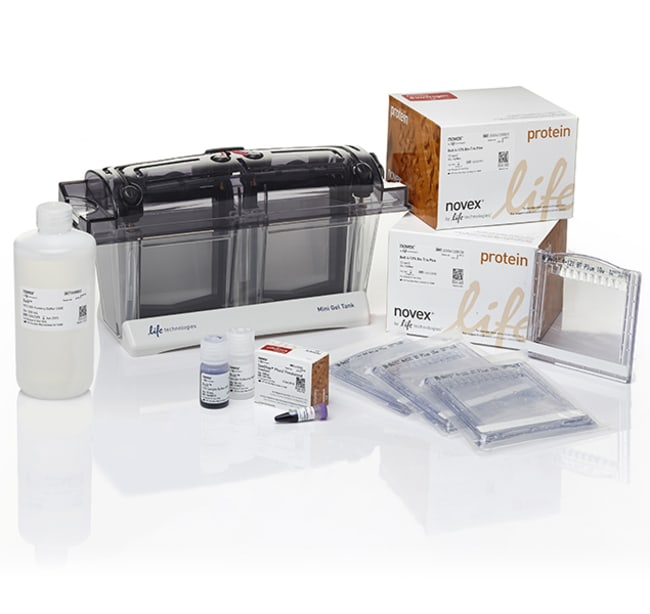
Das Bolt Startpaket bietet alle notwendigen Bolt Gele und Puffer für den erstmaligen Einsatz eines Mini-Gel-Tanks.
Have Questions?
Ansicht ändern

| Katalognummer | Wells |
|---|---|
| NW0008C | 15-Well |
| NW0008A | 10-Well |
| NW0008B | 12-Well |
Katalognummer NW0008C
Preis (EUR)
824,00
Each
Wells:
15-Well
Preis (EUR)
824,00
Each
Das Bolt Startpaket bietet alle notwendigen Bolt Gele und -Puffer für den erstmaligen Einsatz eines Mini-Gel-Tanks. Der Mini-Gel-Tank ist mit Novex Gelen, NuPAGE Gelen und Bolt Bis-Tris Plus Gelen kompatibel. Jeder Mini Gel Tank fasst bis zu zwei Gele pro Lauf. Das einzigartige Tank-Design ermöglicht eine praktische parallele Gelbeladung und eine optimale Anzeige bei der Verwendung. Optimierte Bedingungen mit konstanter Spannung ermöglichen einen Durchlauf der Bolt Bis-Tris Plus-Gele in etwa 35 Minuten.
Das Startpaket enthält:
• Mini-Gel-Tank (A25977)
• Bolt Bis-Tris Plus Gele (2 Boxen, 20 Gele)
• Bolt MES-Laufpuffer, 20x (B0002)
• Bolt LDS-Probenpuffer, 4x (B0007)
• Bolt Probenreduktionsmittel, 10x (B0009)
• PageRuler Plus Vorgefärbte Proteinleiter, 10 bis 250 kDa (26619)
Informationen zum Mini-Gel-Tank
Der Mini-Gel-Tank ist mit Novex Gelen, NuPAGE Gelen und Bolt Bis-Tris Plus Gelen kompatibel. Jeder Mini Gel Tank fasst bis zu zwei Gele pro Lauf. Das einzigartige Tank-Design ermöglicht eine praktische parallele Gelbeladung und eine optimale Anzeige bei der Verwendung. Optimierte Bedingungen mit konstanter Spannung ermöglichen einen Durchlauf der Bolt Bis-Tris Plus-Gele in etwa 35 Minuten. Die Laufzeiten können je nach Pufferbedingungen und verwendeten Netzteilen variieren.
Informationen zu Bolt Bis-Tris Plus Gelen
Bolt Bis-Tris Plus Gele sind Polyacrylamid-Fertiggele, die für eine optimale Trennung Ihrer kleinen bis mittleren Proteine unter denaturierenden Bedingungen ausgelegt sind. Bolt Bis-Tris Plus-Gele liefern eine gleichbleibend hohe Gel-Leistung und eine pH-neutrale Umgebung, die Protein-Veränderungen minimiert. Bolt Gele eignen sich hervorragend für Western-Blot-Transfers und -Analysen und für andere Verfahren, bei denen die Unversehrtheit der Proteine entscheidend ist. Verwenden Sie Bolt Gele auch, um bei der Proteintrennung im Laboralltag optimale Ergebnisse zu erzielen. Bolt Bis-Tris Plus-Gele sind in vier Polyacrylamid-Konzentrationen erhältlich: 8-, 10-, 12- und 4 bis 12 %-Gradient und mehrere Well-Formate. Bolt Bis-Tris-Gele verfügen über keilförmige Wells, die leicht bis zu zwei Mal mehr Probenvolumen laden können, um Proteine in sehr verdünnten Proben nachzuweisen oder Proteine mit niedriger Abundanz zu visualisieren.
Für den Transfer Ihrer Proteine auf eine Membran empfehlen wir die Verwendung von Bolt Transferpuffer (BT0006) für den herkömmlichen Nasstransfer mit dem Mini Blot-Modul (B1000). Alternativ kann der schnelle halbtrockene Transfer mit dem Invitrogen Power Blotter oder der schnelle trockene Transfer mit dem iBlot 2 Gel-Transfergerät (IB21001) durchgeführt werden.
• Mini-Gel-Tank (A25977)
• Bolt Bis-Tris Plus Gele (2 Boxen, 20 Gele)
• Bolt MES-Laufpuffer, 20x (B0002)
• Bolt LDS-Probenpuffer, 4x (B0007)
• Bolt Probenreduktionsmittel, 10x (B0009)
• PageRuler Plus Vorgefärbte Proteinleiter, 10 bis 250 kDa (26619)
Informationen zum Mini-Gel-Tank
Der Mini-Gel-Tank ist mit Novex Gelen, NuPAGE Gelen und Bolt Bis-Tris Plus Gelen kompatibel. Jeder Mini Gel Tank fasst bis zu zwei Gele pro Lauf. Das einzigartige Tank-Design ermöglicht eine praktische parallele Gelbeladung und eine optimale Anzeige bei der Verwendung. Optimierte Bedingungen mit konstanter Spannung ermöglichen einen Durchlauf der Bolt Bis-Tris Plus-Gele in etwa 35 Minuten. Die Laufzeiten können je nach Pufferbedingungen und verwendeten Netzteilen variieren.
Informationen zu Bolt Bis-Tris Plus Gelen
Bolt Bis-Tris Plus Gele sind Polyacrylamid-Fertiggele, die für eine optimale Trennung Ihrer kleinen bis mittleren Proteine unter denaturierenden Bedingungen ausgelegt sind. Bolt Bis-Tris Plus-Gele liefern eine gleichbleibend hohe Gel-Leistung und eine pH-neutrale Umgebung, die Protein-Veränderungen minimiert. Bolt Gele eignen sich hervorragend für Western-Blot-Transfers und -Analysen und für andere Verfahren, bei denen die Unversehrtheit der Proteine entscheidend ist. Verwenden Sie Bolt Gele auch, um bei der Proteintrennung im Laboralltag optimale Ergebnisse zu erzielen. Bolt Bis-Tris Plus-Gele sind in vier Polyacrylamid-Konzentrationen erhältlich: 8-, 10-, 12- und 4 bis 12 %-Gradient und mehrere Well-Formate. Bolt Bis-Tris-Gele verfügen über keilförmige Wells, die leicht bis zu zwei Mal mehr Probenvolumen laden können, um Proteine in sehr verdünnten Proben nachzuweisen oder Proteine mit niedriger Abundanz zu visualisieren.
Für den Transfer Ihrer Proteine auf eine Membran empfehlen wir die Verwendung von Bolt Transferpuffer (BT0006) für den herkömmlichen Nasstransfer mit dem Mini Blot-Modul (B1000). Alternativ kann der schnelle halbtrockene Transfer mit dem Invitrogen Power Blotter oder der schnelle trockene Transfer mit dem iBlot 2 Gel-Transfergerät (IB21001) durchgeführt werden.
For Research Use Only. Not for use in diagnostic procedures.
Specifications
Zur Verwendung mit (Geräte)Mini-Gel-Tank
Gel Thickness1,0 mm
Menge1 Welcome Pack
VersandbedingungZugelassen für den Versand bei Raumtemperatur und auf Nasseis
Gelanteil (%)8 %
GelgrößeMini
GeltypBis-Tris
ProduktlinieBolt WedgeWell
Trennbereich3,5 bis 180 kDa
Wells15-Well
Unit SizeEach
Inhalt und Lagerung
• Mini-Gel-Tank
• Bolt 8%ige Bi-Tris Plus-Gele, 15-Well
• Bolt MES-Laufpuffer (20X)
• Bolt LDS-Probenpuffer (4X)
• Bolt Probenreduktionsmittel (10X)
• PageRuler Plus Vorgefärbte Proteinleiter, 10 bis 250 kDa
• Bolt 8%ige Bi-Tris Plus-Gele, 15-Well
• Bolt MES-Laufpuffer (20X)
• Bolt LDS-Probenpuffer (4X)
• Bolt Probenreduktionsmittel (10X)
• PageRuler Plus Vorgefärbte Proteinleiter, 10 bis 250 kDa