Search


Zitierungen und Referenzen (236)
Invitrogen™
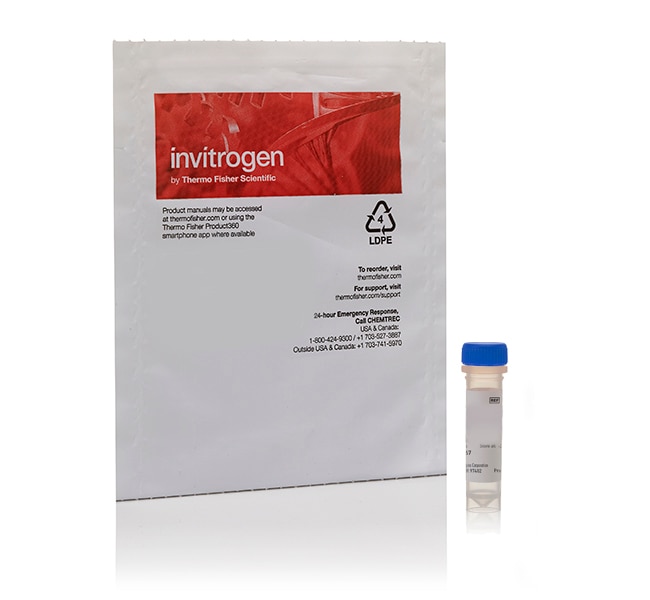
Octadecyl Rhodamin B Chlorid (R18)
Das lipophile Otadecyl Rhodamin B bindet an Membranen mit dem Fluorophor an der wässrigen Schnittstelle und dem in das LipidinnereWeitere Informationen
| Katalognummer | Menge |
|---|---|
| O246 | 10 mg |
Katalognummer O246
Preis (EUR)
720,00
Each
Menge:
10 mg
Preis (EUR)
720,00
Each
Das lipophile Otadecyl Rhodamin B bindet an Membranen mit dem Fluorophor an der wässrigen Schnittstelle und dem in das Lipidinnere vortretenden Alkylschwanz.
Nur für Forschungszwecke. Nicht zur Verwendung bei diagnostischen Verfahren.
Specifications
SummenformelC46H67ClN2O3.
ProduktlinieMolecular Probes
Menge10 mg
Empfohlene LagerungIm Tiefkühlgerät (-5 °C bis -30 °C) lagern und vor Licht schützen.
VersandbedingungRaumtemperatur
Subzelluläre LokalisationZellmembranen & Lipide
Physikalische FormFest
ProdukttypReagenz für die Zellmarkierung
Unit SizeEach
Zitierungen und Referenzen (236)
Zitierungen und Referenzen
Abstract
Modification of the cytoplasmic domain of influenza virus hemagglutinin affects enlargement of the fusion pore.
Journal:Journal of virology
PubMed ID:10906206
The fusion activity of chimeras of influenza virus hemagglutinin (HA) (from A/fpv/Rostock/34; subtype H7) with the transmembrane domain (TM) and/or cytoplasmic tail (CT) either from the nonviral, nonfusogenic T-cell surface protein CD4 or from the fusogenic Sendai virus F-protein was studied. Wild-type or chimeric HA was expressed in CV-1 cells
Fusion activity of transmembrane and cytoplasmic domain chimeras of the influenza virus glycoprotein hemagglutinin.
Journal:J Virol
PubMed ID:9420208
The role of the sequence of transmembrane and cytoplasmic/intraviral domains of influenza virus hemagglutinin (HA, subtype H7) for HA-mediated membrane fusion was explored. To analyze the influence of the two domains on the fusogenic properties of HA, we designed HA-chimeras in which the cytoplasmic tail and/or transmembrane domain of HA
Exocytotic insertion of calcium channels constrains compensatory endocytosis to sites of exocytosis.
Journal:J Cell Biol
PubMed ID:10684256
'Proteins inserted into the cell surface by exocytosis are thought to be retrieved by compensatory endocytosis, suggesting that retrieval requires granule proteins. In sea urchin eggs, calcium influx through P-type calcium channels is required for retrieval, and the large size of sea urchin secretory granules permits the direct observation of
Thiol/disulfide exchange is required for membrane fusion directed by the Newcastle disease virus fusion protein.
Journal:J Virol
PubMed ID:17151113
'Newcastle disease virus (NDV), an avian paramyxovirus, initiates infection with attachment of the viral hemagglutinin-neuraminidase (HN) protein to sialic acid-containing receptors, followed by fusion of viral and cell membranes, which is mediated by the fusion (F) protein. Like all class 1 viral fusion proteins, the paramyxovirus F protein is thought
Mild proteolysis induces a ready-to-fuse state on Sendai virus envelope.
Journal:FEBS Lett
PubMed ID:9515725
'The Sendai virus fuses with host cell membranes in a pH-independent manner through an unknown mechanism. Here we report that mild trypsin pre-treatments of Sendai virions, for example 15 min at 4 degrees C, give Sendai virions the ability to fuse at a rate up to 10-fold higher than control.