Search


Zitierungen und Referenzen (2)
Invitrogen™
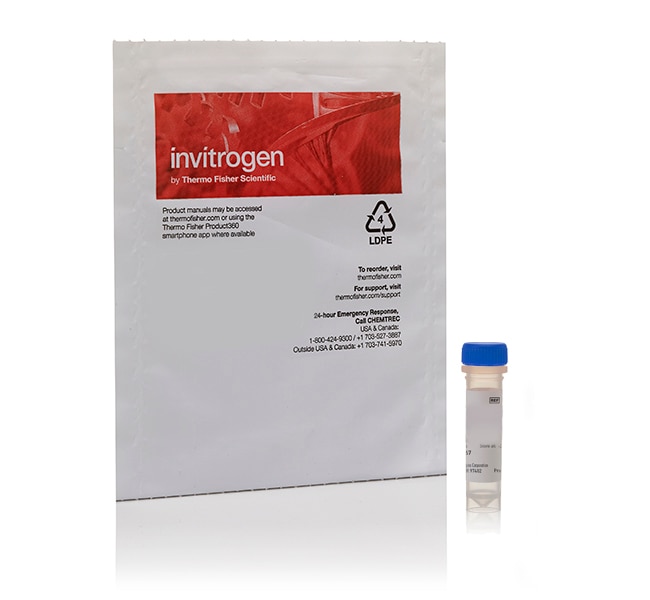
Qdot™ 545 ITK™ Carboxyl Quantum Dots
Qdot™ 545 ITK™ Carboxyl-Quantenpunkte sind das ideale Ausgangsmaterial für die Vorbereitung von kundenspezifischen Konjugaten, die eine hohe Beladung mit BiomolekülenWeitere Informationen
| Katalognummer | Menge |
|---|---|
| Q21391MP | 250 μl |
Katalognummer Q21391MP
Preis (EUR)
720,00
Each
Menge:
250 μl
Preis (EUR)
720,00
Each
Qdot™ 545 ITK™ Carboxyl-Quantenpunkte sind das ideale Ausgangsmaterial für die Vorbereitung von kundenspezifischen Konjugaten, die eine hohe Beladung mit Biomolekülen erfordern. Diese Materialien sind Carboxylat-funktionalisiert und können mit Amingruppen von Proteinen und modifizierten Oligonukleotiden durch EDC-vermittelte Kondensation gekoppelt werden. Die Beschichtungen dieser Sonden bieten mehr Bindungsstellen als unsere Qdot™ ITK™-Aminoquantenpunkte, haben jedoch keine PEG-Linker, die nicht-spezifische Wechselwirkungen verhindern. Diese Materialien können mit bi-funktionalen X-PEG-Amin-Linkern konjugiert werden, um eine individuelle Reaktivität und eine höhere Spezifität zu gewährleisten. Unsere Qdot™ ITK™ Carboxyl-Quantenpunkte werden als 8 μM-Lösungen angeboten und sind in allen 9 Qdot™ Sondenfarben erhältlich.
Wichtige Merkmale von Qdot™ ITK™ Carboxyl-Quantenpunkten:
• Qdot™ 545 ITK™ Carboxylquantenpunkte weisen ein Emissionsmaxima von ∼545 nm auf
• Extrem photostabil und helle Fluoreszenz
• Effiziente Anregung durch einlinige Anregungsquellen
• Enge Emission, hohe Stokes-Verschiebung
• In mehreren Farben erhältlich
• Ideal für Markierungs- und Tracking-Anwendungen
Eigenschaften von Qdot™ Nanokristallen
Qdot™ Sonden sind ideal für Bildgebungs- und Markierungsanwendungen, die helle Fluoreszenzsignale und/oder Echtzeit-Tracking erfordern. Einzigartig bei fluoreszierenden Reagenzien ist, dass alle neun verfügbaren Farben von Qdot™ Sonden gleichzeitig mit einer einzigen Lichtquelle (UV bis blau-grün) angeregt werden können. Diese Eigenschaft macht diese Reagenzien für wirtschaftliche und benutzerfreundliche Multiplexing-Anwendungen besonders geeignet. Qdot™ Markierungen basieren auf der Halbleiternanotechnologie und sind in der Größenordnung mit Proteinen mittlerer Größe vergleichbar.
Informationen über die Innovator Tool Kit Qdot™ ITK™ Reagenzien
Diese Qdot™ ITK™ Sonden sind ideal für Forscher, die spezifische (nicht auf Lager befindliche) Konjugate für ihre Anwendungen vorbereiten lassen möchten und eine anpassbare Konjugationsfunktion benötigen.
Weitere Formen von Qdot™ Nanokristallen sind erhältlich
Neben der Carboxyl-derivatisierten Form bieten wir Qdot™ ITK™ Quantentpunkte mit Amino- und aliphatischen Kohlenwasserstoffmodifikationen an. Wir ’haben auch eine breite Palette von Qdot™ Nanokristallkonjugaten und -markierungskits entwickelt. Untersuchen Sie die Eigenschaften von Qdot™ Nanokristallen oder lesen Sie das Molecular Probes™ Handbuch Abschnitt 6.6—Qdot™ Nanokristalle, um mehr zu erfahren.
Nur für Forschungszwecke. Nicht für therapeutische oder diagnostische Zwecke an Tieren und Menschen vorgesehen.
Wichtige Merkmale von Qdot™ ITK™ Carboxyl-Quantenpunkten:
• Qdot™ 545 ITK™ Carboxylquantenpunkte weisen ein Emissionsmaxima von ∼545 nm auf
• Extrem photostabil und helle Fluoreszenz
• Effiziente Anregung durch einlinige Anregungsquellen
• Enge Emission, hohe Stokes-Verschiebung
• In mehreren Farben erhältlich
• Ideal für Markierungs- und Tracking-Anwendungen
Eigenschaften von Qdot™ Nanokristallen
Qdot™ Sonden sind ideal für Bildgebungs- und Markierungsanwendungen, die helle Fluoreszenzsignale und/oder Echtzeit-Tracking erfordern. Einzigartig bei fluoreszierenden Reagenzien ist, dass alle neun verfügbaren Farben von Qdot™ Sonden gleichzeitig mit einer einzigen Lichtquelle (UV bis blau-grün) angeregt werden können. Diese Eigenschaft macht diese Reagenzien für wirtschaftliche und benutzerfreundliche Multiplexing-Anwendungen besonders geeignet. Qdot™ Markierungen basieren auf der Halbleiternanotechnologie und sind in der Größenordnung mit Proteinen mittlerer Größe vergleichbar.
Informationen über die Innovator Tool Kit Qdot™ ITK™ Reagenzien
Diese Qdot™ ITK™ Sonden sind ideal für Forscher, die spezifische (nicht auf Lager befindliche) Konjugate für ihre Anwendungen vorbereiten lassen möchten und eine anpassbare Konjugationsfunktion benötigen.
Weitere Formen von Qdot™ Nanokristallen sind erhältlich
Neben der Carboxyl-derivatisierten Form bieten wir Qdot™ ITK™ Quantentpunkte mit Amino- und aliphatischen Kohlenwasserstoffmodifikationen an. Wir ’haben auch eine breite Palette von Qdot™ Nanokristallkonjugaten und -markierungskits entwickelt. Untersuchen Sie die Eigenschaften von Qdot™ Nanokristallen oder lesen Sie das Molecular Probes™ Handbuch Abschnitt 6.6—Qdot™ Nanokristalle, um mehr zu erfahren.
Nur für Forschungszwecke. Nicht für therapeutische oder diagnostische Zwecke an Tieren und Menschen vorgesehen.
Nur für Forschungszwecke. Nicht zur Verwendung bei diagnostischen Verfahren.
Specifications
Chemische ReaktivitätAmin
Konzentration8 μM
Emission545
Marker oder FarbstoffQdot™ 545
ProdukttypQuantenpunkt
Menge250 μl
Reaktiver TeilCarbonsäure
VersandbedingungRaumtemperatur
MarkertypQdot Nanokristalle
ProduktlinieITK, Qdot
Unit SizeEach
Inhalt und Lagerung
Im Kühlschrank lagern (2 – 8 °C).
Häufig gestellte Fragen (FAQ)
How large are the Qdot nanocrystals?
What is the best way to remove white precipitate from my ITK Qdot nanocrystals?
I see a white precipitate in my ITK Qdot nanocrystals; should I be concerned?
Why do my Qdot nanocrystals appear to be blinking?
My Qdot nanocrystals were brightly fluorescent before I mounted my samples; now I'm seeing a loss of fluorescence. Why is this happening?
Zitierungen und Referenzen (2)
Zitierungen und Referenzen
Abstract
In vivo real-time, multicolor, quantum dot lymphatic imaging.
Journal:J Invest Dermatol
PubMed ID:19536144
'The lymphatic network is complex and difficult to visualize in real-time in vivo. Moreover, the direction of flow within lymphatic networks is often unpredictable especially in areas with well-developed '
The impact of different nanoparticle surface chemistry and size on uptake and toxicity in a murine macrophage cell line.
Journal:Toxicol Appl Pharmacol
PubMed ID:18708083
This study investigated the uptake, kinetics and cellular distribution of different surface coated quantum dots (QDs) before relating this to their toxicity. J774.A1 cells were treated with organic, COOH and NH2 (PEG) surface coated QDs (40 nM). Model 20 nm and 200 nm COOH-modified coated polystyrene beads (PBs) were also