Search




인용 및 참조 문헌 (6)
Invitrogen™
NuPAGE™ Bis-Tris Mini Protein Gels, 10%, 1.0–1.5 mm
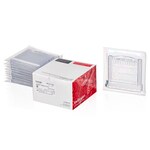
Invitrogen NuPAGE Bis-Tris protein gels are precast polyacrylamide gels that provide broad molecular weight protein separation with high resolution and sample integrity. These precast gels are ideal for applications where protein integrity is crucial.
Have Questions?
보기 방식 변경

| 카탈로그 번호 | 웰 | Gel Thickness | 수량 |
|---|---|---|---|
| NP0315BOX | 10-well | 1.5 mm | 10 gels (1 box) |
| NP0301BOX | 10-well | 1.0 mm | 10 gels (1 box) |
| NP0301PK2 | 10-well | 1.0 mm | 2 gels (1 box) |
| NP0302BOX | 12-well | 1.0 mm | 10 gels (1 box) |
| NP0302PK2 | 12-well | 1.0 mm | 2 gels (1 box) |
| NP0303BOX | 15-well | 1.0 mm | 10 gels (1 box) |
| NP0306BOX | 2D-well | 1.0 mm | 10 gels (1 box) |
| NP0316BOX | 15-well | 1.5 mm | 10 gels (1 box) |
카탈로그 번호 NP0315BOX
제품 가격(KRW)
259,000
Online offer
Ends: 30-Sep-2026
296,000할인액 37,000 (13%)
Each
웰:
10-well
Gel Thickness:
1.5 mm
수량:
10 gels (1 box)
제품 가격(KRW)
259,000
Online offer
Ends: 30-Sep-2026
296,000할인액 37,000 (13%)
Each
Invitrogen NuPAGE Bis-Tris protein gels are precast polyacrylamide gels that provide broad molecular weight protein separation with high resolution and sample integrity. These precast gels are ideal for applications where protein integrity is crucial. Unlike traditional Tris-glycine gels, NuPAGE Bis-Tris gels have a neutral pH environment that minimizes protein modifications. Use NuPAGE Bis-Tris gels for preparing proteins for sequencing, mass spectrometry, and any other techniques where protein integrity is important.
Features of NuPAGE Bis-Tris gels:
• Better protein integrity—optimized sample preparation process preserves your proteins
• Wide ranges of molecular weight separation—select the right gel and running buffer to get the optimal separation of your proteins
• Faster run times—get separation of your proteins in as little as 35 minutes
• Longer shelf life—NuPAGE Bis-Tris gels can be stored for at least 12 months at room temperature
Choose the right NuPAGE Bis-Tris gel for your protein separation
Obtain optimal separation of your proteins by choosing the right combination of gel and running buffer. NuPAGE Bis-Tris protein gels come in four polyacrylamide concentrations: 8%, 10%, 12%, and a 4–12% gradient. Gels come in two sizes: mini (8 cm x 8 cm) or midi (8.7 cm x 13.3 cm) and either 1.0 mm (mini and midi gels) or 1.5 mm (mini gel format only) in thickness. NuPAGE Bis-Tris gels also come in multiple well formats.
NuPAGE Bis-Tris gels are formulated for denaturing gel electrophoresis applications. For optimal sample preparation, use the NuPAGE LDS Sample Buffer (NP0007) and NuPAGE Sample Reducing Agent (NP0004). Use NuPAGE Antioxidant (NP0005) in the running buffer to maintain the reduced state of the proteins during the run and to allow maximum band sharpness. The gels can be run using NuPAGE MES SDS Running Buffer (NP0002) to better resolve small proteins or NuPAGE MOPS SDS Running Buffer (NP000102) to resolve medium- to large-size proteins.
For transfer of proteins to a membrane, we recommend using NuPAGE Transfer Buffer (NP00061) for traditional wet transfer using the Mini Blot Module (B1000) or XCell II Blot Module (EI9051). Alternatively, rapid semi-dry transfer can be done using the Invitrogen Power Blotter or rapid dry transfer using the iBlot 2 Gel Transfer Device (IB210010).
For Research Use Only. Not for use in diagnostic procedures.
사양
용도(장비)XCell SureLock Mini-Cell
Gel Thickness1.5 mm
길이(미터법)8 cm
분리 모드Molecular Weight
수량10 gels (1 box)
권장 애플리케이션Denaturing
샘플 로딩 부피Up to 37 μL
유통 기한12 Months
배송 조건Room Temperature
보관 요구 사항Store at 4–25°C. Do not freeze.
폭(미터법)8 cm
젤 비율10%
젤 크기Mini
젤 유형Bis-Tris
제품라인NuPAGE
분리 범위3.5 to 260 kDa
분리 유형Denaturing
웰10-well
Unit SizeEach
자주 묻는 질문(FAQ)
Can I prepare my protein sample with the reducing agent and store it for future use?
My LDS or SDS sample buffer precipitates when stored at 4 degrees C. Can I warm it up? Can I store it at room temperature?
How are Bolt gels different than NuPAGE gels?
What is the advantage of NuPAGE Gels over regular Tris-Glycine gels?
What does it mean when bands appear to be getting narrower (or "funneling") as they progress down a protein gel?
인용 및 참조 문헌 (6)
인용 및 참조 문헌
Abstract
Matrix GLA protein, a regulatory protein for bone morphogenetic protein-2.
Journal:J Biol Chem
PubMed ID:11741887
'Matrix GLA protein (MGP) has been identified as a calcification inhibitor in cartilage and vasculature. Part of this effect may be attributed to its influence on osteoinductive activity of bone morphogenetic protein-2 (BMP-2). To detect binding between MGP and BMP-2, we performed immunoprecipitation using MGP and BMP-2 tagged with FLAG
Differentiation of mouse embryonic stem cells following RNAi-mediated silencing of OCT4 and Nanog.
Journal:Stem Cells
PubMed ID:16456133
RNAi holds great promise as a tool to study the basic biology of stem cells or to direct differentiation in a specific manner. Barriers to achieving efficient and specific gene silencing in RNAi experiments include limitations in transfection efficiency and in the efficacy and specificity of RNAi silencing effectors. Here,
Oligomerization of the fifth transmembrane domain from the adenosine A2A receptor.
Journal:Protein Sci
PubMed ID:15987888
The human adenosine A2A receptor (A(2A)R) belongs to one of the largest family of membrane proteins, the G-protein coupled receptors (GPCRs), characterized by seven transmembrane (TM) helices. Little is known about the determinants of their structures, folding, assembly, activation mechanisms, and oligomeric states. Previous studies in our group showed that
Identification and expression of immunogenic proteins of a disease-associated marine turtle herpesvirus.
Journal:J Virol
PubMed ID:12239336
Herpesviruses are associated with several diseases of marine turtles, including lung-eye-trachea disease (LETD) and fibropapillomatosis. Two approaches were used to identify immunodominant antigens of LETV, the LETD-associated herpesvirus. The first approach targeted glycoprotein B, which is known to be immunogenic and neutralizing in other species. The second strategy identified LETV
Rapid exchange of actin-bound nucleotide in perfused rat heart.
Journal:Am J Physiol Heart Circ Physiol
PubMed ID:15020303
In the rat heart the actin-bound nucleotide contained both ATP and ADP. The ratio of bound ATP to bound ADP depended on the functional state of the heart; it was higher in hearts stopped reversibly in diastole (low Ca(2+), high Mg(2+), or high K(+)), than in stimulated (inotropic agents or