How dPCR Enables Cancer Research
Digital PCR (dPCR) is an advanced DNA quantification technique that segments a standard bulk PCR sample into hundreds of miniature PCR reactions. With dPCR, targets can be measured with a high degree of precision with no need for a standard curve. This makes dPCR an ideal option for situations in which a very small amount of genetic material must be quantified with high precision.
dPCR for Quantifying RNA Editing Events at Hotspots
Some RNA Editing Events Indicate Development of Cancer
In a recent article published in STAR Protocols, Sunwoo Oh and Dr. Rémi Buisson described a protocol they developed using dPCR for quantifying RNA-editing events at hotspots.1 RNA editing events are the work of enzymes like APOBEC3A, which affect specific alterations on existing RNAs. Some RNA-editing events are implicated in the development of cancer. RNA alterations by APOBEC3A are tumorigenic; thus, the effects of APOBEC3A and similar enzymes are important to understand for cancer research.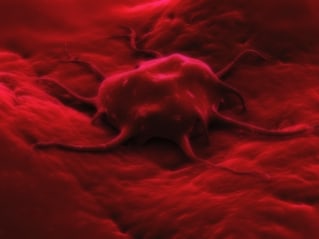
RNA Editing Events Analysis
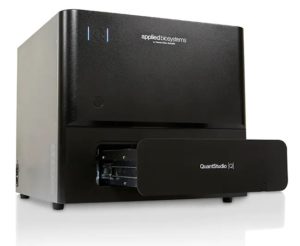
Unlike DNA mutations, RNA editing events are not encoded in the genome in a lasting way. The affected RNAs are rapidly degraded, which makes conventional DNA or even RNA-based analysis techniques unreliable ways to study them.1 Different, more sensitive methods are required to accurately quantify the effects of RNA-editing enzymes. Oh and Buisson’s work sought to create a simple and reusable protocol for measuring RNA editing events. Their method was recently optimized for the Applied Biosystems™ QuantStudio™ Absolute Q™ Digital PCR System.
The Digital PCR Advantage
dPCR provides a major advantage over quantitative PCR (qPCR) with its ability to accurately quantify extremely rare nucleic acid targets without the need for a standard curve. The fast, simple, reproducible workflow for the QuantStudio Absolute Q Digital PCR System makes it an ideal option for testing rare targets. The dPCR method developed by Oh and Buisson has a dynamic range of 0.25 to thousands of copies per microliter, sufficient to deal with their tumorigenic target. More importantly, Oh and Buisson show how their dPCR method can be used to distinguish between RNA edits consisting of only single nucleotide changes as long as the primers are well optimized and the target is within the defined range of detection. This enables the detection of extremely small edits in rare substrates. This level of sensitivity means that Oh and Buisson’s method may be applicable not only for studying natural RNA editing, but also for studying CRISPR-Cas9 techniques and other RNA-altering processes used for gene editing. The ability to accurately quantify gene edits at the RNA level may prove to have profound implications as both a therapeutic and a research tool. dPCR enables greater precision and accuracy to help researchers better understand the effects of RNA-editing events. To have a look at Oh and Buisson’s protocol, visit their article in STAR Protocols.
Learn more about the QuantStudio Absolute Q Digital PCR System
Learn More
» Mutation Detection Using Digital PCR
» Digital PCR – Powerfully simple dPCR for absolute quantification
» Applied Biosystems Solutions for Cancer Research
—
References
- Oh S, Buisson R (2022) A digital PCR-based protocol to detect and quantify RNA editing events at hotspots. STAR Protoc 3(1):101148. doi:10.1016/j.xpro.2022.101148.
—
For Research Use Only. Not for use in diagnostic procedures. © 2022 Thermo Fisher Scientific Inc. All Rights reserved. All trademarks are the property of Thermo Fisher Scientific and its subsidiaries unless otherwise specified.

Revolutionizing Gene Editing with CRISPR and Digital PCR – A Conversation with Dr. Dustin Rubinstein
In a recent Absolute Gene-ius podcast episode titled “CRIS...
Read More
Following the Molecular Fingerprints of Cancer with Digital PCR
For clinical researchers and scientists, the value of a biom...
Read More
Advancing Cancer Cell-Based Assays with Assay-Ready Tumoroids
Cancer research is continually evolving, and patient-derived...
Read More
From Telomeres in Space, Cancer Research to Microbes on Earth: Harnessing the Power of qPCR
Conversation with Dr. Christopher Mason from Weill Cornell M...
Read More