We’re attending and exhibiting at the BIO International Convention in Boston, the largest conference in biotechnology that brings over 20,000 leaders globally. Read on as Jenny Ro, Director, Biotech, Pharma and Applied Segment Marketing, recaps the key takeaways from each day.
Accelerating Biotech: A Network that Drives Innovation Forward
I started my day by attending a BIO-adjacent event hosted by Portal Innovations–Southline and sponsored by Thermo Fisher Scientific.
Betty Woo, VP of Cell, Gene and Advanced Therapies at Thermo Fisher Scientific and Anne Stone, Life Science investor at JP Morgan, led a panel discussion about strategic collaborations in our space and shared key tips along the way.
The Power of Partnerships: Why Long-Term Strategic Collaborations Matter
Key highlights:
- Collaboration is key—Betty spoke about collaboration and how it’s the cornerstone of progress, especially in the rapidly evolving field of cell and gene therapies. She highlighted the multiple collaboration centers Thermo Fisher has invested in and launched over the last few years to help lower the barrier for customers to access cutting edge technologies in cell and gene therapy process development and manufacturing. She also noted how collaboration centers function as a training center to help the community increase their skills in this fast evolving technology space.
- More than an investor—Anne said many consider JP Morgan as just late-stage investors, but they would like to debunk that and emphasize that they also invest in early-stage life science companies. Besides their capital investments, they also aim to be the first bank for startups before they hit their first inflection point and to share in the entire journey as they scale. She also emphasized that JP Morgan hopes to bring value to startups beyond simply being a banking partner, and potentially also become a financial and/or accounting partner.
- Follow up in fundraising—Startups should track their investors and study their current portfolio companies, success record, etc. just as much as investors perform diligent review on startups. It’s recommended to share their press releases with their newsletter subscribers then make sure to follow up with their target investors personally.
- Consider community engagement—Anne said she is focusing on raising awareness around some of JP Morgan’s community involvement, including the fact that JP Morgan invests in not only late stage companies but also in early-stage life science companies. She shared that the company also does a lot to support the academic community, and that her life science investment team is always open for opportunities to do more with the community.
- Drive innovation in unique ways—Betty shared Thermo Fisher Scientific’s deep investment and commitment to the whole innovation ecosystem: We have a partnership with incubators like Biolabs across the U.S. and Europe for providing easy access to technologies to early-stage companies.
- Support training, education, and collaboration—Similarly, we have a strategic partnership with the University of California system and created Technology Sandbox with UCSD. The Technology Sandbox is a place where not only academic researchers but the nearby biotech and biopharma community as a whole is invited to “play in the sand box” filled with our advanced instruments and equipment. To further support the community to bring therapies to patient faster, we also created a 44,000 sq. ft. cell therapy collaboration center at UCSF, where the community is trained and supported in creating their own manufacturing process using our innovative solutions like closed automated cell therapy manufacturing system.
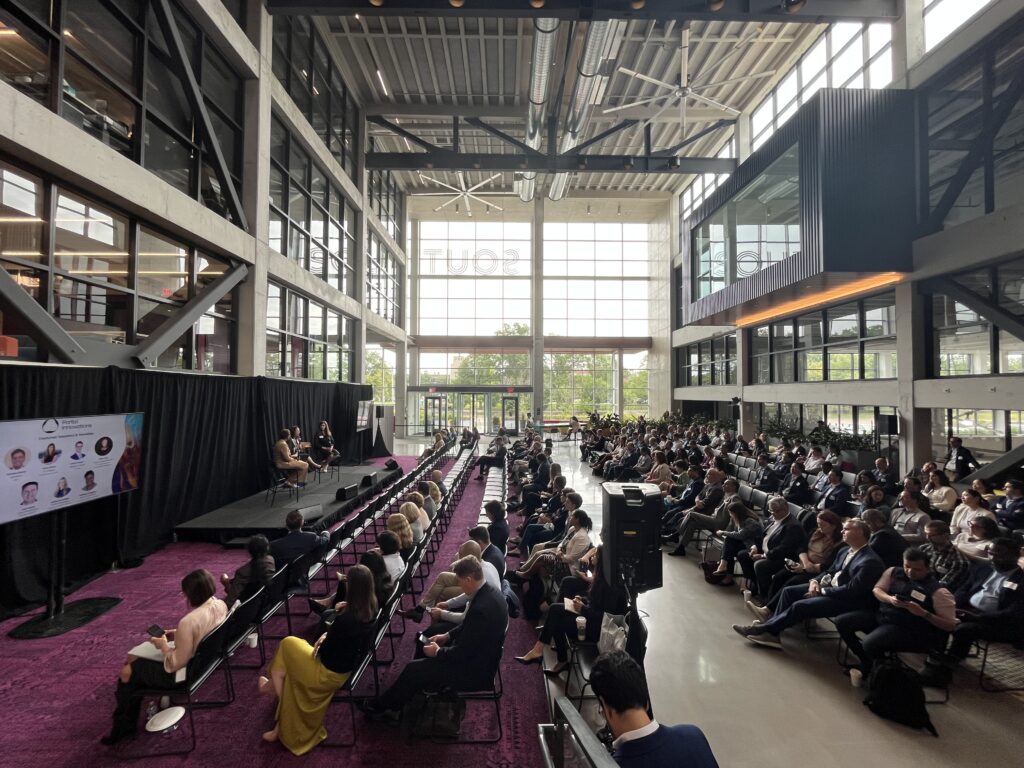
Portal Innovation Session

Betty Woo, VP of Cell, Gene and Advanced Therapies at Thermo Fisher Scientific

Betty Woo, Jenny Ro, and Krista Sullivan of Thermo Fisher Scientific
Throughout the day, the MassBio booth was busy with MA state officials’ visits and talks. My favorite was seeing MA Governor, Maura Healey, receiving BIO’s Governor of the Year award for her leadership and commitment to strengthening biotech in their state.
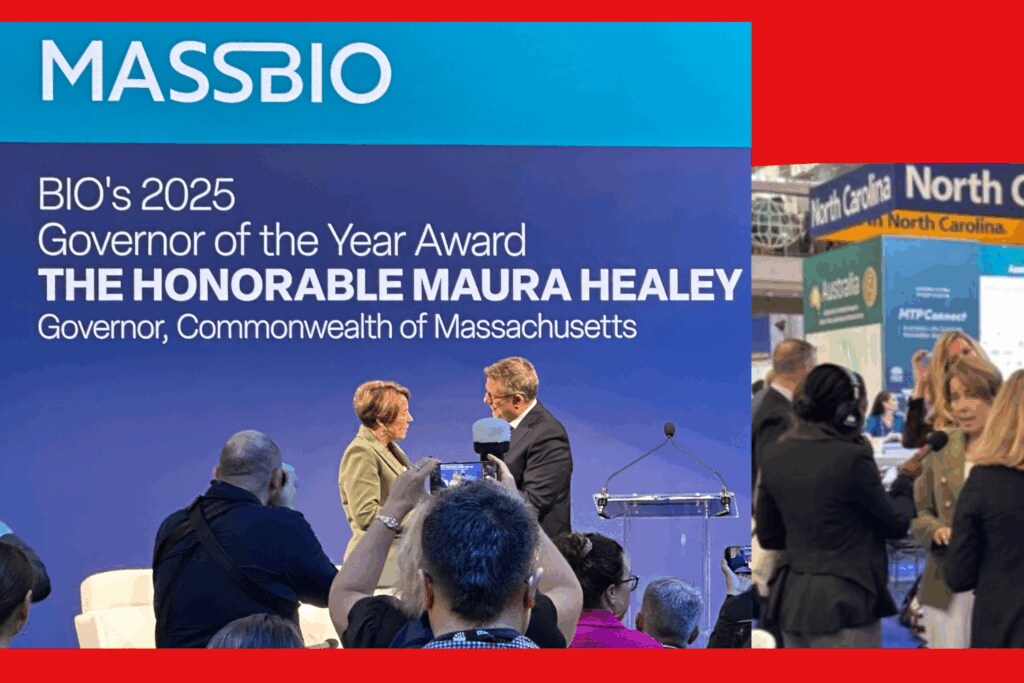
Afternoon Session
Power Partnerships: How Novartis is Revolutionizing Medicine with Biotech, VCs, and Pharma Collaborations
I took some key highlights away from each speaker’s discussion about how their organization is revolutionizing medicine and collaborating for the future.
Mindset Shifts in Biotech
Kevin Bitterman, PhD of Atlas Venture mentioned they focus most of their investment in therapeutics, but also in adjacent areas like new modalities, delivery, and other enabling technologies, which could be prone to change by the macroenvironment. To counteract this, Atlas built a strategy around steadiness, in which the volatility in macroenvironment is less likely to affect their investment strategy.
Nandita Shangari of RA Capital mentioned that when they invest, they think through how it’s clinical program appears as well as how a big pharma would perceive the venture. They also invest in geographical regions outside of the U.S. for cost efficiency and speed, such as the EU and others. Some areas they have been newly focusing on are women’s health and longevity. They recently made a real shift in their mindset to be more asset-centric and sees platform as a means to get to indications.
Trends in Life Sciences
Alfred Sandrock, MD, PhD of Voyager Therapeutics shared how difficult it is to raise money in the equity market right now. So most are relying on strategic partnerships in current times.
For strategic partnerships, Bill Muery of Anthos Therapeutics recommended to monitor the pipeline of the top 10 Pharma companies for insight into trends. Big Parma’s top pipeline consists of therapies for oncology, immunology, neurodegeneration, and cardio-metabolism. Therefore, he believed these are the areas that the market will continue to see investment in.
Alfred Sandrock shared that because of advancements in human genetics and fundamental biology, the risk of R&D is decreasing in the neuroscience area, while the risk of commercialization is increasing. And because we have better surrogate genetic markers, an early-stage program could be terminated much earlier based on the results of these markers.
Opportunities in Neurological Drug Development
The pharmaceutical industry is buzzing with potential, particularly in the realm of new modalities that can cross the blood-brain barrier. This breakthrough could revolutionize treatments for neurological conditions. All speakers emphasized the importance of targeting known biological pathways with innovative targeted delivery methods and go beyond systemic delivery. This approach could address numerous unmet medical needs, offering hope for more effective therapies.
There is still a large gap in diagnostics and functional measurements to follow how the neurological disorders progress over time, however there are a lot of exciting new innovations such as an in-home device that can monitor a patient’s movement, gait speed, etc. in real-life and in a continuous fashion rather than a single time point of limited measures at a healthcare facility or physician’s office.
The Reality of AI in Drug Development
While artificial intelligence (AI) holds significant promise in drug development, it’s crucial to consider realistic expectations and temper the hype. The notion that AI can fully automate drug discovery has been debunked, yet its potential to impact the field remains undeniable. AI should instead be viewed as a powerful tool that can enhance specific areas. One major challenge is the fragmented nature of data in the pharmaceutical industry, which limits the effectiveness of generative AI models . Unlike other industries, the data in drug development is not as readily accessible or integrated.
Mergers and Acquisitions: A Strategic Perspective
In discussions about mergers and acquisitions (M&A) between pharma and biotech companies, it’s essential to consider the acquirer’s perspective. According to an Bill Muery, acquirers are primarily concerned with potential downsides rather than just the obvious upsides. Transparency and open discussions about these risks are crucial for a successful acquisition. Trust between the parties involved is paramount and cannot be established during the acquisition talks alone. It must be built over time through ongoing relationships, similar to those demonstrated by the speakers of the session.
The Importance of Business Quality in Mergers
Once the financial aspects of a deal are settled, the focus shifts to the merger itself. The quality of the business being acquired is critical. Acquirers are not just obtaining drug assets and intellectual property; they are also integrating people, business structures, and processes. For instance, when Novartis acquired Anthos, they conducted thorough audits to assess the quality of the business and the depth of its leadership. This careful evaluation is key to achieving a successful merger and creating synergy between the two entities.
Afternoon Session
Unlocking the Future: Opportunities and Challenges in Advanced Biologics Manufacturing
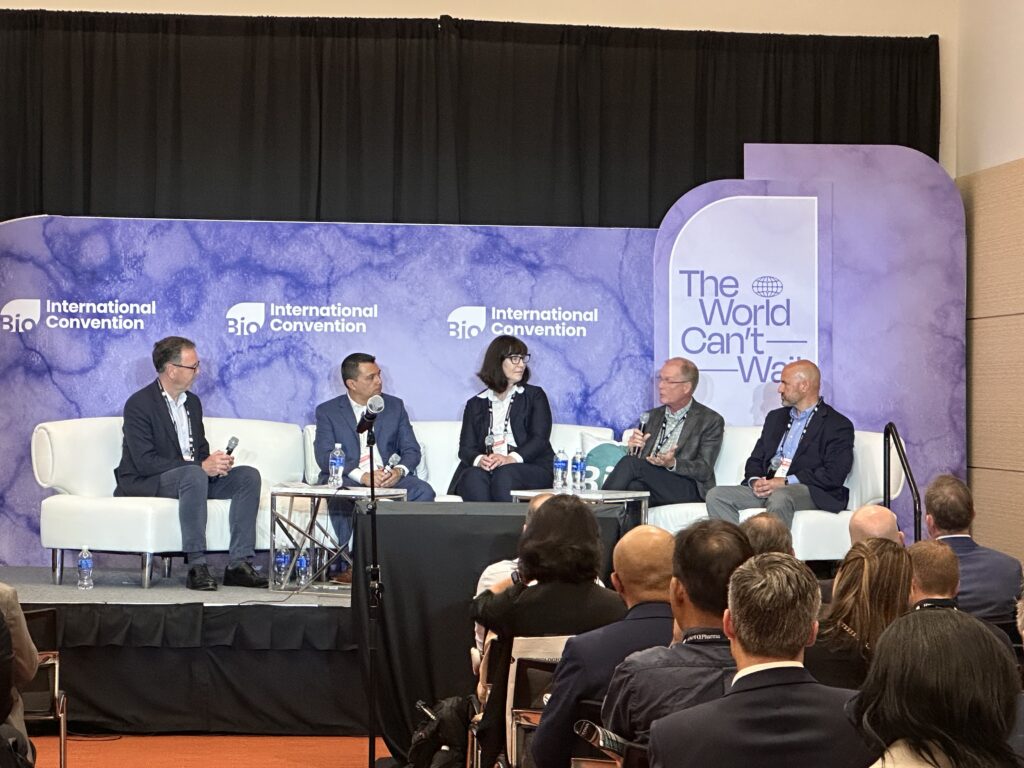
Innovation in Manufacturing for Advanced Therapies
The development of advanced therapies and new modalities often necessitates innovation in the manufacturing process. For instance, Michael Paglia, MSc of ElevateBio highlighted the need for Next Generation sequencing analytics in cell therapy release tests. Sergio Cerdas, MBA of Novartis emphasized the importance of a fully integrated manufacturing-to-patient delivery cycle for radiopharmaceuticals due to the unique nature of these drugs. Stacy Springs, PhD from MIT’s Center for Biomedical Innovation points out that even in biologics, where manufacturing processes like those for antibodies are well-standardized, there is still room for innovation. She cites continuous manufacturing and real-time feedback loops as methods to reduce variability and improve efficiency. Additionally, she noted that using host cell systems for mechanistic modeling can inform and optimize manufacturing strategies.
Chromatographic Solutions for Capsid Resolution
Stacy Springs also identified a specific area ready for innovation: chromatographic solutions for resolving empty, partial, and full capsids. She highlighted that this advancement could significantly enhance the precision and effectiveness of manufacturing processes for certain therapies.
The Role of CROs and CDMOs in Biologics Manufacturing
Contract Research Organizations (CROs) and Contract Development and Manufacturing Organizations (CDMOs) play a crucial role as innovative solution providers in biologics manufacturing. According to Michael Paglia, partnering with a CDMO can help small biotech companies address cost issues, making therapies more financially accessible to patients.
In cell therapy for example, a significant portion of the cost comes from overheads like cleanroom infrastructure and trained personnel. Isolating the manufacturing process from the environment through closed manufacturing solutions can lead to substantial cost savings, making these therapies more viable.
Training and Adoption of Innovative Tools
Stacy Springs underscored the importance of training programs within organizations to fully leverage innovative tools available in the market instead of underutilizing advanced tools due to lack of training.
Reflecting on insights from yesterday’s AI summit, she also mentioned that the advanced tool users need to be able to show the work in understandable manner instead of presenting a black box to a regulator.
The Thermo Fisher Scientific booth was also very busy today, and it was great to see everyone leaning in and engaging!
Come say hello at Booth #534 and learn more about how we can help accelerate your drug development journey.


“Lighthouse Hubs” Can Create Specialized Clusters in Europe to Elevate Particular Sub-Disciplines in the ATMP-Field
When experts from across Europe sit around one table to deba... Frauke Graalfs
Read More
Which Financial Solution Is Right for You? A Guide for Biotech Leaders
Whether you’re a startup navigating early fundin...
Read More
Smart Leasing Strategies for Growth-Phase Companies
The scientific landscape is undergoing a lot of change and c...
Read More
Balancing Progress and Cash Flow: How One Pharmaceutical Company Optimized Funding with an Extended Terms Agreement
Pharmaceutical companies often face long timelines and ...
Read More
Leave a Reply