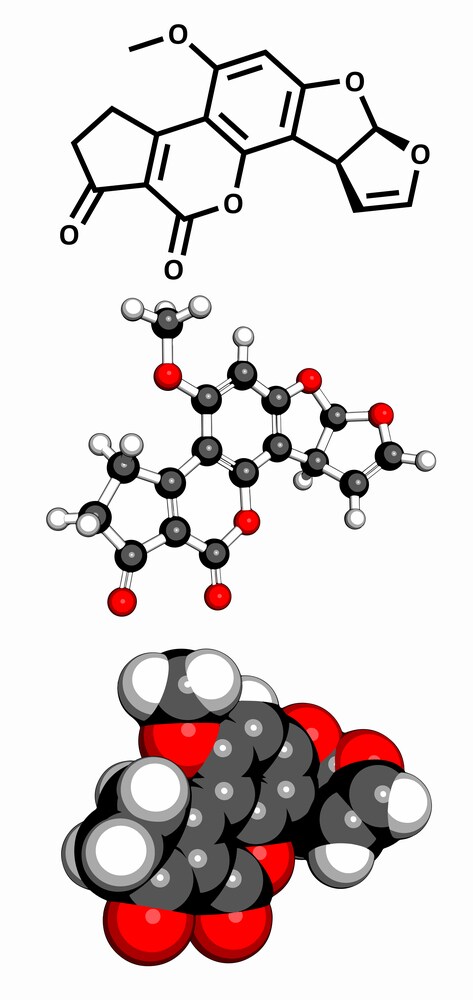
 Aflatoxin B1 is a formidable food contaminant that is both mutagenic and carcinogenic. One of its metabolites, Aflatoxin M1 (AFM1), persists in excreted milk and becomes bioaccessible within the human digestive tract after the consumption of contaminated dairy products. There is evidence that probiotic bacteria may bind AFM1 and render it less bioavailable. Using an in vitro digestion model, Serrano-Niño et al.1 assessed this potential in five probiotic strains (Lactobacillus acidophilus, L. reuteri, L. rhamnosus, L. johnsonii, and Bifidobacterium bifidum).
The researchers activated these cultures in Man, Rogosa and Sharpe (MRS) broth (Thermo Scientific) in static incubation (8 or 12 hours, 37 C) before preparing three subcultures (1-2 x10⁹ CFU/mL). They also produced a standard solution using powdered AFM1 and PBS dilution and used this to contaminate reconstituted non-fat dry milk (10 ng/mL final concentration).
For the binding assay, the team suspended 1 mL of each active culture in 20 mL PBS. They centrifuged, washed, and resuspended it in working solution (1.5 mL) before incubation (0, 4 and 12 hours, 37 C) and cell removal via centrifugation. They applied high performance liquid chromatography (HPLC) for the analysis of the supernatant. To assess the stability of the bound product, the researchers washed the pellets and used HPLC to quantify released AFM1.
Serrano-Niño et al. performed an in vitro digestion assay as previously described2,3 using three experimental groups: plain milk, milk with AFM1 only, and milk with AFM1 and probiotics (1 mL). For the salivary phase of the model, they suspended 3 mL aliquots from each group in 6 mL PBS. They closed the tubes under a nitrogen atmosphere and deposited them in a shaking water bath (37 C, 85 rpm) for 10 minutes. Afterwards, they iced the tubes, used saline to adjust the reaction volume to 30 mL, and added HCl (1 N) to achieve pH 2. For the gastric phase, they added 2 mL pepsin solution (40 mg/mL) and used PBS to adjust the volume to 40 mL before flushing the tubes with nitrogen, sealing them, and placing them in the shaking water bath for 1 hour.
Next, the researchers began the small intestine phase by adding NaHCO3 (1 N) to achieve pH 5. They also added 2 mL of pancreatin solution (10 mg/mL) and lipase (5 mg/mL) in NaHCO3 before adjusting the pH to 6, adding 3 mL bile solution (40 mg/mL) and using saline to bring the reaction volume to 50 mL. They sealed the tubes under a nitrogen atmosphere and returned them to the shaking water bath for 2 hours. Finally, the team centrifuged 30 mL of the resultant digestive material (10,000 g, 4 C) to procure an aqueous fraction, 1 mL of which they filtered and refrigerated (4 C) for analysis by HPLC. They also added 10 mL of the material to MRS (5 mL) and incubated for 20 hours (37 C) before visually assessing for turbidity to ensure that all strains had survived.
The team found that the amount of bound AFM1 was strain-specific with a range of 20-25%. There was negligible difference in the amount bound after 4 hours, and the highest values were L. rhamnosus (24%, 4h), L. acidophilus (24%, 4h), and L. reuteri (25%, 12h). The highest values for released AFM1 were L. reuteri (4.4%) and L. rhamnosus (3.2%). The researchers found a range of 23-45% reduction in bioavailability of AFM1 within 3 hours, with the greatest reduction accomplished by B. bifidum (45.17%). The range for Lactobacilli was 23-32%.
According to Serrano-Niño et al., these results indicate that probiotic bacteria can bind AFM1 and reduce its bioaccessibility in the digestive tract, thereby reducing risk for humans who consume contaminated products. They call for further studies, including in vivo animal models.
References
1 Serrano-Niño, J.C. et al. (2013) ‘Assessment of probiotic strains ability to reduce the bioaccessibility of aflatoxin M1 in artificially contaminated milk using an in vitro digestive model,’ Food Control 31, 202-207.
2 Garrett, D. A., et al. (1999). ‘Development of an in vitro digestion method to assess carotenoid bioavailability from meals.’ Journal of Agricultural and Food Chemistry,’ 47, 4301e4309.
3 Green, R., et al. (2007). ‘Common tea formulations modulate in vitro digestive recovery of green tea catechins.’ Molecular Nutrition & Food Research, 51, 1152e1162.

Natural Colorants: Unlocking the Future Through Fungal Innovation and Mass Spectrometry
As consumer demand continues to shift toward clean-label, pl... Daniel Merriman
Read More
What to Keep in Mind When Analyzing Chlorophyll Samples using UV-Vis Spectrometry
In some food industries, it can be important to determine th...
Read More
Can UV-Vis Spectrometry Be Used to Analyze Chlorophyll in Canola Oil?
Canola oil is a type of vegetable oil derived from the seeds...
Read More
Changing Texture and Taste of Plant-Based Meats with Added Oils
Consumers are increasingly choosing plant-based foods becaus...
Read More

Leave a Reply