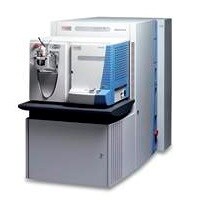
 Considering mass spectrometry? Wondering what system is best for your needs? Bewildered by the array of technologies available? Don’t worry – you’re not alone. There are a staggering number of mass spectrometry (MS) technologies available to researchers and laboratory managers these days, each with its own individual specifications and requirements. There’s a lot at stake – simple decisions such as type of analyzer (single type or combination), detector, and ionization method can influence the type of substance optimally analyzed by your choice. Roman Zubarev from the Karolinska Institute in Stockholm, Sweden and Thermo Scientific’s Alexander Makarov have put together a handy review1 of the Orbitrap family of high resolution mass spectrometers (HRMS). Produced by Thermo Scientific, the authors describe these compact machines as capable of high speed performance and excellent quantification. The review starts with a brief history of the Orbitrap. Its early development by Makarov involved moving away from the magnetic fields technology used by Fourier Transform MS. The Orbitrap analyzer distinguishes ionized particles according to their mass to charge ratio m/z using electrical fields. Announced in 1999, the first Orbitrap analyzer, the LTQ Classic was available commercially in 2005. Instead of using a magnetic field, the Orbitrap analyzer relies on generating linear and radial electrical fields. The compact analyzer itself comprises three electrodes; two cup-shaped outer electrodes surround a spindle-like central electrode, producing the linear and radial electrical fields as voltage is applied across them. Ionized particles are fired tangentially into the chamber formed by the two outer electrodes, and their tangential velocity forces them into a spiral orbit around the central electrode. The two outer electrodes act as receiver plates that catch these axial oscillations and the data translates into the typical mass spectrum. There’s a handy animation on the Q Exactive Orbitrap product page, showing the ionized particles traveling through the mass spectrometer. The animation also shows additional features, such as the curved linear ion trap or C-trap, an external ion storage device that collects and pulses the packets of ions into the analyzer. As with all good ideas, the system has continued to improve; these additional features increase the range and versatility of the Orbitrap for a wide number of life science applications. As a high resolution mass spectrometer, the Orbitrap analyzer systems are particularly applicable to food safety testing. Their range of analytical possibilities includes identification and quantification of compounds, at trace levels and in complex mixtures. This makes them an ideal addition to food safety testing since they can be used to detect and identify low levels of potentially harmful contaminants in food. Using a targeted screening approach, Orbitrap analysis is also a powerful tool for quantifying these contaminants. Although the field of laboratory science moves along quickly, Zubarev and Makarov are confident that limits of the Orbitrap MS system’s range of analytical applications have not yet been reached. Improvements in speed, resolving power, detection limits and dynamic range are still possible, meaning that the Orbitrap is as relevant now as it was when first introduced. Further Resources
- Planet Orbitrap – news, views, hints and tips on all-things Orbitrap (make this your first stop)
- MS Transformed – the newest mass spectrometers introduced at ASMS 2013
- Thermo Scientific Mass Spectrometry resources and products – links to product information and supplies
References 1. Zubarev, R.A. and Makarov, A. (2013) “Orbitrap Mass Spectrometry“, Analytical Chemistry 85 (pp.5288−5296) dx.doi.org/10.1021/ac4001223

Natural Colorants: Unlocking the Future Through Fungal Innovation and Mass Spectrometry
As consumer demand continues to shift toward clean-label, pl... Daniel Merriman
Read More
What to Keep in Mind When Analyzing Chlorophyll Samples using UV-Vis Spectrometry
In some food industries, it can be important to determine th... Jennifer Empey-Kohl
Read More
Can UV-Vis Spectrometry Be Used to Analyze Chlorophyll in Canola Oil?
Canola oil is a type of vegetable oil derived from the seeds...
Read More
Changing Texture and Taste of Plant-Based Meats with Added Oils
Consumers are increasingly choosing plant-based foods becaus... Jill Staggert
Read More

Leave a Reply