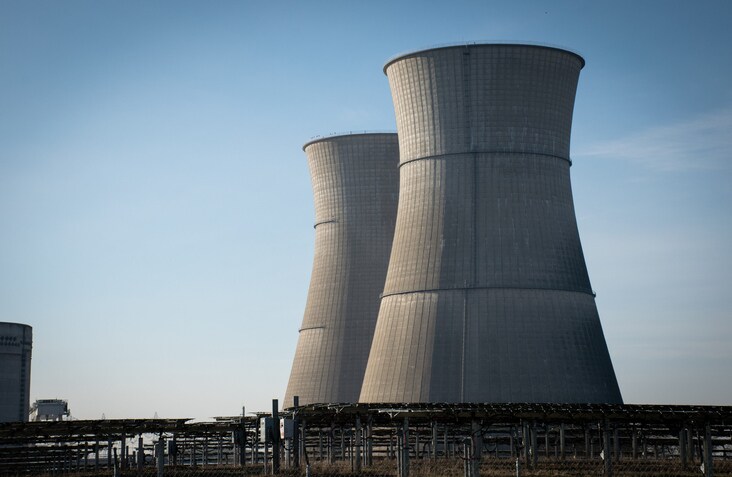
 The Backgrounder on Decommissioning Nuclear Power Plants, offered by the U.S. Nuclear Regulatory Commission (USNRC) specifically states that “When a power company decides to close a nuclear power plant permanently, the facility must be decommissioned by safely removing it from service and reducing residual radioactivity to a level that permits release of the property and termination of the operating license. The Nuclear Regulatory Commission has strict rules governing nuclear power plant decommissioning, involving cleanup of radioactively contaminated plant systems and structures, and removal of the radioactive fuel. These requirements protect workers and the public during the entire decommissioning process and the public after the license is terminated.”
The USNRC offers discussion, regulations, fund information, improvement programs, decommissioning phases and it even names power reactors in the decommission process on its website. Of course, the goal during decommissioning is to minimize residual contamination and provide the highest levels of safety for workers, public and the environment during and after the decommissioning process.
Decommissioning can be a labor intensive and dirty job, as well as a dangerous one. Many sites have more than just radiation to worry about: chemicals, munitions and explosives may also be present. Advanced, integrated radiation detection and radioactivity measurement instruments, as well as chemical analyzers, help mitigate the threat and keep workers safe.
The USNRC states that both worker safety and public safety are considered in the planning for and review of decommissioning. In fact, there is continued environmental monitoring of the site and the offsite areas to measure releases of radioactive material during the decommissioning process.
Here are some of the radiation detection solutions that can be used in the decommissioning process:
- Dose rate monitoring:
- Dosimetry services offer accurate measurement of radiation dose exposure in the workplace, ensuring personnel safety in any environment where radiation exposure is a concern. There are electronic dosimeters that are used for active monitoring of employee exposure that feature a built-in telemetry option.
- Site entry and exist screening:
- There are several monitors that help detect radioactive material that is unknowingly on personnel, clothing, object to ensure contamination is not spread beyond the radiation control boundaries of a nuclear facility. Personnel Contamination Monitors identify surface contamination on the body, hands, and feet. Personnel Gamma Portal Monitors provide simplified but advanced internal and external monitoring of workers well below clearance levels.
- Air monitoring:
- Air monitoring systems give early warning to workers of airborne alpha and beta radiation. Alpha Air Monitors and Beta Air Monitors are an excellent solution for monitoring stacks and ducts, as well as monitoring work areas.
- Radiation surveys and smear counting:
- There are Personal Dose Rate Meters that detect and measure very low gamma energies; even the smallest change in radiation rates are displayed immediately, while coincidentally occurring fluctuations are suppressed. MicroRem/Sievert Tissue-Equivalent Survey Meters are ideal in applications where accurate dose rate measurements of low radiation levels are required. Ion Chamber Survey Meters are vented to atmospheric pressure and specifically designed to have a flat energy response into the X-ray. Geiger Muller, scintillation and gas proportional detectors are suited for a wide range of applications such as contamination assessment and reducing personnel risk radiation exposure.
- Frisking:
- Multi-Purpose Survey Meters help to quickly identify mixed radioactive surface contamination in facility and field environments.
- Identifying of unknown isotopes:
- Spectroscopic Personal Radiation Detectors detect and identify neutron and gamma radiation, while Handheld Radiation Isotope Identifiers are well suited to support contamination monitoring and remediation.
The USNRC reports that there are currently 98 licensed to operate nuclear power plants in the United States [65 Pressurized Water Reactors (PWR) and 33 Boiling Water Reactors (BWR)], which generate about 20% of our nation’s electrical use. Combining nuclear power, USDOE and DOD, there are over 80 sites undergoing decommissioning.
The USNRC offers a map on its website that depicts the locations of sites that are currently decommissioning, accompanied by an Alphabetical List of Sites Undergoing Decommissioning which provides links to their descriptions. Included are site status summaries, any major technical or regulatory issues, and the estimated date for closure of each site.
Resources:
- The USNRC Frequently Asked Questions About Reactor Decommissioning
- Radiation Detection for Decommissioning Technology
- Backgrounder on Decommissioning Nuclear Power Plants

Addressing Radiation Contamination in Scrap Metal Recycling
Radiation-contaminated scrap metal poses serious risks to en... Johnny Long
Read More
Evolving Approaches to CBRNE and Radiation Threat Preparedness
A Persistent and Expanding Challenge Chemical, Biological,... Marlene Gasdia-Cochrane, Editor
Read More
Was that Fireworks or an Explosion?
Last year, there was an estimated crowd of 250,000 people wh...
Read More
Avoiding Health Risks by Understanding Water Contaminants
Ensuring the quality of drinking water is crucial for mainta...
Read More


Leave a Reply