Search


Citations & References (27)
Invitrogen™
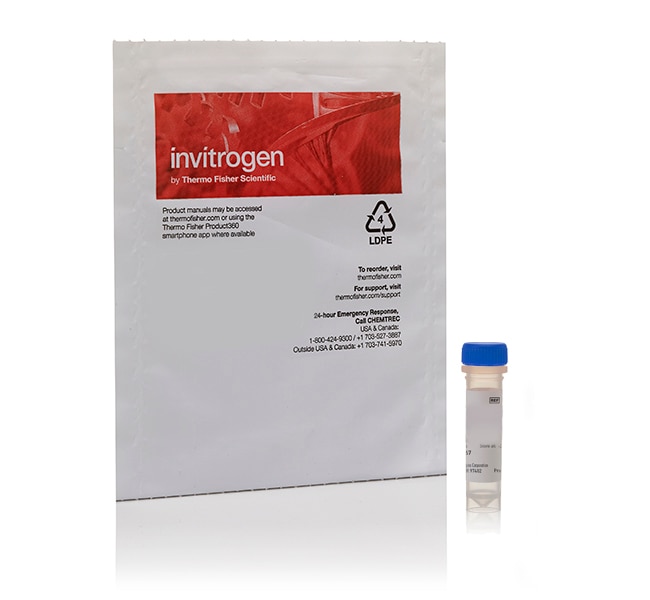
SYTOX™ Blue Nucleic Acid Stain - 5 mM Solution in DMSO
SYTOX® Blue nucleic acid stain is an excellent blue-fluorescent nuclear and chromosome counterstain that is impermeant to live cells, makingRead more
| Catalog Number | Quantity |
|---|---|
| S11348 | 250 μL |
Catalog number S11348
Price (USD)
379.00
Each
Quantity:
250 μL
Price (USD)
379.00
Each
SYTOX® Blue nucleic acid stain is an excellent blue-fluorescent nuclear and chromosome counterstain that is impermeant to live cells, making it a useful indicator of dead cells within a population. The excitation/emission maxima for the dye bound to DNA are 444/480 nm.
For Research Use Only. Not for use in diagnostic procedures.
Specifications
ColorBlue
Detection MethodFluorescence
Dye TypeCell-Permeant
Emission480 nm
Excitation Wavelength Range444 nm
For Use With (Equipment)Fluorescence Microscope
FormSolution
FormatTube(s)
Product LineSYTOX
Quantity250 μL
Shipping ConditionRoom Temperature
Volume (Metric)250 μL
Label TypeFluorescent Dye
Product TypeNucleic Acid Stain
Sub Cellular LocalizationNucleic Acids
Unit SizeEach
Contents & Storage
Store in freezer at -5°C to -30°C and protect from light.
Frequently asked questions (FAQs)
How do SYTO dyes bind to DNA?
I am using SYTOX AAdvanced as a dead cell stain, but all of my cells are labeling even though I am certain that they are supposed to be alive. These are adherent cells that I have trypsinized. Why am I getting false-dead signals?
How long can I leave SYTOX Blue Nucleic Acid Stain - 5 mM Solution in DMSO on my cells during imaging?
Citations & References (27)
Citations & References
Abstract
Signaling at the gliovascular interface.
Journal:J Neurosci
PubMed ID:14534260
'Advances in fluorescent calcium indicating dyes over the past decade have identified calcium signaling as the tool by which astrocytes communicate among themselves and with neighboring neurons. Studies of astrocyte-neuron interactions have shown that calcium signaling is a potent modulator of the strength of both excitatory and inhibitory synapses. The
Phosphatidylserine-dependent engulfment by macrophages of nuclei from erythroid precursor cells.
Journal:Nature
PubMed ID:16193055
'Definitive erythropoiesis usually occurs in the bone marrow or fetal liver, where erythroblasts are associated with a central macrophage in anatomical units called ''blood islands''. Late in erythropoiesis, nuclei are expelled from the erythroid precursor cells and engulfed by the macrophages in the blood island. Here we show that the
Trogocytosis by Entamoeba histolytica contributes to cell killing and tissue invasion.
Journal:
PubMed ID:24717428
'Entamoeba histolytica is the causative agent of amoebiasis, a potentially fatal diarrhoeal disease in the developing world. The parasite was named '
Delivery of macromolecules into live cells by simple co-incubation with a peptide.
Journal:Chembiochem
PubMed ID:20029930
'n this report, we test the hypothesis that optimized cell-penetrating peptides (CPPs) might deliver macromolecules to the cytosol of live cells by simple co-incubation and without the requirement for any type of conjugation, whether covalent or noncovalent. This hypothesis is based on the observation that the binding of TAT and
Assessment of fluorochromes for two-photon laser scanning microscopy of biofilms.
Journal:Appl Environ Microbiol
PubMed ID:11823234
A major limitation for the use of two-proton laser scanning microscopy (2P-LSM) in biofilm and other studies is the lack of a thorough understanding of the excitation-emission responses of potential fluorochromes. In order to use 2P-LSM, the utility of various fluorochromes and probes specific for a range of biofilm constituents