Search

Invitrogen™
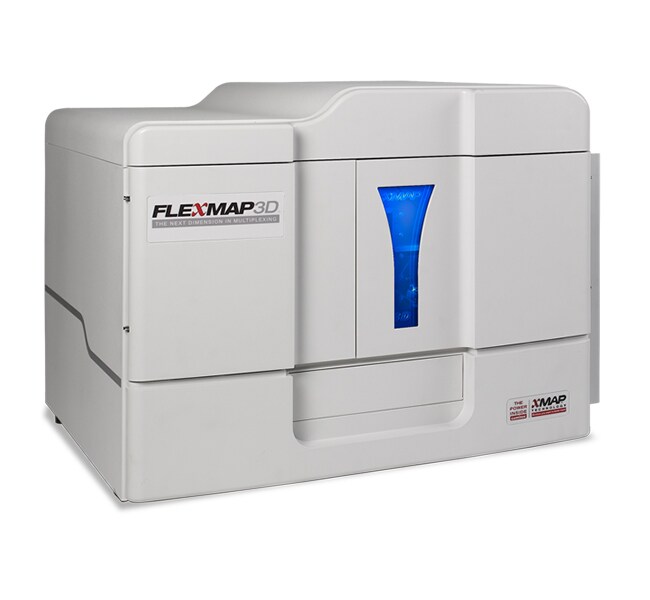
Luminex™ FLEXMAP 3D™ Instrument System
Le système d’instruments 3D Luminex FLEXMAP est la plateforme de multiplexage la plus avancée et la plus polyvalente. Un tempsAfficher plus
| Référence | Quantité |
|---|---|
| APX1342 | 1 système |
Référence APX1342
Prix (EUR)
-
Quantité:
1 système
Le système d’instruments 3D Luminex FLEXMAP est la plateforme de multiplexage la plus avancée et la plus polyvalente. Un temps de lecture rapide, une compatibilité avec les plaques 96 et 384 puits et une facilité d’intégration avec les systèmes d’automatisation frontaux font du système 3D Luminex FLEXMAP la plateforme idéale pour les applications à haut débit. Les routines de démarrage, d’arrêt et de maintenance automatisées facilitent l’utilisation et la maintenance du système 3D Luminex FLEXMAP. Le système est compatible avec les immunodosages multiplex ProcartaPlex et les dosages d’expression génétique multiplex QuantiGene Plex.
Caractéristiques du système Luminex MAGPIX :
• Multiplexage : jusqu’à 500 analytes dans un échantillon unique
• Plage dynamique (type) : ≥ 4,5 journaux
• Temps de lecture : Plaque à 96 puits en ∼ 20 min (jusqu’à 144 000 tests/heure) ; plaque à 384 puits en ∼ 75 min (jusqu’à 153 600 tests/heure)
• Démarrage/arrêt quotidien : ≤ 30 min
Options disponibles
Logiciel : licences de siège supplémentaires, module de sécurité de base, module 21 CFR partie 11, module d’automatisation, module LIS/LIMS
Service : contrats de service, QI/QO
En savoir plus :
Immuno-essais multiplex ProcartaPlex
Dosages d’expression génétique multiplex QuantiGene Plex
Technologie Luminex xMAP
L’architecture ouverte de la technologie Luminex xMAP utilise l’imagerie, les microsphères, le traitement numérique du signal et la chimie traditionnelle—combinaison de technologies éprouvées d’une manière unique.
Avantages de la technologie Luminex xMAP :
• Contribue à réduire les coûts et la main-d’œuvre grâce au multiplexage
• Les tailles d’échantillons n’ont pas besoin d’être aussi grande que celle des immunodosages à résultat unique
• Permet des résultats rapides et reproductibles à partir d’une cinétique favorable de l’approche par réseau de microbilles liquides
• Couverture d’applications étendue, notamment l’expression des protéines et le profilage de l’expression génétique
Comment fonctionne la technologie Luminex xMAP
Les ensembles de microsphères magnétiques ont un code couleur avec des combinaisons de fluorophores rouges et infrarouges. Chaque ensemble de microbilles est revêtu d’un réactif spécifique à un dosage biologique particulier, permettant la capture et la détection de plusieurs analytes spécifiques à partir d’un seul échantillon. L’optique de l’analyseur compact excite les colorants internes qui identifient chaque microsphère ainsi que tout colorant rapporteur capturé, qui effectuent la quantification d’analytes individuels sur chaque microsphère. L’analyseur lit de nombreuses microbilles de chaque ensemble, ce qui permet des résultats rapides et précis pour plusieurs cibles dans un seul échantillon.
Caractéristiques du système Luminex MAGPIX :
• Multiplexage : jusqu’à 500 analytes dans un échantillon unique
• Plage dynamique (type) : ≥ 4,5 journaux
• Temps de lecture : Plaque à 96 puits en ∼ 20 min (jusqu’à 144 000 tests/heure) ; plaque à 384 puits en ∼ 75 min (jusqu’à 153 600 tests/heure)
• Démarrage/arrêt quotidien : ≤ 30 min
Options disponibles
Logiciel : licences de siège supplémentaires, module de sécurité de base, module 21 CFR partie 11, module d’automatisation, module LIS/LIMS
Service : contrats de service, QI/QO
En savoir plus :
Immuno-essais multiplex ProcartaPlex
Dosages d’expression génétique multiplex QuantiGene Plex
Technologie Luminex xMAP
L’architecture ouverte de la technologie Luminex xMAP utilise l’imagerie, les microsphères, le traitement numérique du signal et la chimie traditionnelle—combinaison de technologies éprouvées d’une manière unique.
Avantages de la technologie Luminex xMAP :
• Contribue à réduire les coûts et la main-d’œuvre grâce au multiplexage
• Les tailles d’échantillons n’ont pas besoin d’être aussi grande que celle des immunodosages à résultat unique
• Permet des résultats rapides et reproductibles à partir d’une cinétique favorable de l’approche par réseau de microbilles liquides
• Couverture d’applications étendue, notamment l’expression des protéines et le profilage de l’expression génétique
Comment fonctionne la technologie Luminex xMAP
Les ensembles de microsphères magnétiques ont un code couleur avec des combinaisons de fluorophores rouges et infrarouges. Chaque ensemble de microbilles est revêtu d’un réactif spécifique à un dosage biologique particulier, permettant la capture et la détection de plusieurs analytes spécifiques à partir d’un seul échantillon. L’optique de l’analyseur compact excite les colorants internes qui identifient chaque microsphère ainsi que tout colorant rapporteur capturé, qui effectuent la quantification d’analytes individuels sur chaque microsphère. L’analyseur lit de nombreuses microbilles de chaque ensemble, ce qui permet des résultats rapides et précis pour plusieurs cibles dans un seul échantillon.
Usage exclusivement réservé à la recherche. Ne pas utiliser pour des procédures de diagnostic.
Spécifications
FormatPlaque à 96 puits, plaque à 384 puits
Gamme de produitsLuminex, FLEXMAP 3D
Quantité1 système
Conditions d’expéditionTempérature ambiante
Unit SizeEach
Contenu et stockage
• FLEXMAP 3D instrument
• xMAP Sheath Fluid
• Sample Probe-Needle
• Off Plate Reagent Block
• Waste Container
• Barcode Scanner
• Heater Block (96-well plate)
• Heater Block (384-well plate)
• Documentation
• Desktop PC with Windows 10; Dell monitor, keyboard, and mouse; xPONENT Software (3 seats), and 90-day trial of Security, 21 CFR Part 11, Automation and LIS modules
• Sample Probe Height Adjustment Tool
Shipped separately:
• FLEXMAP 3D Calibration Kit
• FLEXMAP 3D Performance Verification Kit
• xMAP Sheath Fluid
• Sample Probe-Needle
• Off Plate Reagent Block
• Waste Container
• Barcode Scanner
• Heater Block (96-well plate)
• Heater Block (384-well plate)
• Documentation
• Desktop PC with Windows 10; Dell monitor, keyboard, and mouse; xPONENT Software (3 seats), and 90-day trial of Security, 21 CFR Part 11, Automation and LIS modules
• Sample Probe Height Adjustment Tool
Shipped separately:
• FLEXMAP 3D Calibration Kit
• FLEXMAP 3D Performance Verification Kit