Search
Invitrogen
Nuclear Pore Complex Monoclonal Antibody (39C7)
{{$productOrderCtrl.translations['antibody.pdp.commerceCard.promotion.promotions']}}
{{$productOrderCtrl.translations['antibody.pdp.commerceCard.promotion.viewpromo']}}
{{$productOrderCtrl.translations['antibody.pdp.commerceCard.promotion.promocode']}}: {{promo.promoCode}} {{promo.promoTitle}} {{promo.promoDescription}}. {{$productOrderCtrl.translations['antibody.pdp.commerceCard.promotion.learnmore']}}
Additional Information:
{{banner.description}}

FIGURE: 1 / 2
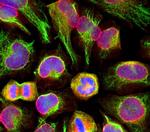
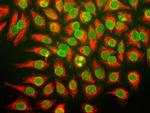
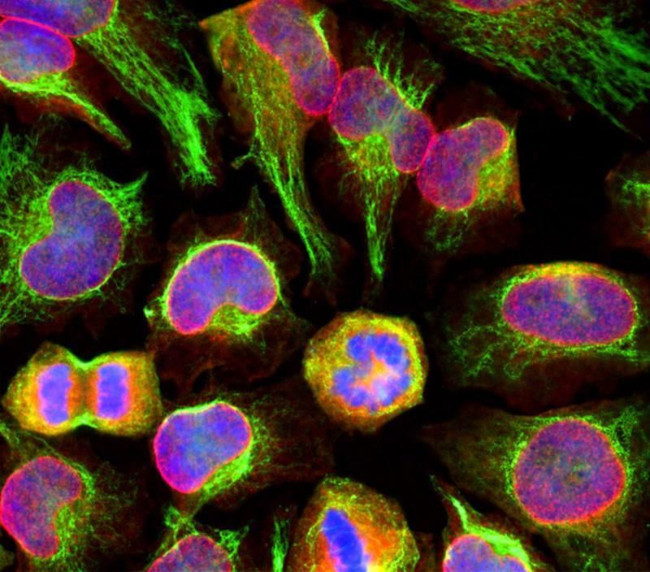
Nuclear Pore Complex Antibody (MA5-33097) in ICC/IF
Immunocytochemistry analysis of Nuclear Pore Complex in HeLa cells, stained with Nuclear Pore Complex monoclonal antibody (Product # MA5-33097) using a dilution of 1:100 (red) and rabbit Anti-Vimentin antibody using a dilution of 1:10,000 (green), the blue is DAPI staining nuclear DNA. The Anti-Nuclear Pore Complex antibody reveals strong granular labeling of the nuclei corresponding to the protein, while t... View More

Product Details
MA5-33097
Product Specifications
Species Reactivity
Human,
Mouse,
Rat
Host/Isotype
Mouse
/ IgG1
Class
Monoclonal
Type
Antibody
Clone
39C7
Immunogen
Yeast nuclear preparations
Conjugate
Form
Liquid
Concentration
0.25 mg/mL
Amount
25 µg
Storage buffer
tissue culture supernatant
Contains
10mM sodium azide
Storage conditions
-20°C, Avoid Freeze/Thaw Cycles
Shipping conditions
Ambient (domestic); Wet ice (international)
RRID
Target Information
The nuclear pore complex (NPC) serves as the sole bidirectional gateway of macromolecules in and out of the nucleus. Each NPC consists of ~1,000 protein subunits, termed nucleoporins, and totals to a molecular mass of ~110 Mda. NPCs maintain the integrity of the nuclear compartment by preventing macromolecules from freely diffusing in or out of the nucleus. (Annu Rev Biochem, 2019. PMID 30883195)
For Research Use Only. Not for use in diagnostic procedures. Not for resale without express authorization.
References (0)
Have you cited this product in a publication?
Let us know so we can reference it here.
Bioinformatics
Protein Aliases: 107 kDa nucleoporin; 133 kDa nucleoporin; 153 kDa nucleoporin; 155 kDa nucleoporin; 160 kDa nucleoporin; 205 kDa nucleoporin; 214 kDa nucleoporin; 35 kDa nucleoporin; 50 kDa nucleoporin; 62 kDa nucleoporin; 85 kDa nucleoporin; 88 kDa nuclear pore complex protein; 88 kDa nucleoporin; 93 kDa nucleoporin; 98 kDa nucleoporin; alternatively spliced; CAN protein, putative oncogene; CBP-interacting protein 4; FROUNT; Gene trap locus 1-13 protein; gene trap locus-13; GLFG-repeat containing nucleoporin; GTL-13; karyoporin; KIAA0023; KIAA0095; KIAA0225; Mitotic phosphoprotein 44; MP-44; Nuclear envelope pore membrane protein POM 210; nuclear pore associated protein 60 kDa; nuclear pore complex 1; nuclear pore complex protein 88; nuclear pore complex protein hnup153; Nuclear pore complex protein Nup107; Nuclear pore complex protein Nup133; Nuclear pore complex protein Nup153; Nuclear pore complex protein Nup155; Nuclear pore complex protein Nup160; Nuclear pore complex protein Nup205; Nuclear pore complex protein Nup214; Nuclear pore complex protein Nup50; Nuclear pore complex protein Nup53; Nuclear pore complex protein Nup85; Nuclear pore complex protein Nup88; Nuclear pore complex protein Nup93; nuclear pore complex protein Nup98; Nuclear pore complex protein Nup98-Nup96; nuclear pore glycoprotein 62; Nuclear pore glycoprotein p62; Nuclear pore membrane glycoprotein 210; nuclear pore membrane protein 210; Nuclear pore protein gp210; Nuclear pore-associated protein 60 kDa-like; nuclear pore-associated protein 60L; nucleoporin; nucleoporin 107kDa; nucleoporin 133; nucleoporin 133kD; nucleoporin 133kDa; nucleoporin 153kD; nucleoporin 153kDa; nucleoporin 155kD; nucleoporin 155kDa; nucleoporin 160kD; nucleoporin 160kDa; nucleoporin 205kDa; nucleoporin 210; nuclear pore membrane glycoprotein 210; nuclear pore membrane protein 210; nucleoporin 210kDa; nucleoporin 214kDa; nucleoporin 35kDa; nucleoporin 50 kDa; nucleoporin 50kD; nucleoporin 50kDa; nucleoporin 62kD; nucleoporin 62kDa; nucleoporin 85kDa; nucleoporin 88kDa; nucleoporin 93kDa; nucleoporin 96; nucleoporin 98kD; nucleoporin 98kDa; Nucleoporin Nup107; Nucleoporin Nup133; Nucleoporin Nup153; Nucleoporin Nup155; Nucleoporin Nup160; Nucleoporin Nup205; Nucleoporin Nup210; Nucleoporin Nup214; Nucleoporin NUP35; Nucleoporin Nup50; Nucleoporin NUP53; Nucleoporin Nup62; Nucleoporin Nup75; Nucleoporin Nup84; Nucleoporin Nup85; Nucleoporin Nup88; Nucleoporin Nup93; nucleoporin Nup98; nucleoprotein 50; Nucleoprotein 50kD; NUP50; NUP62; Nup98-Nup96; NUP98/PHF23 fusion 2 protein; p105; P140; pericentrin 1; Pericentrin-1; POM210; Pore membrane protein of 210 kDa; predicted protein of HQ1146; preimplantation protein 2; Protein CAN; unnamed protein product
Gene Aliases: 160kDa; 1700030K07Rik; 2310006I24Rik; 2410008G02Rik; 2810011M03Rik; 35kDa; 3830404O05Rik; 4732457F17; 5330402E05Rik; 9830001L10; AA414952; AA589433; ADAR2; ADIR2; AI413123; AI426861; AI790512; AI836801; AI849286; ATFB15; AU020188; AU045898; AV248391; AW541137; B130015D15Rik; BC039282; C76801; C7orf14; C88147; CAIN; CAN; Cip4; D2H9S46E; D7Ertd649e; D930027M19Rik; FADS4; FROUNT; GAMOS7; GAMOS8; gp190; GP210; Gtl-13; Gtl1-13; Gtl13; hNUP133; HNUP153; IBSN; IIAE9; KIAA0023; KIAA0095; KIAA0197; KIAA0225; KIAA0791; KIAA0906; mermaid; mKIAA0197; mKIAA0225; mKIAA0791; MP-44; MP44; N153; N155; NIC96; NO44; NP44; Np62; NPAP60; NPAP60L; NPHS11; NPHS13; NPHS17; NPHS18; NPHS19; NUCZINK; NUP107; NUP120; NUP133; NUP153; NUP155; NUP160; NUP196; NUP205; NUP210; NUP214; NUP35; NUP50; NUP53; NUP62; NUP75; NUP84; NUP85; NUP88; NUP93; NUP96; NUP98; Nup98-96; Nupc1; ODG6; ODG6; GAMOS7; p62; PCNT1; POM210; Prei2; PRO1146; PSEC0245; RGD1304977; Rtp60; SNDI
UniProt ID: (Human) P57740, (Human) Q8WUM0, (Human) P49790, (Human) O75694, (Human) Q12769, (Human) Q92621, (Human) Q8TEM1, (Human) P35658, (Human) Q8NFH5, (Human) Q9UKX7, (Human) P37198, (Human) Q9BW27, (Human) Q99567, (Human) Q8N1F7, (Human) P52948, (Rat) O08587, (Mouse) Q8BH74, (Mouse) Q8R0G9, (Mouse) E9Q3G8, (Rat) P37199, (Mouse) Q99P88, (Mouse) Q9Z0W3, (Rat) P11654, (Mouse) Q9QY81, (Mouse) Q80U93, (Rat) Q68FY1, (Mouse) Q8R4R6, (Mouse) Q9JIH2, (Rat) P17955, (Mouse) Q63850, (Rat) Q4QQS8, (Mouse) Q8R480, (Mouse) Q8CEC0, (Rat) O08658, (Mouse) Q8BJ71, (Rat) Q66HC5, (Mouse) Q6PFD9, (Rat) P49793
Entrez Gene ID: (Human) 57122, (Human) 55746, (Human) 9972, (Human) 9631, (Human) 23279, (Human) 23165, (Human) 23225, (Human) 8021, (Human) 129401, (Human) 10762, (Human) 23636, (Human) 79902, (Human) 4927, (Human) 9688, (Human) 4928, (Rat) 25497, (Rat) 116555, (Mouse) 103468, (Mouse) 234865, (Rat) 292085, (Rat) 25281, (Mouse) 218210, (Rat) 117021, (Mouse) 170762, (Mouse) 59015, (Rat) 311182, (Mouse) 70699, (Rat) 362335, (Rat) 58958, (Mouse) 54563, (Mouse) 227720, (Rat) 296634, (Rat) 295692, (Mouse) 69482, (Mouse) 18141, (Rat) 65274, (Mouse) 18226, (Rat) 287830, (Mouse) 445007, (Mouse) 19069, (Rat) 113929, (Mouse) 71805, (Rat) 291874, (Mouse) 269966, (Rat) 81738
protein binding
structural constituent of nuclear pore
DNA binding
nuclear localization sequence binding
zinc ion binding
identical protein binding
protein anchor
metal ion binding
molecular condensate scaffold activity
nuclear export signal receptor activity
nucleic acid binding
phospholipid binding
chromatin binding
receptor signaling complex scaffold activity
Hsp70 protein binding
SH2 domain binding
ubiquitin binding
PTB domain binding
Hsp90 protein binding
transcription coactivator activity
RNA binding
mRNA binding
peptidase activity
serine-type peptidase activity
hydrolase activity
peptide binding
promoter-specific chromatin binding
nucleocytoplasmic transporter activity
porin activity
Ran GTPase binding
protein dimerization activity
protein homodimerization activity
thyroid hormone receptor binding
kinesin binding
CCR2 chemokine receptor binding
transporter
scaffold/adaptor protein
structural protein
posttranscriptional tethering of RNA polymerase II gene DNA at nuclear periphery
mRNA export from nucleus
protein import into nucleus
nucleocytoplasmic transport
female gonad development
protein transport
mRNA transport
nuclear pore complex assembly
nephron development
transcription-dependent tethering of RNA polymerase II gene DNA at nuclear periphery
nuclear pore organization
poly(A)+ mRNA export from nucleus
neural tube development
neurogenesis
paraxial mesoderm development
animal organ development
system development
somite development
RNA export from nucleus
viral entry into host cell
negative regulation of RNA export from nucleus
viral penetration into host nucleus
amyloid fibril formation
nuclear envelope organization
protein localization to nucleus
production of miRNAs involved in gene silencing by miRNA
protein targeting to nuclear inner membrane
atrial cardiac muscle cell action potential
protein export from nucleus
intracellular protein transport
regulation of nucleocytoplasmic transport
regulation of cell cycle
NLS-bearing protein import into nucleus
cellular response to leukemia inhibitory factor
neural tube formation
mitotic metaphase plate congression
centrosome cycle
mitotic centrosome separation
cell surface receptor signaling pathway
negative regulation of cell proliferation
regulation of signal transduction
negative regulation of epidermal growth factor receptor signaling pathway
negative regulation of apoptotic process
negative regulation of programmed cell death
positive regulation of I-kappaB kinase/NF-kappaB signaling
positive regulation of epidermal growth factor receptor signaling pathway
positive regulation of mitotic nuclear division
positive regulation of transcription, DNA-templated
regulation of Ras protein signal transduction
negative regulation of Ras protein signal transduction
positive regulation of centriole replication
regulation of mitotic spindle organization
cellular senescence
centriole assembly
positive regulation of mitotic cytokinetic process
positive regulation of protein localization to centrosome
chemotaxis
lamellipodium assembly
macrophage chemotaxis
ribosomal large subunit export from nucleus
ribosomal small subunit export from nucleus
positive regulation of SMAD protein import into nucleus
proteolysis
telomere tethering at nuclear periphery
positive regulation of mRNA splicing, via spliceosome
intracellular transport
transmembrane transport
transport
biological_process
transcription, DNA-templated
cell aging
cell death
negative regulation of MAP kinase activity
cell migration
cytokine-mediated signaling pathway
positive regulation of defense response to virus by host
mitophagy in response to mitochondrial depolarization
protein import into nucleus, docking
DNA replication
Disclaimer

Clicking the images or links will redirect you to a website hosted by BenchSci that provides third-party scientific content. Neither the content nor the BenchSci technology and processes for selection have been evaluated by us; we are providing them as-is and without warranty of any kind, including for use or application of the Thermo Fisher Scientific products presented.

Performance Guarantee
If an Invitrogen™ antibody doesn't perform as described on our website or datasheet,we'll replace the product at no cost to you, or provide you with a credit for a future purchase.*
Learn more
We're here to help
Get expert recommendations for common problems or connect directly with an on staff expert for technical assistance related to applications, equipment and general product use.
Contact tech support