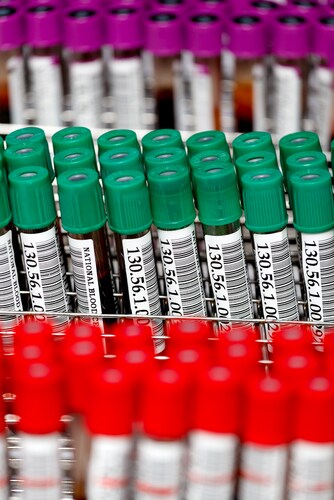
 The introduction of unified standard operating procedures (SOPs) would mitigate the issues that plague researchers who use biobank-derived biological samples for genomic applications. These issues include poor specimen quality and difficulties with reproducing and validating experimental findings. Indeed, Zhou et al. (2015) cited RAND Corporation reporting indicating that although U.S. institutions harvested over 300 million biospecimens in 1999, the lack of unified SOPs made it impossible to adequately exploit this vast collection for research purposes.1 Multiple governmental agencies and non-governmental organizations have recommended guidelines for biobanking, but the specific parameters necessary for SOPs do not currently exist.
For this reason, Zhou et al. reviewed the existing literature to collect evidence-based data for the eventual development of standards for the harvesting, preservation and storage of biospecimens. They assessed 212 total articles drawn from Biospecimen Research and Pubmed, focusing on the following preanalytic variables:
-
warm ischemia
-
surgical manipulation
-
cold ischemia/delayed specimen processing
-
preservation at low temperature
-
preservation and fixatives (duration and temperature)
-
freeze-thaw cycles
-
storage duration
They reported the following for tissue biospecimens:
|
Variable |
Significance |
Recommendation |
|
Warm ischemia |
This condition occurs immediately upon ligation of an organ’s blood vessels during surgery and impacts gene expression profiling but not RNA quality. |
The team recommends pre-operative harvesting of biospecimens to avoid this. |
|
Surgical manipulation |
While this condition has been demonstrated to impact gene expression levels, it is difficult to differentiate between this and the confounding effects of warm ischemia. |
Further study with control of warm ischemia would be necessary to evaluate the true impact of surgical manipulation. |
|
Cold ischemia and delayed specimen processing |
The team indicates difficulty distinguishing between these two variables, leading to the decision to combine them. These factors influence both nucleic acid quality and gene/protein expression. |
In addition to further investigation into parameter specifics, the team calls for standardization of processing delay times to diminish gene profiling variations. |
|
Preservation at low temperature |
Includes all fast-freeze methods like snap-freezing in liquid nitrogen, embedding in medium with immersion in -80C isopentane, and carbon dioxide quick freeze. |
These techniques produce similar quantities of nucleic acids and proteins and similar polymerase chain reaction (PCR) performance, including opportunity for meaningful comparison and validation. Fresh specimens preserved overnight at –48°C produced similar yields to those generated from snap-frozen samples, indicating that this process could be used to address short delays in processing. |
|
Preservation and fixation |
Formalin fixation can fragment nucleic acids. The team also highlights three variables here: tissue thickness, ratio of tissue to volume of fixative, and fixation time. The last variable in particular can impact nucleic acid quality. |
Recommendations include 6 to 18 hours for biopsy samples, 12 to 36 hours for surgical samples, or 8 to 16 hours for formalin fixation at ambient temperature. Alcohol-based fixatives may be preferable to formalin and generate higher-quality nucleic acids and enhanced PCR performance. Another alternative for RNA-based samples is RNALater, which may offer biobankers extra processing time. Further study and standardization of types of preservatives and fixatives as well as duration of the process is necessary for ensuring accurate gene expression profiling. |
|
Freeze-thaw cycles |
This can impact RNA quality and alter gene expression, phosphoprotein levels, and enzymatic activity, depending mostly on total thaw time rather than the number of cycles. |
The team reports that ~30 minutes at ambient temperature results in significant degradation. RNALater attenuated this effect in terms of RNA quality. |
|
Storage duration and temperature |
For formalin-fixed, paraffin-embedded (FFPE) specimens, storage duration can impact quality, with a four-fold reduction in gene signals after two years of storage and RT-PCR failure after 15 years of storage. Older samples may still be usable for microRNA studies. The team reports no significant alteration in microRNA expression after 7 years of storage but gradual loss of expression after 11 years of storage. |
The team indicates that reporting the age of these specimens may benefit comparison and validation steps. They also call for further studies into specific storage duration parameters, using a fit-for-purpose format. The National Cancer Institute recommends storage of FFPE specimens below 27°C with pest and humidity control. |
For blood specimens, the team indicated that collection generally occurs in EDTA or heparinized tubes. These are not suitable for storage, however, as gene expression profiling degrades over time. The literature revealed decreased expression in specific genes in as little as four hours at ambient temperature in EDTA tubes. PAXgene tubes evidenced better short-term storage but not longer than 24 hours at ambient temperature. The team indicates that variations in experimental results (both intra- and inter-institutional) could be addressed by minimizing processing delays and standardizing blood specimen processing time intervals and types of collection tubes. Including this information in experimental reporting would enhance accuracy and validation of findings.
Overall, Zhou et al. highlight the necessity of unified SOPs to control variables that may impact results, reproducibility and validation of genomics-based studies. They call for further investigation into the preanalytic variables presented here in the pursuit of unified SOPs.
Reference
1. Zhou, J. H., et al. (2015) “Biobanking in genomic medicine,” Archives of Pathology and Laboratory Medicine, 139 (pp. 812–818), doi: 10.5858/ arpa.2014-0261-RA
Engaging Diverse Populations in Biospecimen Donation
Certain subpopulations have disproportionately low participa...
Read More
Secondary Biobanking Consent in an Underrepresented Population
One of the commonly raised questions in biobanking research ...
Read More
Biobanking for HIV Malignancy Research in Sub-Saharan Africa
Sub-Saharan Africa has one of the highest incidences of HIV ...
Read More
Stabilizing Tissues for Postmortem Peptide Preservation
Classically, life stops at death; however, cellular processe...
Read More
Leave a Reply