Any research institution that collects tissue samples has to make decisions about how to preserve them for the future. Often, university hospitals or individual labs will take it upon themselves to store biosamples. By contrast, other organizations rely on third-party biobanks to manage their samples when they are limited by cost, storage space or time to spend on the repository. The choice to develop an in-house solution or rely on a third-party biobank is typically complex and depends on the individual needs of the research institution.
Case in point: The Sarcoma Alliance for Research through Collaboration (SARC), a non-profit organization dedicated to the development and support of clinical trial research for the prevention, treatment and cure of sarcomas – a cancer of the bone and connective tissue of the body established a partnership with a biobank to promote sarcoma research.
SARC decided to use a third-party approach and store samples in the biorepository at Nationwide Children’s Hospital in Columbus, Ohio. The repository stores serum and tissue preserved in paraffin from SARC’s 20 clinical trials along with annotated information about the patients and trials.
SARC’s new repository is a step in the right direction for sarcoma research, but the organization’s ultimate goal is a centralized biobank that also stores samples from patients not in clinical trials. The 2004 National Cancer Institute sarcoma report called for “establishing a centralized sarcoma tumor and tissue repository.”
Dr. William Tap, section chief for sarcoma oncology at Sloan-Kettering echoed the report. “It’s still critical to have a centralized bank, with the resources to properly manage it and establish quality control,” he explained.
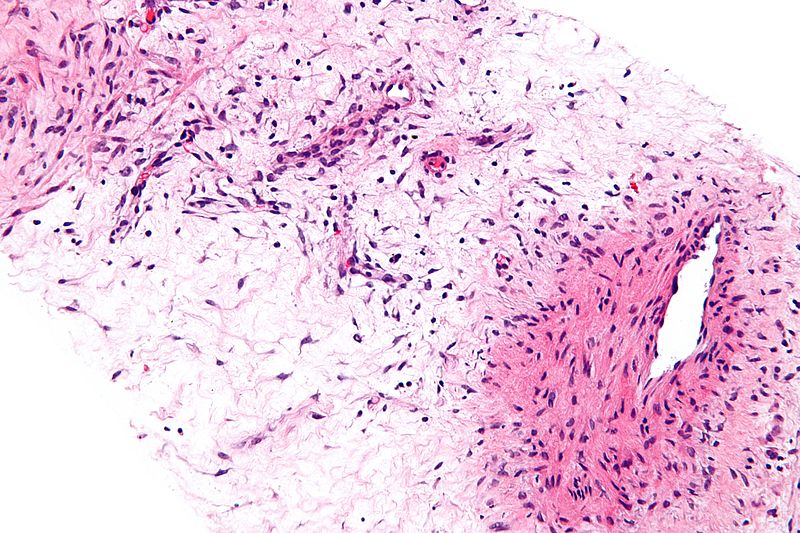
Image: Nephron, Wikimedia Commons
“University hospitals like Stanford, Moffitt and UM are sitting on a gold mine of tissue. I have over a thousand sarcoma specimens sitting in my freezers, linked to clinical data,” Dafydd G. Thomas, PhD, MD, co-director of the University of Michigan’s Molecular Pathology Research Laboratory said.
Although these small repositories provide samples to researchers that request them, a centralized biobank would allow for larger scale sarcoma studies. Perhaps a third-party solution, much like SARC’s repository, would be optimal for establishing a centralized sarcoma tissue bank.

Long-Term Biobanking Potential for Human Islet Cell Functionality
Manning Fox et al. (2015) present in vivo and in vitro human...
Read More
Next-Generation DNA Sequencing: Predictive Biomarkers for Cancer Treatment
As treatment options for cancer patients increase, oncologis...
Read More
A New Brain Imaging Cohort: The UK Biobank
The UK Biobank has created a brain imaging database to incre...
Read More
Leveraging Facebook Likes for Population-Based Biobanking Outreach
Michigan BioTrust for Health (BioTrust), a state-run, popula...
Read More
Leave a Reply