The COVID-19 pandemic is prompting scientists to rethink traditional ways of working, emphasizing the need for integration and optimization in the laboratory. Tens of thousands of scientists are redeploying and laboratories are shifting their focus in response to this global and rapidly evolving public health crisis. The broader scientific community is seeing unprecedented levels of collaboration and coordination.
Novo Nordisk is driving one such collaboration in Denmark. Seeking to better characterize and understand SARS-CoV-2, Novo Nordisk is using Thermo Scientific™ Watson LIMS™ software to support an externally sponsored research project collecting blood samples from volunteers to be tested for SARS-CoV-2 antibodies. Novo Nordisk expects to collect and analyze around 50,000 samples within the next 12-months.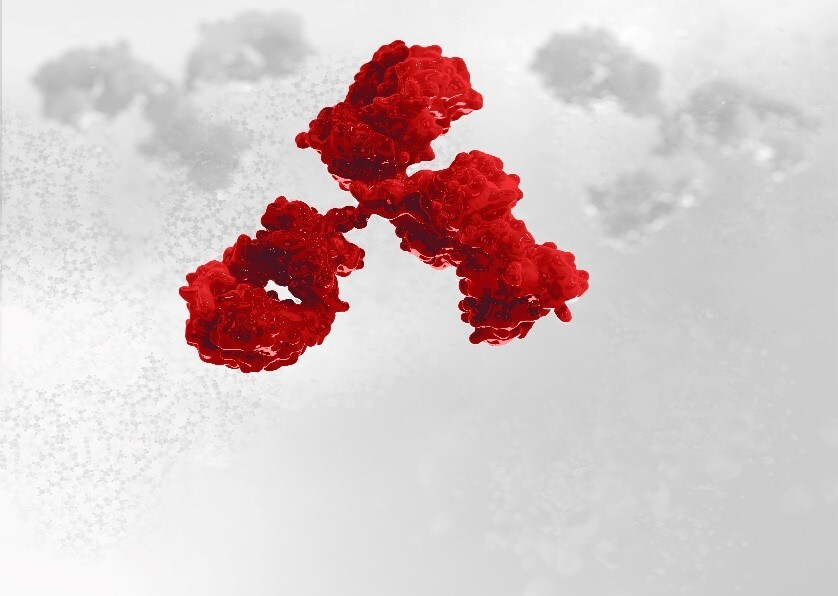
Project details
The Novo Nordisk research project, titled ”Dynamic characteristics of the antibody response towards SARS-CoV-2 in a company-based population,” is not for virus detection. Rather, the study focuses on detecting antibodies against coronavirus. The aim of the study is to investigate the antibody incidence and dynamic development towards SARS-CoV-2 in a large population-based cohort and in their adult household members.
Novo Nordisk chose a study population of employees from the “Novo family,” meaning Denmark-based employees of Novo Nordisk A/S, Novozymes A/S, Novo Holdings A/S and the Novo Nordisk Foundation and their adult household members. Participation in the project was voluntary, and no fees were paid for participation. The company expects approximately 16,000 participants in the study. The study is an observational, prospective cohort study. Antibody samples were taken at the beginning of the study (June-August 2020), with repeated sampling after 6 and 12 months.
The objective of the study is to estimate the seroepidemiology of the workforce, using Novo Nordisk employees as a model for the general Danish workforce. Scientists will investigate the incidence of seroconversion over time, as well as prevalence of antibodies against SARS-CoV-2, within the cohort, and seroconversion in a household relation. Participants also received a questionnaire to record any COVID-19 symptoms they have experienced. This enables the researchers to correlate any antibodies against SARS-CoV-2 to the histories of clinical manifestations of the infection.
Novo Nordisk A/S Non-clinical and Clinical Assay Science (NCAS) performs the initial screening for antibodies in all samples. This screening is performed using an anti-SARS CoV-2 antibody test (Sandwich ELISA) developed by Rigshospitalet, University of Copenhagen and researchers at Novo Nordisk. Development was funded by the Carlsberg Foundation and the Novo Nordisk Foundation. All positive samples are sent to Rigshospitalet for more detailed characterization.
Novo Nordisk Foundation provided the grant for the research project. The grant helps fund the sampling activities at Rigshospitalet. Rigshospitalet also characterize antibodies in positive samples, measuring what isotypes are in the samples and making a titration of the antibodies. The hospital also checks whether the antibodies are neutralizing the virus, and will do the final data analysis for the project.
One additional player in the project is the Statens Serum Institut (Danish National Biobank). Statens Serum Institut is responsible for the initial sample reception, and preparation of the serum from all the samples, and shipping the samples to Novo Nordisk. Statens Serum Institut will also store samples for participants who have given consent.
Automation and Data handling
The SARS-CoV2 antibody analysis and laboratory set-up is completely independent from the daily regulated (GLP/GCP) analysis and laboratory work performed at Novo Nordisk. This gave Novo Nordisk the opportunity to explore additional levels of automation.
Watson LIMS software enables Novo Nordisk to accurately manage all samples and track them using 2D barcodes. All samples are stored in tubes with 1- and 2D barcodes and are placed in 96-size racks. Samples are received along with a sample manifest from the Danish National Biobank. The software also provides the ability to import sample manifests, streamlining the handoff between the clinic and the laboratory. The key capability Watson LIMS software provides is the ability to facilitate worklists and data handling for ELISA assays for a high throughput study. Watson LIMS software’s Immune Response Module (IRM) drives users through immunogenicity testing. IRM calculates and determines assay cut-points, allows for different cut-points for screen and titer within the same run, summarizes results for samples run and flags results below the cut-point.
Learning more
To learn more about the Novo Nordisk project, and how Watson LIMS software helps Novo Nordisk automate custom-built laboratory workflow processes, including sample accessioning and analysis processes, watch the Collaboration in the Face of a Pandemic webinar. You can also visit Watson LIMS for more details on how this software supports the bioanalytical workflow.

LIMS enables scientists to close in on Edge AI
In recent years, the convergence of edge computing technolog...
Read More
Advancing bioprocessing labs with the new SampleManager LIMS Process Management Solution
In the rapidly evolving landscape of bioprocessing manufactu...
Read More
Driving Productivity and Efficiency with LIMS Software at a Global Pharmaceutical CDMO
Selecting a new LIMS When the laboratory function of Patheon...
Read More
Four Planning Considerations to Ensure a Smooth LIMS Implementation
In our new four-part blog series, we explore why you should ...
Read More
Leave a Reply