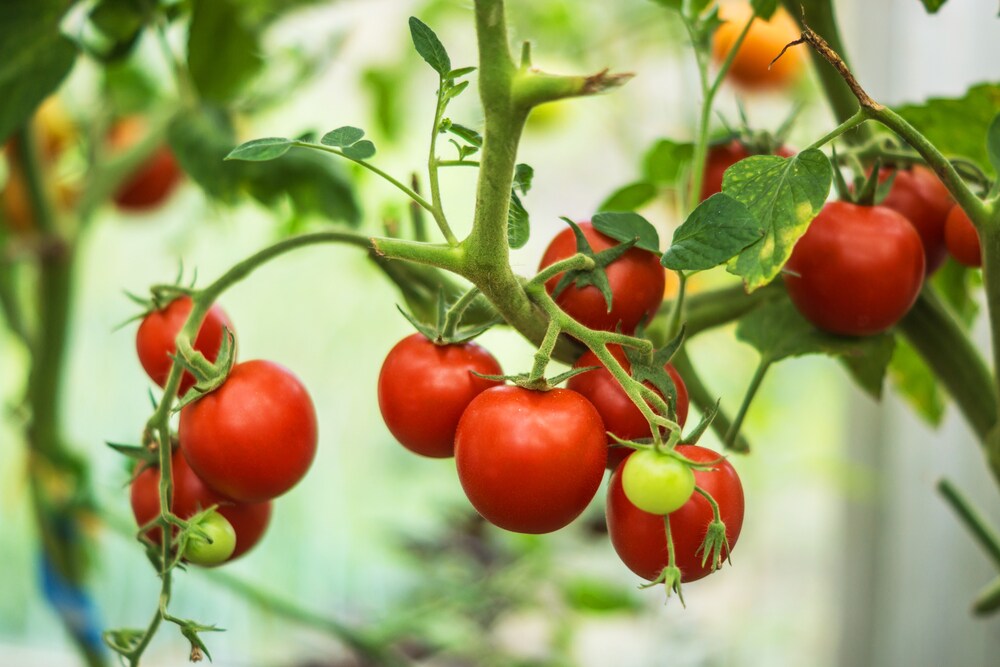
 Melatonin hormone helps regulate a variety of body processes, including the circadian rhythm. It is known to be naturally present in a variety of fruits and vegetables; however, the exact amounts are unknown. In the past, researchers have had a hard time quantifying melatonin due to its low concentration as well as other difficulties resulting from incompatible preparation techniques and unreliable detection systems. In pursuit of a dependable analytical method, Reinholds et al. investigated melatonin (MEL) in cherries and tomatoes using ultra-high-performance liquid chromatography coupled with hybrid quadrupole-Orbitrap mass spectrometry.
For their analysis, the team collected samples from 18 tart cherry varieties grown at the Latvian State Institute of Fruit-Growing. To exclude the factor influence of day–night cycles, they harvested cherries on the same day from at least three different trees by selecting fruits with different degree of maturity, e.g., middle, fully ripe and overripe samples. They also purchased tomatoes representing 28 varieties from local retailers in Latvia as well as samples from the Netherlands, Poland and Spain. To analyse samples, they used an Accela 1250 ultra-high-performance liquid chromatography (UHPLC) system (Thermo Scientific). The UHPLC system was coupled with Q Exactive Orbitrap high resolution mass spectrometer (Thermo Scientific) equipped with a heated electrospray ionization probe (H-ESI II) operating in the positive detection mode.
The researchers validated deuterated melatonin (MEL-d4) as an internal standard. They also analyzed tomato and cherry samples previously checked and confirmed for the absence of MEL. They also used a combination of blank samples and spiked MEL samples to examine the experimental conditions.
The researchers paid close attention to the selectivity and specificity, linearity, detection and quantification limits; while also evaluating the precision, accuracy, and the robustness depending on matrix and analytical conditions.
The researchers did not get a positive confirmation (<10 pg/g) of MEL in any of the tart cherry samples. In the tomatoes, they found MEL in the range of <10–149 pg/g, where the highest concentrations were determined in “Cherry,” “Cherry Red” and “Rome” tomatoes grown in the Netherlands. In >35% (8 samples) of the 28 cultivars, the concentrations of MEL reached up to 20 pg/g. In most of the cases (75%), the content of MEL was up to 33 pg/g.
The researchers conclude that in both tomatoes and cherries, the climatic conditions of the geographic region, soil characteristics, the type of cultivar, etc. are all likely affecting MEL concentration. These factors also play a role in cherries, since MEL has been identified in other cherry varieties in previous investigations.
For further discussion on food analytical testing, visit our food and beverage learning center.
Reference
Reinholds, I. et al, (2016) “Development and Validation of New Ultra-High-Performance Liquid Chromatography-Hybrid Quadrupole-Orbitrap Mass Spectrometry Method for Determination of Melatonin in Fruits.” Journal of Chromatographic Science. 2016 Mar 9. pii: bmw030. [Epub ahead of print]

Natural Colorants: Unlocking the Future Through Fungal Innovation and Mass Spectrometry
As consumer demand continues to shift toward clean-label, pl... Daniel Merriman
Read More
What to Keep in Mind When Analyzing Chlorophyll Samples using UV-Vis Spectrometry
In some food industries, it can be important to determine th...
Read More
Can UV-Vis Spectrometry Be Used to Analyze Chlorophyll in Canola Oil?
Canola oil is a type of vegetable oil derived from the seeds...
Read More
Changing Texture and Taste of Plant-Based Meats with Added Oils
Consumers are increasingly choosing plant-based foods becaus...
Read More

Leave a Reply