According to Google, here are the Top 10 read articles this year from Analyzing Metals. Some of these articles have been around for quite awhile, but are still as relevant as ever. If you missed any of the latest articles, just click here to see the most recently published ones. You can even filter by topic (on the right hand side Sub-Categories navigation) to focus on the metal subjects that interest you most:
- Manufacturing Quality Assurance,
- Alloy Analysis,
- Metals Measurement,
- Positive Material Identification,
- Precious Metals,
- Scrap Metal Recycling,
- Steel,
- and just the latest trends in the industry.
Happy Reading!
- A Snapshot of the World’s Rarest Metals. While truly rare elements like francium exist only fleetingly, the rarest stable metals in Earth’s crust—such as tantalum, tellurium, and rhenium—occur in tiny amounts but are critical for modern technologies from electronics to jet engines due to their unique physical and chemical properties. Learn why.
- How Gold Plating is Done, Step by Step. One of our readers (a retired jewelry designer), describes gold plating as an electroplating process where the item is meticulously cleaned and prepared, often given an undercoat like nickel, and then submerged in a gold-ion solution with controlled voltage so a thin layer of gold adheres to the surface. Steps include surface cleaning, rinsing, applying a strike/base coat, the gold plating itself, and final rinsing and drying to ensure a smooth, adherent finish.
- What Is Stainless Steel? Part I. The article explains that stainless steel is a family of iron-carbon alloys made corrosion-resistant by adding at least about 10.5% chromium, which forms a protective oxide layer, and often other elements like nickel and manganese to tailor properties. It also outlines the main types—such as austenitic, ferritic, martensitic, and duplex—each with distinct balances of strength, corrosion resistance, and applications across industries.
- Are There Precious Metals in Catalytic Converters? Spent automotive catalytic converters contain valuable platinum group metals (like platinum, palladium, and rhodium), which vary in amount depending on vehicle type and can be worth significant sums when recycled. It also describes how X-ray fluorescence (XRF) analysis is used to non-destructively determine the elemental composition of pulverized converter material to help recyclers assess and optimize recovery of these rare metals.
- Unveiling the Process: How Pawnbrokers Verify Authenticity of Gold Jewelry. Pawnbrokers use a range of tests to check if gold jewelry is genuine, starting with careful visual inspection for hallmarks and simple physical checks like magnet and density tests to spot obvious fakes. When more precision is needed, they may perform acid testing or advanced non-destructive analysis such as X-ray fluorescence to accurately determine the metal composition and purity of the piece.
- PMI Technologies: What’s the Difference Between XRF, LIBS, and OES? XRF, OES, and LIBS are three common positive material identification (PMI) technologies used to determine the elemental composition of metals, each offering distinct advantages and suited to different applications. XRF is a fast, non-destructive method ideal for many alloy checks but limited on light elements, OES provides comprehensive elemental detection including light elements though with more setup and semi-destructive contact, and LIBS uses a laser to rapidly measure composition — including light elements like carbon — with handheld portability and minimal preparation.
- 5 Precious Metals Analysis Methods. Here are five main methods for analyzing precious metals: simple scratch and acid tests and electronic testers (both quick but less accurate), fire assay/cupellation (a highly precise but destructive technique), laboratory analysis with bench-top instruments that require sample prep, and portable XRF analysis which offers fast, non-destructive elemental results.
- How Carbon Affects the Quality of Steel Weldability and Hardness. Discover how increasing carbon content in steel raises its hardness and strength but also makes it more brittle and less ductile, which can negatively affect formability and corrosion resistance. Higher carbon levels also reduce weldability—especially above about 0.25 % carbon—making welding more difficult and increasing the risk of defects like cracking unless precautions and proper alloy matching are used.
- Revolutionizing Gold Analysis: Why XRF Outshines Traditional Methods. Learn how X-ray fluorescence (XRF) provides a fast, accurate, and non-destructive way to analyze gold, giving detailed information on purity and full elemental composition without scratching or damaging the item. It highlights how XRF overcomes limitations of traditional methods like acid testing—such as inaccuracy, health risks, and inability to detect plating or alloy metals—making it a safer, more reliable tool for jewelers and buyers.
- Is There Any Such Thing as Black Gold? Black gold isn’t a naturally occurring form of gold—instead, the black appearance comes from human-made treatments or coatings applied to regular gold to darken its surface. Techniques like oxidation, applying black enamel or paint-like materials, and plating with dark metals (e.g., black rhodium) can give jewelry a black finish, but the underlying metal remains regular gold that has been altered for aesthetic effect.
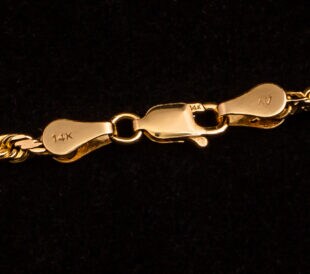
Buyer and Seller Beware: How to Detect Fake Gold in Current Times
Frequently Asked Questions... Pete Anzalone
Read More
Here’s a Free Periodic Table for Your Halloween Goody-Bag
No tricks here. Download this handy periodic table and X-ray... Marlene Gasdia-Cochrane, Editor
Read More
Metallic Microneedle Manufacturing
A metallic microneedle manufacturer faces challenges ensurin... Marc Liu
Read More
INFOGRAPHIC: 8 Fun Facts About Copper
What do pennies, asparagus and police officers have in commo...
Read More

Leave a Reply