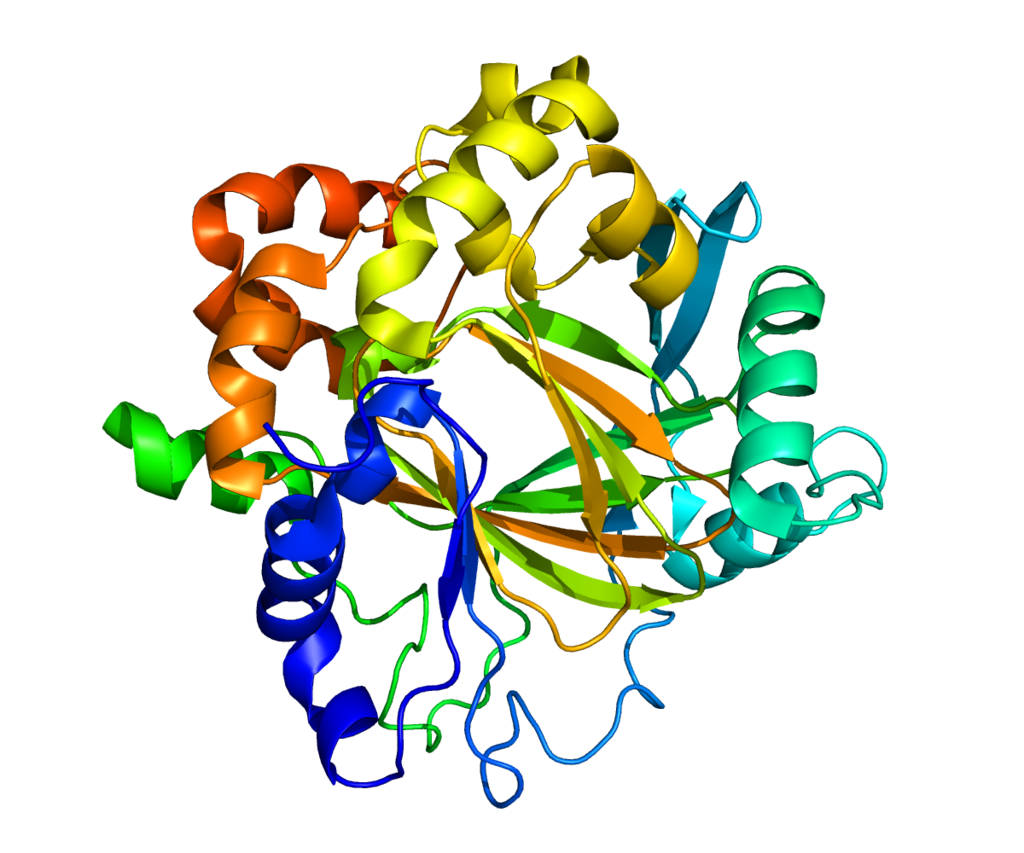
 Lysine methyltransferases and lysine demethylases are two examples of chromatin-modifying enzymes inside the nucleus. While past researchers have focused on how these enzymes target nuclear proteins, Rechem et al. posit that there are also important roles for chromatin-modifying enzymes outside the nucleus.1 Adding weight to this argument, the team also explained that earlier data has implicated chromatin-modifying enzymes as important players in multiple disease states, including cancer, with a possibility of using these enzymes to design drug therapies. Therefore, understanding how these enzymes function outside the nucleus would be very beneficial in disease research.
While investigating chromatin-modifying enzymes in the cytoplasm, Rechem et al. analyzed the lysine demethylase KDM4A, which is a JmjC domain–containing enzyme and is present both inside and outside of the nucleus.The team used endogenously immunoprecipitated KDM4A from whole-cell extracts derived from cell lines. They employed a multiplexed quantitative proteomics strategy using TMT10plex isobaric label reagents (Thermo Scientific) and a synchronous precursor selection-based MS3 method on an Orbitrap Fusion Tribrid mass spectrometer equipped with an EASY-nLC 1000 liquid chromatograph and integrated autosampler (Thermo Scientific). After matching MS data against a protein sequence database containing all protein sequences in the human UniProt database (downloaded 02/04/2014) as well as that of known contaminants such as porcine trypsin, the team identified interacting proteins from both compartments.
They next examined proteins interacting with KDM4A using Ingenuity Pathway Analysis (IPA) and found proteins involved in translation (P = 1.74E−13 and 2.58E−14, respectively). They also confirmed these interactions using co-immunoprecipitations with a separate KDM4A antibody. A Western blot also helped confirm that KDM4A can directly affect translation and is present in the initiating fractions of polysome profiles. When the team depleted KDM4A and analyzed siRNA-treated samples, they found reduced KDM4A levels are able to reduce overall protein synthesis without changing cell proliferation.
The authors remarked that KDM4A depletion using chemical inhibition with JIB-04, a JmjC demethylase inhibitor, prevents translation initiation, reduces overall translation and enhances inhibitor sensitivity. They also found that the direct interaction between KDM4A with proteins is involved in translation. This is a significant finding, since mTOR is considered a first-line defense drug to slow cancer growth by impeding DNA replication. The authors maintain that KDM inhibition could increase the effectiveness of cancer treatments such as mTOR, as well as KDM4A and other JmjC proteins. They suggest these proteins should be further investigated as a potential cancer therapy.
Reference
1. Van Rechem, C., et al. (2015) “Lysine demethylase KDM4A associates with translation machinery and regulates protein synthesis,” Cancer Discovery, 5(3) (pp. 255–63), doi: 10.1158/2159-8290.CD-14-1326.

Acetylation of the Malaria Parasite
Lysine acetylation is a ubiquitous post-translational modifi...
Read More
Holocaust Exposure and Intergenerational Impact via FKBP5 Methylation
Scientists know that, in animal models, stress can produce e...
Read More
C-Terminomics: What’s Happening at the End of the Rainbow
Structurally speaking, all proteins have a beginning and an ...
Read More
Quantifying Phosphorylation on an Orbitrap Fusion Mass Spectrometer
Phosphorylation mediates cell signaling, and therefore ...
Read More
Leave a Reply