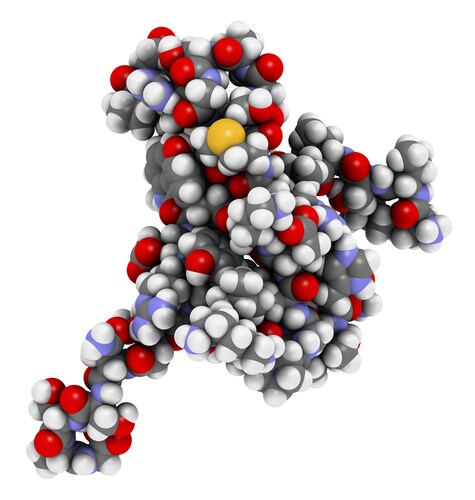
 The human tau protein is a member of the family of microtubule-associated proteins (MAPs) and is the main constituent of intracellular protein aggregates called neurofibrillary tangles (NFTs). These are considered a hallmark of Alzheimer’s disease. As Gunawardana et al. explain,1 past researchers have also documented tau protein aggregates in other, less common dementias. Some of these include progressive supranuclear palsy, corticobasal degeneration, Pick’s disease, and dementia pugilistica, a form of dementia observed in athletes who have been exposed to repeated traumatic brain injury.2
For this investigation Gunawardana et al. chose to use SH-SY5Y cells, which endogenously express the tau protein. They turned their attention to identifying proteins that interact with tau, which may give new insights to understanding dementia.
The team cultured SH-SY5Y cells and in vivo crosslinked them with 1% formaldehyde. To generate cellular extracts, the team selected SH-SY5Y cells that stably expressed human four-repeat tau with a C-terminal EGFP fusion (tau1-441-EGFP) or EGFP alone at levels comparable to endogenous tau levels observed in these cells. Following affinity capture, they eluted bait protein complexes by rapidly lowering the pH. Subsequently, they fully denatured proteins in concentrated urea, reduced, alkalized and digested with trypsin. The authors used a BCA kit (Thermo Scientific) to determine the protein concentration. The researchers conjugated peptide mixtures to six-plex tandem mass tag (TMT) reagents (Thermo Scientific) or four-plex isobaric tags for relative and absolute quantification (iTRAQ). The team injected TMT-labeled (or iTRAQ-labeled) peptide mixtures onto C18 columns using a split-free nLC 1100 nano-HPLC system. The researchers then analyzed peptides by tandem mass spectrometry on an Orbitrap Fusion Tribrid mass spectrometer (Thermo Scientific).
Database searches, along with other supporting experiments, helped assign 13,286 peptide sequences and detect 1,078 protein groups in the tau1-441 interactome. Members of the tau1-441 interactome include major protein complexes involved in RNA processing and translation. The researchers also saw tau bind to several heat shock proteins. They confirmed the association with Hsp70 and Hsp90 and found new connections with Hsp71, STIP1 and 21 homologs of the DnaJ chaperone family. They also found interactions with the proteasome and microtubule associate proteins. Another significant finding in this study was that the expression of P301L mutant tau disrupts interactions of the C-terminal half of tau with heat shock proteins and the proteasome.
Overall, the team concluded this data was consistent with a model whereby a higher propensity of P301L mutant tau to aggregate may reflect a perturbation of its chaperone-assisted stabilization and proteasome-dependent degradation. They also suggest that new areas of study include the mechanisms behind the tau protein and how tau affects health and disease.
References
1. Gunawardana, C.G., et al. (2015) “The human tau interactome: Binding to the ribonucleoproteome, and impaired binding of the P301L mutant to chaperones and the proteasome,” Molecular & Cellular Proteomics, 14(11) (pp. 3000–3014). doi:10.1074/mcp.M115.050724mcp.M115.050724.
2. Lee, V. M., Goedert, M., and Trojanowski, J. Q. (2001) “Neurodegenerative tauopathies,” Annual Review of Neuroscience, 24 (pp. 1121-1159).

Eye Spy: Direct Visualization of Neurotransmitters
Neurotransmitters (i.e., biogenic amines and amino acids) ar...
Read More
Novel Huntington’s Disease Biomarkers
Huntington’s disease (HD) is a genetic neurodegenerati...
Read More
Driving Technology: Peptide Blood–Brain Barrier Shuttles for Therapeutic Transport
Diseases involving the central nervous system impact approxi...
Read More
Post-Stroke Depression Likely Linked to Unresolved Inflammatory Response
The statistics associated with stroke are stark: of the 15 m...
Read More
Leave a Reply