Search


Zitierungen und Referenzen (5)
Invitrogen™
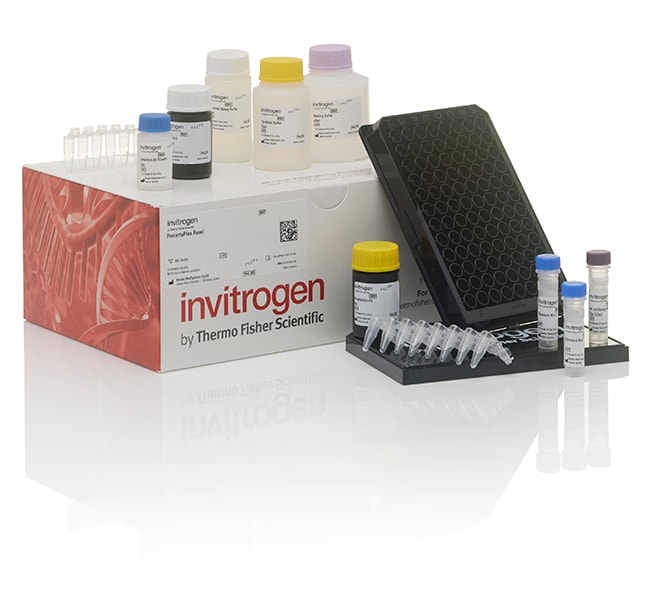
ProcartaPlex™ Human Growth Factor Panel, 11plex
The ProcartaPlex Human Growth Factor Panel 11plex enables researchers to explore the immune response by analyzing 11 protein targets in a single well using Luminex xMAP technology.
| Katalognummer | Menge |
|---|---|
| EPX110-12170-901 | 96 Tests |
Katalognummer EPX110-12170-901
Preis (EUR)
3.100,00
Each
Menge:
96 Tests
Preis (EUR)
3.100,00
Each
Mit dem ProcartaPlex 11-Plex-Wachstumsfaktor-Panel (Mensch) können Forscher die Immunantwort untersuchen, indem sie 11 Proteinziele in einem einzigen Well mit Luminex xMAP Technologie analysieren. Dieses Panel ist ein Modul des Zytokin/Chemokin/Wachstumsfaktor 45-Plex ProcartaPlex Panel 1 (Best.- Nr. EPX450-12171-901). Dieses Kit ist vollständig mit den anderen Modulen oder einzelnen Simplex-Assays kombinierbar, die zu den Zielen im 45-Plex-Panel gehören.
ProcartaPlex vorkonfigurierte Panels werden umfassend auf die Kombinierbarkeit, Interferenz und Kreuzreaktivität von Analyten getestet, um ein Höchstmaß an Validierung und Präzision zu gewährleisten. Alle ProcartaPlex Panels werden mit den erforderlichen Reagenzien für den Assay geliefert.
ProcartaPlex Multiplex-Panels sind in verschiedenen Formaten für sechs Spezies erhältlich (Mensch, Maus, Ratte, nicht menschlicher Primat, Schwein und Hund). Weitere Informationen und verfügbare Produkte finden Sie auf unserer ProcartaPlex-Immunoassays-Seite.
Zielliste [Bead-Region]: BDNF [57], EGF [56], FGF-2 [75], HGF [46], LIF [15], NGF beta [55], PDGF-BB [77], PlGF-1 [29], SCF [39], VEGF-A [78], VEGF-D [53]
Über ProcartaPlex Assays für die Luminex Plattform
ProcartaPlex Immunassays basieren auf den ELISA-Prinzipien und verwenden zwei hochspezifische Antikörper, die an verschiedene Epitope eines Proteins gebunden sind, um alle Proteinziele gleichzeitig mit einem Luminex Gerät zu quantifizieren. ProcartaPlex Multiplex-Assays benötigen nur 25 µl Plasma oder Serum oder 50 µl Zellkulturüberstand und liefern analysierte Ergebnisse in nur vier Stunden.
Produktmerkmale:
• Reproduzierbare, zuverlässige Ergebnisse – dieses Panel wurde nach dem höchsten Industriestandard validiert und umfasst sowohl die Möglichkeit zur Kombination von Proteinzielen als auch einen Kreuzreaktivitätstest
• Mehr Ergebnisse pro Probe durch gleichzeitige Messung mehrerer Proteinziele in einer einzigen Probe von 25 bis 50 µl
• Bewährte, vielfach referenzierte Multiplexing-Plattform mit Luminex Technologie zum Nachweis und zur Quantifizierung von Proteinen
ProcartaPlex Assays verwenden die Luminex xMAP (Multianalyt-Profiling) Technologie für den gleichzeitigen Nachweis und die Quantifizierung von bis zu 65 Proteinzielen in einer einzigen Probe von 25 bis 50 µl aus Plasma, Serum, Zellkulturüberständen und anderen Körperflüssigkeiten.
Die Luminex Beads im ProcartaPlex Assay sind intern mit präzisen Anteilen von roten und Infrarot-Fluorophoren gefärbt, um spektral einzigartige Signaturen zu erzeugen, die von den Luminex xMAP Detektionssystemen (z. B. Luminex 200, FLEXMAP 3D und MAGPIX) identifiziert werden können. Ähnlich wie bei einem Sandwich-ELISA verwendet der ProcartaPlex Assay zusammenpassende Antikörperpaare, um das zu untersuchende Protein zu identifizieren. In einem Multiplex-Assay wird jeder spektral einzigartige Bead mit spezifischen Antikörpern für ein einzelnes Zielprotein markiert, und gebundene Proteine werden mit biotinylierten Antikörpern und Streptavidin-R-Phycoerythrin (RPE) identifiziert. Die Konjugation von Protein-spezifischen Antikörpern an bestimmte Beads ermöglicht die Analyse mehrerer Ziele in einem einzelnen Well.
Der wichtigste Unterschied zwischen einem ProcartaPlex Assay und ELISA besteht darin, dass der Capture-Antikörper im ProcartaPlex Assay mit einem Bead konjugiert ist und nicht per Adsorption am Mikrotiterplatten-Well haftet, weshalb die ProcartaPlex Assay-Reagenzien frei in der Lösung schwimmen. Zum Nachweis verfügt das Luminex 200 Gerät beispielsweise über zwei Laser, einen zur Unterscheidung der spektralen Signatur jedes Beads und den zweiten zur Quantifizierung der RPE-Fluoreszenz, die proportional zur in der Probe vorhandenen Proteinmenge ist. Mit ProcartaPlex Multiplex-Assays können mehr Zielproteine mit deutlich weniger Proben in der gleichen Zeit profiliert werden, die für die Durchführung eines herkömmlichen Sandwich-ELISA benötigt wird.
ProcartaPlex Multiplex-Panels sind in verschiedenen Formaten für sechs Spezies erhältlich (Mensch, Maus, Ratte, nicht menschlicher Primat, Schwein und Hund). Weitere Informationen und verfügbare Produkte finden Sie unter thermofisher.com/procartaplex
ProcartaPlex vorkonfigurierte Panels werden umfassend auf die Kombinierbarkeit, Interferenz und Kreuzreaktivität von Analyten getestet, um ein Höchstmaß an Validierung und Präzision zu gewährleisten. Alle ProcartaPlex Panels werden mit den erforderlichen Reagenzien für den Assay geliefert.
ProcartaPlex Multiplex-Panels sind in verschiedenen Formaten für sechs Spezies erhältlich (Mensch, Maus, Ratte, nicht menschlicher Primat, Schwein und Hund). Weitere Informationen und verfügbare Produkte finden Sie auf unserer ProcartaPlex-Immunoassays-Seite.
Zielliste [Bead-Region]: BDNF [57], EGF [56], FGF-2 [75], HGF [46], LIF [15], NGF beta [55], PDGF-BB [77], PlGF-1 [29], SCF [39], VEGF-A [78], VEGF-D [53]
Über ProcartaPlex Assays für die Luminex Plattform
ProcartaPlex Immunassays basieren auf den ELISA-Prinzipien und verwenden zwei hochspezifische Antikörper, die an verschiedene Epitope eines Proteins gebunden sind, um alle Proteinziele gleichzeitig mit einem Luminex Gerät zu quantifizieren. ProcartaPlex Multiplex-Assays benötigen nur 25 µl Plasma oder Serum oder 50 µl Zellkulturüberstand und liefern analysierte Ergebnisse in nur vier Stunden.
Produktmerkmale:
• Reproduzierbare, zuverlässige Ergebnisse – dieses Panel wurde nach dem höchsten Industriestandard validiert und umfasst sowohl die Möglichkeit zur Kombination von Proteinzielen als auch einen Kreuzreaktivitätstest
• Mehr Ergebnisse pro Probe durch gleichzeitige Messung mehrerer Proteinziele in einer einzigen Probe von 25 bis 50 µl
• Bewährte, vielfach referenzierte Multiplexing-Plattform mit Luminex Technologie zum Nachweis und zur Quantifizierung von Proteinen
ProcartaPlex Assays verwenden die Luminex xMAP (Multianalyt-Profiling) Technologie für den gleichzeitigen Nachweis und die Quantifizierung von bis zu 65 Proteinzielen in einer einzigen Probe von 25 bis 50 µl aus Plasma, Serum, Zellkulturüberständen und anderen Körperflüssigkeiten.
Die Luminex Beads im ProcartaPlex Assay sind intern mit präzisen Anteilen von roten und Infrarot-Fluorophoren gefärbt, um spektral einzigartige Signaturen zu erzeugen, die von den Luminex xMAP Detektionssystemen (z. B. Luminex 200, FLEXMAP 3D und MAGPIX) identifiziert werden können. Ähnlich wie bei einem Sandwich-ELISA verwendet der ProcartaPlex Assay zusammenpassende Antikörperpaare, um das zu untersuchende Protein zu identifizieren. In einem Multiplex-Assay wird jeder spektral einzigartige Bead mit spezifischen Antikörpern für ein einzelnes Zielprotein markiert, und gebundene Proteine werden mit biotinylierten Antikörpern und Streptavidin-R-Phycoerythrin (RPE) identifiziert. Die Konjugation von Protein-spezifischen Antikörpern an bestimmte Beads ermöglicht die Analyse mehrerer Ziele in einem einzelnen Well.
Der wichtigste Unterschied zwischen einem ProcartaPlex Assay und ELISA besteht darin, dass der Capture-Antikörper im ProcartaPlex Assay mit einem Bead konjugiert ist und nicht per Adsorption am Mikrotiterplatten-Well haftet, weshalb die ProcartaPlex Assay-Reagenzien frei in der Lösung schwimmen. Zum Nachweis verfügt das Luminex 200 Gerät beispielsweise über zwei Laser, einen zur Unterscheidung der spektralen Signatur jedes Beads und den zweiten zur Quantifizierung der RPE-Fluoreszenz, die proportional zur in der Probe vorhandenen Proteinmenge ist. Mit ProcartaPlex Multiplex-Assays können mehr Zielproteine mit deutlich weniger Proben in der gleichen Zeit profiliert werden, die für die Durchführung eines herkömmlichen Sandwich-ELISA benötigt wird.
ProcartaPlex Multiplex-Panels sind in verschiedenen Formaten für sechs Spezies erhältlich (Mensch, Maus, Ratte, nicht menschlicher Primat, Schwein und Hund). Weitere Informationen und verfügbare Produkte finden Sie unter thermofisher.com/procartaplex
Nur für Forschungszwecke. Nicht zur Verwendung bei diagnostischen Verfahren.
Specifications
Assay-BereichSiehe Analysezertifikat, Siehe Analysezertifikat
Assay-Empfindlichkeit:Siehe Analysezertifikat
Zur Verwendung mit (Geräte)Luminex™ Geräte, Luminex™ Geräte
FormatMultiplex-Kit
ProduktlinieProcartaPlex, ProcartaPlex
ProbentypSerum, Plasma, Zellkulturüberstände, Plasma, Cell Culture Supernatants
ProbenvolumenSerum/Plasma: 25 µl; CCS: 50 µl, Serum, Plasma: 25 μl; CCS: 50 μl
VersandbedingungNasses Eis, Nasseis
CombinabilityKombinierbar
ProdukttypMultiplex-Panel
Menge96 Tests
Research AreaImmunology, Growth Factors
SpeziesHuman
Unit SizeEach
Inhalt und Lagerung
• 2 Fläschchen Standard-Mischung C (Mensch) (gefriergetrocknet)
• 1 Fläschchen Erfassungs-Bead-Mischung (1x)
• 1 Fläschchen biotinylierte Detektionsantikörper-Mischung (50x)
• 1 Fläschchen Lesepuffer (1x)
• 1 Flasche Waschpuffer (10x)
• 1 Flasche Streptavidin-PE (1x)
• 1 Flasche Universal-Assay-Puffer (1x)
• 1 Flasche Detektionsantikörper-Verdünnung (1x)
• Streifen mit 8 Röhrchen
• Klebefolie
• 96-Well-Mikrotiterplatte mit flachem Boden, schwarz
Bei 2 – 8 °C lagern.
• 1 Fläschchen Erfassungs-Bead-Mischung (1x)
• 1 Fläschchen biotinylierte Detektionsantikörper-Mischung (50x)
• 1 Fläschchen Lesepuffer (1x)
• 1 Flasche Waschpuffer (10x)
• 1 Flasche Streptavidin-PE (1x)
• 1 Flasche Universal-Assay-Puffer (1x)
• 1 Flasche Detektionsantikörper-Verdünnung (1x)
• Streifen mit 8 Röhrchen
• Klebefolie
• 96-Well-Mikrotiterplatte mit flachem Boden, schwarz
Bei 2 – 8 °C lagern.
Häufig gestellte Fragen (FAQ)
What is the size of the Luminex beads you currently use?
I am interested in performing Luminex assays using BioSource kits, and I have a Luminex xMAP system. Besides the kits and system, what other reagents and equipment will I need?
Do the Luminex beads require special care in handling?
Why would the Luminex acquisition software display "Sample Empty" messages during analysis?
What are the Luminex beads made of?
Zitierungen und Referenzen (5)
Zitierungen und Referenzen
Abstract
Mesenchymal stromal cells isolated from human fetal liver release soluble factors with a potential role in liver tissue repair.
Journal:
PubMed ID:30553176
We isolated a population of proliferating cells from cultured human fetal hepatocytes of 16-22 weeks gestational age. The cells shared a similar phenotype to that of mesenchymal stromal cells (MSCs) according to the International Society for Cellular Therapy (ISCT), including plastic adherence, antigen expression profile, and in vitro multilineage differentiation
Development of a 3D angiogenesis model to study tumour - endothelial cell interactions and the effects of anti-angiogenic drugs.
Journal:Sci Rep
PubMed ID:28592821
'The tumour microenvironment and tumour angiogenesis play a critical role in the development and therapy of many cancers, but in vitro models reflecting these circumstances are rare. In this study, we describe the development of a novel tri-culture model, using non-small cell lung cancer (NSCLC) cell lines (A549 and Colo699)
Imetelstat, a telomerase inhibitor, differentially affects normal and malignant megakaryopoiesis.
Journal:Leukemia
PubMed ID:28270692
Imetelstat (GRN163L) is a specific telomerase inhibitor that has demonstrated clinical activity in patients with myeloproliferative neoplasms (MPN) and in patients with solid tumors. The antitumor effects were associated with the development of thrombocytopenia, one of the common side effects observed in patients treated with imetelstat. The events underlying these
Development of vascularized nerve scaffold using perfusion-decellularization and recellularization.
Journal:Mater Sci Eng C Mater Biol Appl
PubMed ID:32919672
Vascularized nerve grafts (VNG) may offer an advantage in peripheral nerve regeneration by avoiding ischemic damage and central necrosis observed in non-VNG, particularly for the treatment of large and long nerve defects. However, surgical complexity, donor site morbidity and limited nerve availability remain important drawbacks for the clinical use of
A Novel Intravesical Dextrose Injection Improves Lower Urinary Tract Symptoms on Interstitial Cystitis/Bladder Pain Syndrome.
Journal:Front Pharmacol
PubMed ID:34975473
Interstitial cystitis/bladder pain syndrome (IC/BPS) is a painful recurrent condition characterized by the discomfort of the bladder, and current treatment options have limited effectiveness. Prolotherapy is a well-known treatment that involves the injection of non-biologic solutions to reduce pain and/or promote proliferation of soft tissue, and dextrose is the most